Sweepstakes Casino Guide
AMOE Sweepstakes Casinos US: Free Sweeps Coins 2026
 Available in US
Your Free Pass Into Every Sweepstakes Casino
Nine years ago, when I first started analyzing sweepstakes casino compliance structures, most players I talked to had never heard the phrase “alternate method of entry.” They knew how to buy Gold Coins. They knew how to spin slots. What they didn’t know was that every single sweepstakes casino operating in the United States is legally required to let you participate without spending a dime — and that this requirement has an official name: the AMOE, or Alternate Method of Entry.
That gap between what operators quietly provide and what players actually know has always struck me as one of the most consequential blind spots in this industry. The sweepstakes casino sector crossed $10.6 billion in gross purchases in 2024, according to Eilers and Krejcik Gaming — a market built on the premise that the entertainment is technically free. And yet the mechanism that makes that legal claim hold up is routinely buried in fine print, mentioned in obscure FAQ sections, or made just inconvenient enough that most players never bother.
This guide covers the whole picture: what AMOE actually is, why U.S. law demands it, how the mail-in process works in practice, how many Sweeps Coins you can realistically expect, how the regulatory map shifted dramatically in 2025, and what red flags tell you when an operator’s free-entry system is designed to fail. Whether you’re a player who’s never heard of AMOE or someone who’s been sending postcards for years and wonders if you’re doing it right — this is the reference I wish had existed when I started.
Table of Contents
- Sweepstakes Casino AMOE Processing and SC Payout Rules
- AMOE X-Ray
- What Exactly Is an Alternate Method of Entry?
- Why AMOE Is Not Optional: The No-Purchase-Necessary Rule
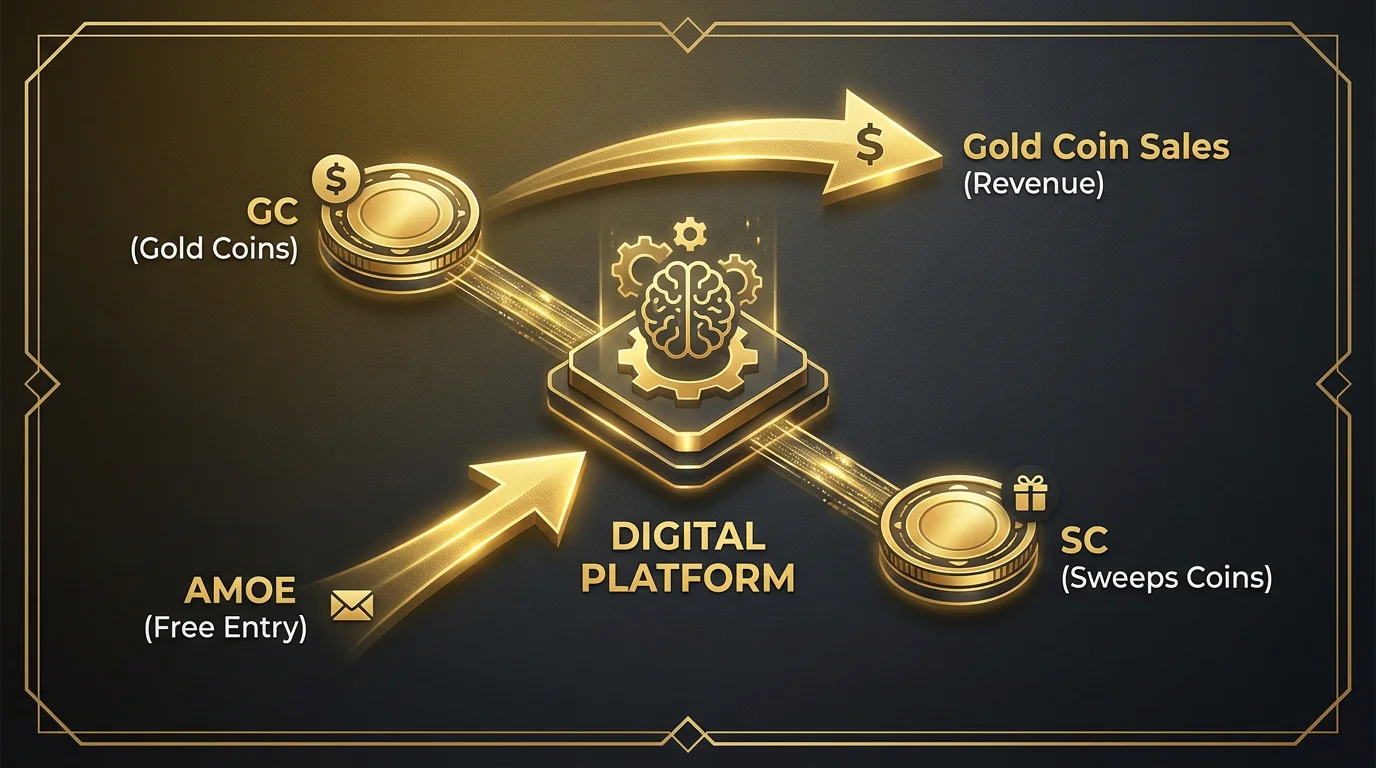
- The Dual Currency System: Why Gold Coins and Sweeps Coins Exist Together
- The Three Main Types of AMOE in 2025
- Mail-In AMOE: The Step-by-Step Process
- How Many Sweeps Coins Do You Actually Get?
- Processing Times Across Operators: What to Expect
- State Restrictions and the 2025 Regulatory Wave
- AMOE vs. Daily Logins, Social Bonuses, and Referral Rewards
- The Industry Behind the Envelope: Market Scale and Growth
- Red Flags: When an Operator’s AMOE System Is Working Against You
- The Compliance Test Every Player Can Run
- Frequently Asked Questions About AMOE
Sweepstakes Casino AMOE Processing and SC Payout Rules
- Every legitimate U.S. sweepstakes casino must offer a free entry method — this is a legal requirement, not a marketing choice, and any operator who obscures it is a red flag worth taking seriously.
- Mail-in is the most common AMOE format: one handwritten postcard per day, per household, typically earns 1–5 Sweeps Coins and takes 7–14 business days to credit (delays up to 6–8 weeks happen).
- Sweeps Coins earned through AMOE carry the same legal standing — and the same redemption rights — as those obtained any other way.
- Six states enacted laws restricting or banning sweepstakes casinos in 2025; knowing your state’s status before you mail anything is step zero.
- The industry behind AMOE is massive and under scrutiny: 186-plus platforms, 60–70% annual growth, and over 100 class-action lawsuits filed in 2025 alone.

AMOE X-Ray
What Exactly Is an Alternate Method of Entry?
Think of AMOE as the legal side door that every sweepstakes casino is required to leave unlocked. It’s not a bonus. It’s not a promotion. It’s a structural requirement — the mechanism that separates a lawful sweepstakes promotion from an illegal lottery under U.S. law.
AMOE defined: An Alternate Method of Entry is any pathway through which a person can obtain sweepstakes entries — and the associated promotional currency (Sweeps Coins) — without making a purchase or providing any financial consideration. It is legally mandated, not optional, for any sweepstakes operator conducting promotions in the United States.

The “alternate” part of the name is telling. The primary method of entry — the one most operators spend their marketing budget promoting — involves purchasing Gold Coin packages. The alternate method is the no-cost option that must be equally valid, equally accessible, and carry equivalent odds. Not a lesser version. Not a token gesture. An actual functional path to participation.
In practice, AMOE most commonly takes the form of a mail-in request: you send a handwritten postcard or letter to the operator’s designated address, and within a set processing window the operator credits your account with Sweeps Coins. Some platforms also accept digital AMOE — an online form submission or email-based request — though the physical mail-in format is the most universally supported and the one courts have historically recognized as satisfying the requirement.
Sweeps Coins (SC) — the redeemable promotional currency at sweepstakes casinos. Unlike Gold Coins, which are entertainment-only, Sweeps Coins can be redeemed for real cash prizes or gift card equivalents once eligibility conditions are met. AMOE is the primary legal mechanism for obtaining SC without a purchase.
What makes AMOE structurally interesting from a compliance standpoint is that it isn’t just a consumer courtesy — it’s the load-bearing wall of the entire sweepstakes casino legal model. Magnus Boberg, managing director of JustGamblers.com, put it precisely when he described how sweepstakes platforms sidestep gambling regulations: traditional gambling requires payment, chance, and a prize — the “three-element test” under U.S. law. Sweepstakes casinos break that chain by eliminating the payment requirement. AMOE is how that elimination is operationalized. Remove AMOE — or make it genuinely inaccessible — and the legal architecture collapses.
I’ve reviewed dozens of operator terms-of-service documents over the years, and the language around AMOE varies wildly. Some operators dedicate a clear FAQ page to the process. Others bury the address in a promotional-rules footnote or specify requirements so narrow that most attempts fail on a technicality. That variance is itself diagnostic: it tells you exactly how seriously an operator takes its compliance obligations. Whether or not you ever plan to use AMOE, knowing that it must exist is useful leverage when evaluating whether a platform is worth your time.
Why AMOE Is Not Optional: The No-Purchase-Necessary Rule
Here’s the question I get from skeptical clients more often than any other: “Do they actually have to offer this, or is AMOE just something operators do to look good?” The answer is unambiguous, and the stakes for getting it wrong are significant enough that no serious operator treats it as optional.
Federal Trade Commission guidelines and state-level sweepstakes laws across all 50 states converge on a single principle: a sweepstakes promotion becomes an illegal lottery the moment it requires participants to pay for a chance at a prize. This is the “No Purchase Necessary” rule — often abbreviated NPN — and it applies regardless of how the payment is structured, disguised, or branded.
The Three-Element Test: Under U.S. law, a game of chance becomes an illegal lottery when it contains all three of the following elements simultaneously: (1) consideration — some form of payment or valuable exchange required to participate; (2) chance — outcomes determined by luck rather than skill; (3) prize — something of value awarded to winners. Sweepstakes casinos eliminate “consideration” by offering AMOE, breaking the triad and keeping the operation legal.
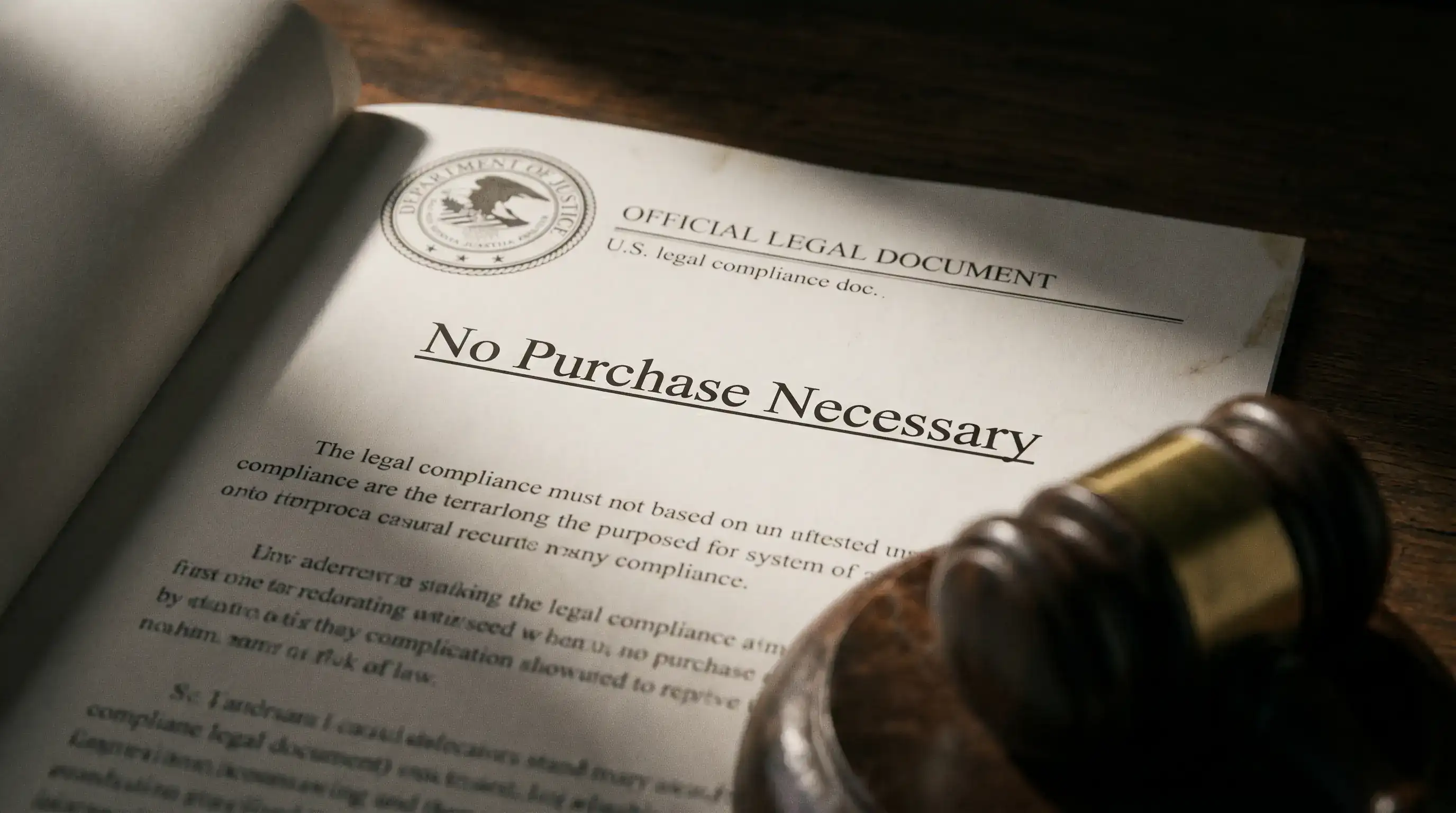
The practical requirement this creates is specific: operators must provide a method of obtaining entries that requires no purchase, no financial transaction, and no exchange of value beyond the time and effort of submitting the request. The cost of a postage stamp has been litigated and generally found acceptable — it does not constitute “consideration” in the legal sense — but operators cannot charge a processing fee, require an active paid subscription, or condition AMOE access on any prior purchase.
What many players and even some industry observers miss is how the NPN requirement extends beyond mere access. It’s not sufficient to technically offer AMOE while making the practical barriers high enough that most players give up. Deliberately obscuring AMOE instructions, publishing an incorrect mailing address, failing to process valid requests, or systematically crediting fewer Sweeps Coins than the terms promise — any of these patterns can constitute a compliance failure. As one legal analysis of sweepstakes gaming regulations puts it: any attempt by an operator to hide, complicate, or penalize AMOE use is a direct violation of federal law and a serious warning sign for users. That’s not an overclaim. Courts and regulatory agencies have increasingly taken that position.
A note on state variation: While the federal NPN framework applies nationally, states have layered additional requirements on top. New York, for instance, has held that a mail-in-only AMOE option is insufficient for digital promotions — operators must also offer an online or digital entry path. Other states have required specific disclosure language in promotional materials. The NPN principle is universal; its implementation details are not.
The regulatory pressure around this has intensified sharply. Six states enacted laws restricting dual-currency sweepstakes operations in 2025, and enforcement actions in New York and Tennessee targeted operators whose AMOE systems were found to be inadequate or insufficiently accessible. The “technically compliant” approach — offering AMOE without making it genuinely usable — is becoming harder to sustain as regulators become more sophisticated about evaluating what “accessible” actually means in practice.
For a player, this legal landscape translates into something concrete: if an operator makes AMOE difficult to find, difficult to use, or slow to credit, that difficulty is not random. It’s a design choice, and it tells you something important about how that operator views its obligations to participants. I’ll cover what those red flags look like in detail later in this guide. For the deeper legal architecture behind the sweepstakes casino model — including how courts have treated the three-element test and the distinction between nominal and genuine AMOE — that analysis stands on its own.
The Dual Currency System: Why Gold Coins and Sweeps Coins Exist Together
The two-wallet structure at sweepstakes casinos is not an accident of product design. It’s the legal architecture made visible. Once you understand what each currency actually is, the whole system — including why AMOE matters so much — clicks into place.
Gold Coins (GC)
Entertainment-only virtual currency. Can be purchased or received as a bonus. Cannot be redeemed for cash or prizes. No legal value outside the platform.
Sweeps Coins (SC)
Promotional currency with redemption rights. Cannot be purchased directly. Earned through AMOE, sign-up bonuses, and promotions. Redeemable for real cash prizes or gift cards once eligibility thresholds are met.
Why both exist
Gold Coin purchases generate revenue for operators without constituting “gambling consideration.” Sweeps Coins, which carry prize eligibility, must be obtainable without any purchase — hence AMOE.
AMOE’s role
AMOE is specifically the mechanism for obtaining SC without buying GC. It’s the legal bridge between the paid entertainment layer and the prize-eligible layer.

Gold Coins generated over $10 billion in platform sales during 2024, according to Eilers and Krejcik Gaming data compiled for the Social Gaming Leadership Alliance. That’s the revenue engine. But because Gold Coins can’t be redeemed for prizes, buying them doesn’t constitute gambling — it’s closer, legally, to purchasing entertainment time. Sweeps Coins are a different story. They’re prize-eligible, which is why they cannot be sold directly without triggering lottery laws. Instead, they must be “obtainable without purchase” — which is exactly what AMOE provides.
Here’s a detail worth sitting with: only about 12% of sweepstakes platform users ever make a purchase, according to Eilers and Krejcik data cited by industry groups. The vast majority of players participate through free Sweeps Coins from sign-up bonuses, daily login rewards, and AMOE requests. That 88% majority is using the system largely as intended under the sweepstakes legal model. Their presence — their engagement, their data, their conversion potential — is part of what makes the model financially viable for operators, which is also why AMOE amounts, while small, are a deliberate business calculation rather than pure generosity.
Understanding the two-wallet structure also clarifies a common misconception: Sweeps Coins obtained through AMOE are not “lesser” coins in any functional sense. They carry the same redemption rights as Sweeps Coins from any other source. The source of the coin doesn’t affect its value or your eligibility to redeem it — what matters is meeting the operator’s minimum redemption threshold, which varies by platform but typically falls in the range of 50 to 100 SC before cash withdrawal is available.
The Three Main Types of AMOE in 2025
Not all alternate entry methods look the same, and the format an operator accepts tells you something about both their technical infrastructure and their attitude toward compliance. In my experience reviewing operator terms across the industry, these three categories cover the overwhelming majority of what’s actually available.

| AMOE Type | How It Works | Processing Speed | Availability |
|---|---|---|---|
| Mail-In (Postcard/Letter) | Handwritten postcard or letter mailed to operator’s designated address with account info and request | 7–14 business days standard; up to 6–8 weeks in delay scenarios | Virtually universal — all compliant sweepstakes casinos must offer this |
| Digital / Online Form | Web form submission or email-based request through the operator’s platform | Often faster than mail — some operators credit within 24–72 hours | Available at select operators; required in New York for full compliance |
| Social Media Action | Follow, share, comment, or other qualifying action on operator’s official social media account | Variable — typically 1–7 days | Less common; must meet specific legal requirements to count as valid AMOE |
Mail-in remains the baseline format for a practical reason: it’s the hardest to dispute. A physical postcard in transit and on record creates a paper trail. Most operators accept it, most regulatory frameworks recognize it, and most players who use AMOE at all use mail-in. The standard across major operators is one AMOE request per day, per household — a limit that applies regardless of which format you use.
Digital AMOE is increasingly available, and in some jurisdictions it’s mandatory. New York’s attorney general office determined that a mail-in-only pathway is insufficient for digital-first sweepstakes promotions, which effectively forced operators active in that market to build online entry options before the regulatory wave of 2025 shut down most operations there anyway. Where digital AMOE exists, it generally credits faster and is easier to track — you get a confirmation email rather than hoping your postcard arrived safely.
Social media AMOE is the most variable and legally complex of the three. Platform-specific rules from companies like Meta and X impose additional constraints on how sweepstakes actions can be structured, and not every social engagement qualifies as a valid AMOE under sweepstakes law. If an operator uses social AMOE as its only free-entry option, that’s worth scrutinizing carefully — it may not satisfy the legal requirement in all states, and social platform rule changes can invalidate the method overnight without the operator updating their terms.
Mail-In AMOE: The Step-by-Step Process
The first time I walked someone through sending an AMOE postcard, they looked at me like I’d suggested they send a telegram. “A physical letter? In 2024?” Yes. A physical letter. And it works.
The mail-in process is more standardized than most players expect, but the margin for rejection is also narrower than you’d hope. Getting it right the first time matters, both because you want your Sweeps Coins and because a rejected request can complicate future submissions.
Before You Write Anything — Verify These First
- Confirm the operator is currently accepting AMOE requests in your state (several states restricted or banned sweepstakes casinos in 2025)
- Locate the current, verified mailing address from the operator’s official website or terms document — addresses change, and an outdated address means no coins
- Check the operator’s specific format requirements — some require plain index cards, others accept standard postcards, a few allow envelopes
- Have your exact account username or registered email address on hand — this is how they match your request to your account
- Know your household’s submission history — most operators enforce a one-per-day limit per household, and duplicate submissions within that window are typically discarded

The content of a valid mail-in request is typically simple: your full legal name, your account username or registered email address, the name of the sweepstakes (some operators require specific promotional period language), and a written request for Sweeps Coins. Handwriting is a near-universal requirement — printed labels for the request content are frequently grounds for rejection, though address labels on envelopes are generally acceptable.
Do
- Write clearly in block letters if your handwriting is difficult to read
- Include your full account username exactly as it appears on the platform
- Use a standard postcard (3.5″ x 5″ to 4.25″ x 6″) or a No. 10 envelope with a single sheet of paper
- Mail from your own address — the return address should match your account registration
- Keep a simple log of your submissions (date mailed, operator, expected response window)
Don’t
- Use a printed form or typed text for the request content itself
- Include anything other than the required information — extra notes, complaints, or questions won’t be forwarded and may flag the request
- Submit multiple requests in a single envelope to the same operator — this typically counts as one entry, not multiple
- Mail from a P.O. box in a different state than your account registration address
- Assume the address you used last month is still current — verify before each batch of mailings

On processing times: the industry standard across major operators is 7–14 business days from the date your postcard is received (not mailed). Mail transit adds 2–5 days on top of that depending on your location. In practice, I tell people to budget three to four weeks from the day they drop the postcard in a mailbox before expecting to see Sweeps Coins in their account. Delays up to 6–8 weeks do occur, particularly during high-volume promotional periods or when an operator is processing a backlog — these are documented patterns, not anomalies.
For the complete walkthrough — including specific format requirements, what to do when your request goes unanswered, and how operators’ address systems work — the dedicated mail-in AMOE guide covers every detail this overview deliberately leaves for that page.
How Many Sweeps Coins Do You Actually Get?
This is where a lot of first-time AMOE users feel let down — and I understand why. You go through the process, wait two weeks, and receive 2 Sweeps Coins. Two. At a typical redemption rate of $1 per SC, that’s $2 worth of prize-eligible currency in exchange for a stamp, a postcard, and 14 days of waiting. The ROI is not obvious at first glance.
The industry-standard AMOE range is 1 to 5 Sweeps Coins per request, with most major operators landing at 1 to 2 SC for a standard mail-in submission. At a daily cadence across multiple operators, this compounds meaningfully — but the per-request number is deliberately modest.

The low per-request amount is not arbitrary. It’s a deliberate component of the business model. Operators set AMOE Sweeps Coin amounts low enough that they’re not economically meaningful as a standalone strategy — the intent is that AMOE satisfies the legal requirement without cannibalizing Gold Coin sales. Most operators allow one AMOE request per day per household, which means a player engaging with a single operator could accumulate 30–60 SC per month through mail-in alone. Against a minimum redemption threshold of 50–100 SC, that’s 1–3 months of daily submissions to reach redemption eligibility from AMOE alone.
A few things affect where a specific operator lands in the 1–5 SC range. Operators in competitive acquisition phases sometimes offer higher AMOE amounts to attract free-play users they hope to convert. Newer platforms have occasionally used AMOE generosity as a differentiator. Some operators run limited-period AMOE promotions where amounts double or triple temporarily. None of this is reliable or predictable, which is why I always recommend checking the current terms directly rather than relying on third-party reports that may be months out of date.
The variation in AMOE amounts across operators is also one of the more useful signals for evaluating platform quality. An operator that has quietly reduced its AMOE SC amount from 2 to 1 without updating its marketing materials is an operator that’s treating its compliance obligation as a cost to minimize rather than a player benefit to maintain. That pattern tends to correlate with other compliance shortcuts.
For a detailed operator-by-operator breakdown of current SC amounts, processing addresses, and turnaround benchmarks, the AMOE Sweeps Coins by operator comparison maintains that data with sourcing notes. What I’ll say here is that the aggregate picture — 1 to 5 SC, daily limit, 7–14 business day processing — is accurate for the mainstream market and a reasonable baseline expectation.
Processing Times Across Operators: What to Expect
I’ve seen the “why haven’t my coins arrived?” question come up more than almost any other AMOE-related issue, and it almost always traces back to misaligned expectations. The standard 7–14 business day window that operators advertise is a processing window — the clock starts when your mail arrives at their facility, not when you drop it in the mailbox.

| Scenario | Typical Timeline from Mailing | Notes |
|---|---|---|
| Standard processing, local mail | 10–18 calendar days | 2–4 days transit + 7–14 business day processing window |
| Standard processing, cross-country mail | 14–22 calendar days | 4–7 days transit adds to processing window |
| High-volume periods / operator backlog | 4–8 weeks | Documented delay scenario, particularly around major promotional events |
| Rejected request (format or info error) | No coins credited | Operator typically does not notify — absence of coins is the signal |
Most operators do not send confirmation that your AMOE request was received or processed. The absence of a notification after 3–4 weeks is the standard reason players contact customer support — and in many cases the coins did arrive, in a balance the player hadn’t checked recently.
One processing reality that trips people up: operators run batch processing, not daily mail handling. A postcard arriving Friday may not enter the queue until Monday. High-volume periods around holidays or promotional campaigns can push timelines well beyond the advertised window. The 6–8 week delay scenario is documented across industry review communities — not a theoretical edge case. If you’re past the 8-week mark with no coins credited and your account details were correct, contacting customer support with your mailing date is appropriate at that point.
Processing delays are frustrating — but at least they’re solvable. A bigger problem is when a state’s regulatory environment means your AMOE request won’t be credited regardless of how perfectly you filled out the postcard.
State Restrictions and the 2025 Regulatory Wave
If there’s one thing that changed the sweepstakes casino landscape more dramatically in recent memory than anything else, it’s the legislative activity of 2025. I’ve been tracking regulatory developments in this space for years, and the speed and breadth of what happened in 2025 was unlike anything I’d seen before. Six states enacted laws that effectively shut down dual-currency sweepstakes casino operations — and the downstream effects on AMOE access are direct and immediate.
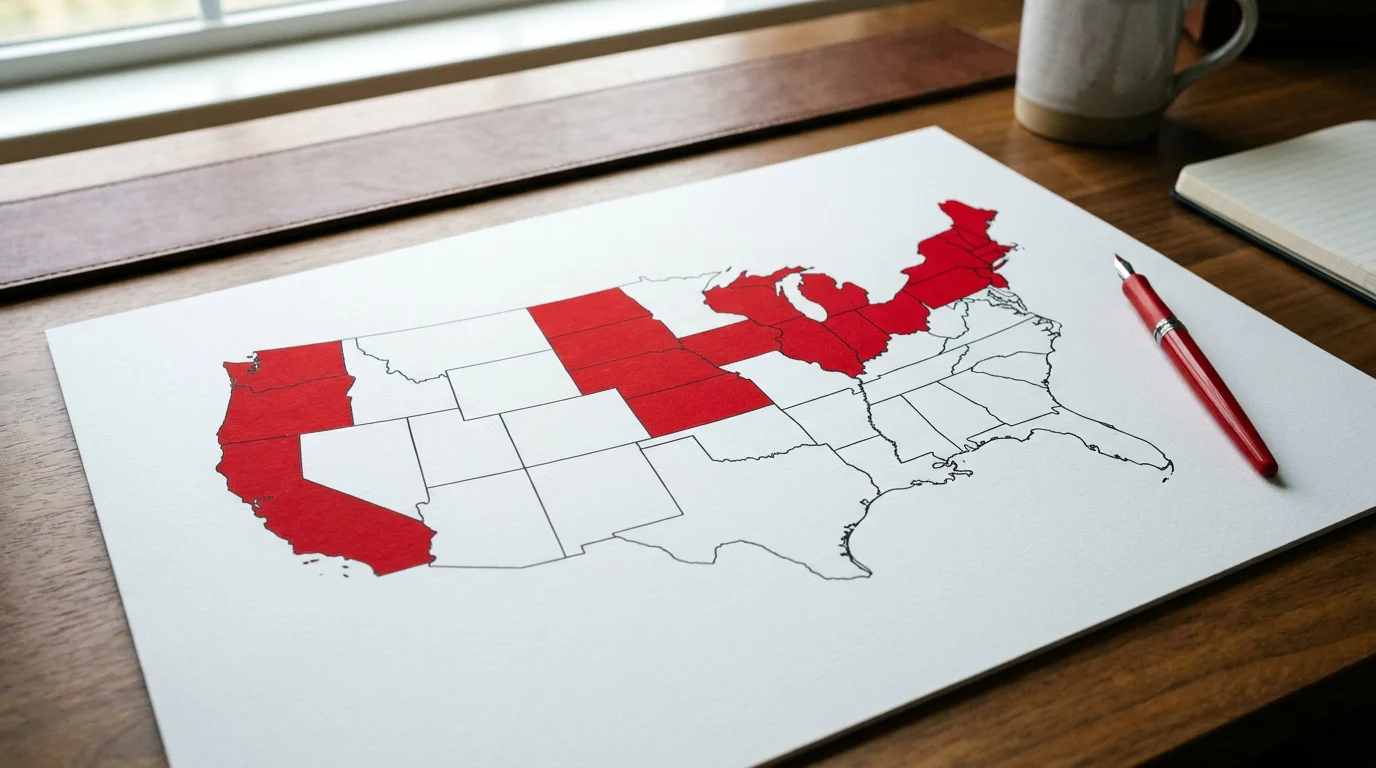
States with active restrictions or bans on sweepstakes casino operations as of 2026: California, New York, Montana, Connecticut, New Jersey, and Nevada. Players in these states cannot access AMOE programs from operators that have exited the market in compliance with these laws. Players in states where the operator has not formally withdrawn may face access blocks, account suspension, or inability to redeem Sweeps Coins — the operator’s specific response varies.
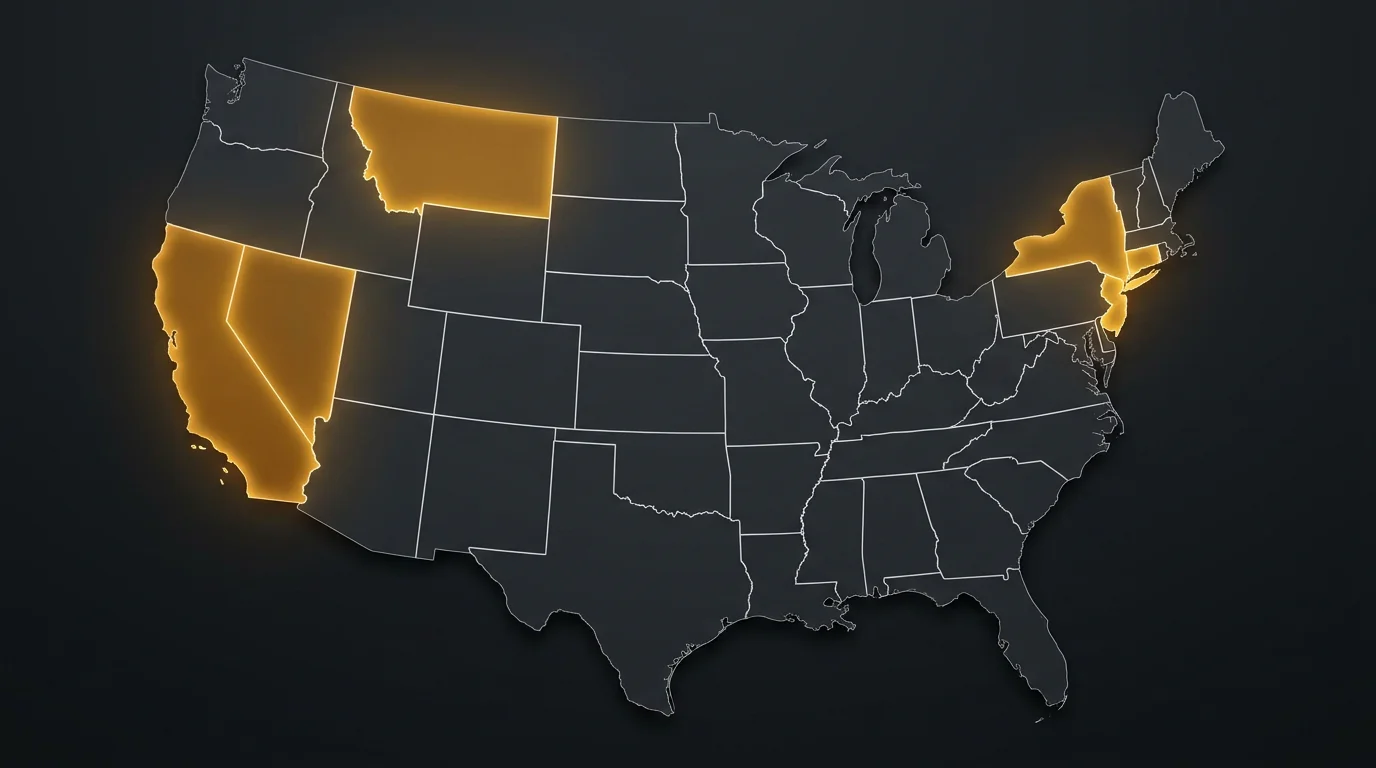
California accounted for approximately $2.42 billion in sweepstakes platform sales in 2025 — 17.3% of the entire U.S. market. New York generated $762 million in 2024 sales alone. These weren’t minor markets experiencing niche regulatory attention. They were the two largest revenue sources in the industry, and their closure forced significant operational restructuring for every major operator.
The enforcement approach varied by state. New York’s attorney general sent cease-and-desist letters to 26 sweepstakes operators in 2025. Tennessee’s attorney general issued similar letters to nearly 40 operators in December 2025. Maryland’s regulatory body pushed more than 20 operators out through direct enforcement. The pattern was consistent: state authorities moved from warning letters to market-exit demands on a compressed timeline, giving operators little runway to adapt.
100+
Class-action lawsuits filed against sweepstakes casino operators in 2025, according to data compiled by industry observers. The surge in civil litigation paralleled the state regulatory wave and involved claims ranging from deceptive advertising to unlicensed gambling operations.

Shawn Fluharty, president of the National Council of Legislators from Gaming States, captured the cross-partisan nature of the legislative push: “Rarely do we agree as legislators, but on this issue we agree — this represents illegal gambling operations.” That level of legislative consensus is significant in an era when almost nothing moves quickly at the state level.
What this means practically for AMOE: if you’re in a restricted state, AMOE doesn’t solve the access problem. The issue isn’t how you enter — it’s that the operator is not permitted to operate there. Sending a postcard to an operator that has exited your state won’t result in credited coins; it will result in nothing, because your account likely no longer has active status.
The states that haven’t moved — and the states whose legislation stalled or failed — represent the remaining operative AMOE landscape. But the trajectory is clear: more restrictions are coming, and the pace of change means that verifying your state’s current status before investing time in AMOE submissions is not optional housekeeping. It’s step zero. For a full breakdown of where each state stands and what players in restricted jurisdictions can do, the state-by-state AMOE restrictions guide is the right resource.
AMOE vs. Daily Logins, Social Bonuses, and Referral Rewards
AMOE is one of several mechanisms for accumulating Sweeps Coins without a purchase — but it’s not always the most efficient one, and it’s rarely the only one. I’ve spent enough time building free-play SC accumulation strategies to have a clear view of where mail-in fits relative to the alternatives.
| Method | Typical SC Yield | Time/Effort Required | Reliability | Daily Cap |
|---|---|---|---|---|
| Mail-In AMOE | 1–5 SC per request | 5–10 min + stamp + 2–4 week wait | High when done correctly | 1 per household |
| Daily Login Bonus | 0.1–1 SC per login | Under 1 minute | Very high — automated | 1 per account |
| Social Media Promotion | Variable — often 1–10 SC | Low — requires follow/share | Low — irregular schedule | Varies by promotion |
| Referral Reward | Often 5–50 SC per referral | High — requires recruiting active users | Low — depends on network | Varies by program |
Daily login bonuses are the low-friction baseline — you’re earning SC as a byproduct of logging in to play, and the amounts are typically consistent enough to budget around. Their ceiling is low per session, but the reliability makes them the foundation of any no-purchase accumulation strategy. AMOE sits above them on a per-request yield basis, but below them on immediacy — you’re trading the 2–4 week processing lag for a coin amount that’s often 2–5x what a daily login provides.
Social media promotions offer the occasional windfall — I’ve seen operators run one-time giveaways worth 10–20 SC for a single qualifying action. The problem is unpredictability. These promotions have no reliable cadence, they require active monitoring of the operator’s social channels, and they sometimes have eligibility conditions that make them effectively unavailable to most players. As a supplemental source of SC, they’re worth watching for. As a primary strategy, they’re not dependable enough to plan around.
Referral programs have the highest theoretical ceiling of any free-play SC source — but the practical yield depends entirely on your social network and their engagement with sweepstakes platforms. For most players, referrals are an occasional bonus rather than a consistent income stream. Operators also frequently cap total referral SC per account or require referred users to meet activity thresholds before the referrer receives credit.
The most effective approach is stacking: daily logins as the floor, mail-in AMOE as the weekly contribution, supplemented by social and referral bonuses when they appear. Done across two or three accessible operators, a player can accumulate meaningful SC over 30–60 days without spending anything. The full comparison of AMOE against all free entry methods works through the 12-month math in detail. What’s worth noting here: average revenue per user in the sweepstakes sector grew 17% annually since 2020, and part of that growth runs directly through the free-play funnel AMOE anchors. Operators know AMOE users are their best long-term acquisition channel — which is exactly why the program exists and exactly why its terms deserve close reading.
The Industry Behind the Envelope: Market Scale and Growth
To put AMOE in context, it helps to understand the scale of the industry it supports. The numbers here are genuinely remarkable — and they help explain why the regulatory pushback was as sharp as it was.
The sweepstakes casino market grew from $3.1 billion in gross purchases in 2022 to $10.6 billion in 2024 — a compound annual growth rate that KPMG’s Sweepstakes Gaming Primer placed at 60–70% over the 2020–2024 period. Industry analysts described sweepstakes casinos as America’s fastest-growing wagering vertical in 2024, surpassing regulated iGaming in both reach and revenue — a striking benchmark given that regulated online casino gaming generated $8.41 billion across seven states that same year.
186+
Verified sweepstakes platforms operating in 2024 — a 340% increase over three years. The proliferation of platforms created both a wider landscape of AMOE options for players and a significantly harder compliance monitoring challenge for state regulators.

Net gaming revenue — gross sales minus prizes paid out — reached $3.4 billion in 2024, according to Eilers and Krejcik Gaming and KPMG data. KPMG’s 2025 projection placed gross revenue on track to exceed $14.3 billion. Even the conservative scenario — $4.6 billion net — represents a market that has become impossible for state and federal regulators to ignore.
The growth trajectory also explains why the 2025 regulatory wave hit as hard as it did. When you have 186-plus platforms growing at 60–70% annually with no federal oversight, no tax contribution to state gaming revenue streams, and no standardized responsible gaming requirements, the political calculus for legislators changes. The sector’s Tres York, vice president of government relations at the American Gaming Association, stated it plainly: “The data is clear. Consumers see through the ‘sweepstakes’ casino facade and call it what it is: gambling.” That framing — repeated by regulators and legislators across multiple states — drove the 2025 bans.
Looking ahead, Eilers and Krejcik’s conservative forecast projects a 10% revenue decline in 2026, attributable to the market closures in California, New York, and the other four restricted states. Even in that scenario, the remaining market is substantial. But the era of unchecked growth is over, and AMOE — as the legal linchpin of the entire model — is under scrutiny it has never faced before.
Red Flags: When an Operator’s AMOE System Is Working Against You
In nine years of compliance analysis, I’ve developed a fairly reliable set of signals for distinguishing an AMOE program that’s genuinely accessible from one that’s been designed to technically exist while functionally failing players. The gap between those two categories is wider than most people expect.
The clearest warning sign is inaccessibility. A legitimate operator makes its AMOE instructions easy to find — on the promotional rules page, in the FAQ, sometimes directly in the onboarding flow. When I have to search through three layers of terms documents, submit a support ticket, and wait 48 hours to get a mailing address, that’s not a logistical coincidence. That’s a design choice. Any operator who hides, complicates, or penalizes AMOE use is — to quote directly from compliance guidance in this area — engaging in a direct violation of federal law and presenting a serious warning sign for users.
AMOE red flags to watch for:
- Mailing address not published on the operator’s official website or buried in obscure promotional rules
- Instructions that are vague, ambiguous, or missing key details about what to include
- No acknowledgment or processing confirmation of any kind (some operators at least confirm receipt via email)
- Multiple users reporting zero credited coins after valid submissions, with customer support offering no resolution
- Terms that state SC amounts “at operator’s discretion” without specifying a floor amount
- Processing windows stated as “up to 90 days” or similar — legitimate operators process within 7–14 business days under normal conditions
- Terms that limit AMOE availability by requiring a prior account verification step that itself requires identity documentation before any entry is permitted

The distinction between a genuine AMOE and a nominal one matters legally as well as practically. Courts and regulators evaluating whether a free-entry mechanism satisfies the NPN requirement have looked beyond whether AMOE technically exists — they’ve examined whether it functions, at what rate requests are credited versus rejected, and whether the process is accessible enough that an average person could reasonably use it. An AMOE program that rejects 40% of submitted requests on technicalities is qualitatively different from one that processes virtually all valid submissions correctly, and regulators are increasingly attuned to that distinction.
There’s also a risk specific to less-established operators: the AMOE address changes, and the platform doesn’t update its documentation promptly. I’ve seen cases where players sent dozens of postcards to an outdated address over multiple weeks before noticing nothing had been credited. Verifying the mailing address against the current official terms document — not a third-party list, not cached search results — before a new batch of submissions is basic operational hygiene.
The growth of class-action litigation in 2025 — over 100 suits filed according to industry tracking data — reflects in part the accumulation of these AMOE-related grievances at scale. When individual players can’t resolve processing failures through customer support, and when the pattern of failures is systematic rather than random, class litigation becomes the aggregation mechanism. The operators most exposed are those whose AMOE programs have the weakest documentation trails and the most inconsistent crediting histories.
The Compliance Test Every Player Can Run
Here’s the practical frame I use when evaluating any sweepstakes casino: can I find the AMOE instructions in under 60 seconds, from the platform’s own official website? If yes, that’s a baseline compliance signal. If no — if I have to dig, email support, or accept vague gestures toward “free entry” without a specific address and format requirement — that tells me something about every other aspect of how that platform is run.
AMOE is both a legal requirement and a compliance indicator. An operator who makes AMOE genuinely accessible is demonstrating that they take their legal obligations seriously. An operator who buries it is demonstrating the opposite — and that attitude tends to extend to processing times, redemption processing, and how disputes get handled. The quality of an AMOE program is one of the most honest signals available about an operator’s overall compliance posture.
The sweepstakes casino industry is at a genuine inflection point in 2026. The 60–70% annual growth of prior years has collided with regulatory frameworks that were not built to accommodate it. Six states moved in 2025. More will follow. In that environment, understanding the legal mechanics that make the model work — and specifically understanding AMOE as the foundational requirement that holds the entire structure together — is not just academic. It’s the difference between using the system correctly and getting burned by an operator who never intended to honor the obligations their business model formally requires.
Send the postcard. Know your state’s status. Track your submissions. And when an operator makes any of that harder than it should be, update your assessment of whether they’re worth your time.
Frequently Asked Questions About AMOE
What is an alternate method of entry at a sweepstakes casino and why does it exist?
An alternate method of entry (AMOE) is a no-cost pathway through which players can obtain Sweeps Coins — the redeemable currency at sweepstakes casinos — without making any purchase. It exists because U.S. sweepstakes law requires that any promotion offering prizes must provide a free entry option. Without AMOE, a sweepstakes casino would legally qualify as an unlicensed lottery under the “three-element test”: consideration (payment) plus chance plus prize equals illegal gambling. AMOE eliminates the consideration element, keeping the operation within legal parameters. Every legitimate sweepstakes casino must offer it.
How do I send a mail-in AMOE request — what exactly goes in the envelope?
A valid mail-in AMOE request typically includes your full legal name, your account username or registered email address (exactly as it appears on the platform), the name of the sweepstakes or promotional program, and a written request for Sweeps Coins. The content must be handwritten — printed or typed text is grounds for rejection at most operators. Mail it to the official address in the operator’s current promotional rules. A standard postcard (3.5″ x 5″ minimum) or a single sheet in a standard envelope both work. Keep a log of submission dates, since operators do not confirm receipt.
How many Sweeps Coins will I receive from one AMOE request?
The industry standard range is 1 to 5 Sweeps Coins per request. Most major operators credit 1 to 2 SC for a standard mail-in submission. The specific amount varies by operator, by promotion, and occasionally by timing — some platforms run limited-period AMOE promotions with elevated amounts. The daily limit is universally one request per household, and the per-request amount is deliberately modest. At daily engagement across one or more operators, monthly accumulation typically falls in the 30–60 SC range, meaning most players reach redemption thresholds over a 1–3 month window of consistent submissions.
How long does it take for AMOE Sweeps Coins to show up in my account?
The standard processing window after your request is received at the operator’s facility is 7 to 14 business days. Adding mail transit time (2–7 days depending on distance), a realistic total timeline from the day you mail is 2 to 4 weeks under normal conditions. Delay scenarios of 4 to 8 weeks occur during high-volume periods or when operators are processing a backlog. Operators do not typically send confirmation when a request is received or credited — the appearance of coins in your balance is the notification. If 8 weeks have passed with no credit and your request was valid, customer support contact is appropriate.
Which U.S. states restrict or ban sweepstakes casino AMOE access in 2025?
Six states enacted laws restricting or effectively banning dual-currency sweepstakes casino operations in 2025: California, New York, Montana, Connecticut, New Jersey, and Nevada. In these states, most compliant operators have withdrawn or suspended services — AMOE is not accessible regardless of format. Additional states have pending legislation or have taken enforcement actions short of a full ban. The situation continues to evolve rapidly. Verifying whether a specific operator currently accepts players from your state is an essential step before sending any AMOE submission.
Is the alternate method of entry truly free, or are there hidden costs?
The direct cost of a mail-in AMOE request is the postage stamp and the cost of the postcard or paper and envelope — typically $0.50 to $1.00 per submission. Courts have consistently held that postage does not constitute “consideration” under sweepstakes law, so the method remains legally “free” despite this nominal expense. There are no processing fees, no subscription requirements, and no other financial obligations attached to a valid AMOE submission at a compliant operator. Any operator who charges a fee, requires an active paid account, or conditions AMOE access on a prior purchase is violating the NPN requirement.
How does AMOE compare to daily login bonuses as a way to earn free Sweeps Coins?
Daily login bonuses and mail-in AMOE serve different roles in a no-purchase SC strategy. Daily logins offer lower per-session yields (typically 0.1 to 1 SC) but require almost no effort and credit immediately. AMOE offers higher per-request yields (1 to 5 SC) but involves a physical mailing process and a 2 to 4 week delay. Neither method is strictly superior — the most effective approach uses both simultaneously. Daily logins provide the consistent baseline; AMOE adds a higher-yield contribution that takes longer to materialize. For players engaging with multiple operators, combining both methods across platforms is the most practical no-purchase accumulation strategy.
Published by the Alternate Method of Entry Sweepstakes team.