Choose a Sweepstakes Casino US: Best AMOE Programs
 Available in US
After working through the compliance side of dozens of operator terms documents, I’ve developed a practical evaluation framework that I use when someone asks which platform is worth participating with through AMOE. It doesn’t produce a ranking — I don’t publish operator rankings for reasons that are worth explaining briefly — but it does produce a clear picture of whether a given platform’s AMOE program meets a meaningful quality threshold. Here’s the framework, and here’s how to apply it.
Key Criteria for Evaluating Sweepstakes Casino AMOE Returns
The first criterion is the most fundamental: is the AMOE program genuinely accessible without prerequisite action? The mailing address, the SC award amount, the required information, and the submission format should all be publicly available in the Sweepstakes Rules document without requiring account login, support contact, or navigation through promotional gates. If you can’t find a specific, current mailing address in the public terms document, that’s a disqualifying issue. Stop there.
Operators that treat their AMOE information as something players should have to “find” are signaling something about how they view the free entry obligation — and what they’re signaling is not reassuring. Accessible means available in the same click path as any other prominent site feature, not hidden three layers deep in a help center.

The second criterion is the SC award amount per request. The industry range is one to five SC per submission, and where a specific operator sits within that range is a direct measure of the per-request value proposition. For players building a multi-operator AMOE strategy, SC amount per request is one of the key variables in optimizing monthly SC accumulation. The standard processing window of seven to fourteen business days is real, so the SC amount per request — averaged over monthly volume — determines the actual throughput of each operator relationship.
Third: processing reliability. What’s the operator’s published processing window, and does actual experience track with it? This is harder to assess before you’ve participated, but community feedback and pattern-of-complaint data can give you directional information. An operator with a published seven-to-fourteen-business-day window who actually runs three to four weeks systematically is exhibiting a gap that tells you something about their operational investment in the AMOE program.
Fourth: terms transparency. Can you read the complete Sweepstakes Rules without creating an account? Are the AMOE-specific terms written clearly without excessive reservation-of-rights language that gives the operator unlimited discretion over whether entries are honored? Is the household limit defined precisely rather than left to interpretation? Transparency in terms correlates with operational seriousness — operators who’ve built real AMOE programs tend to document them clearly because they’re confident the program does what it says.

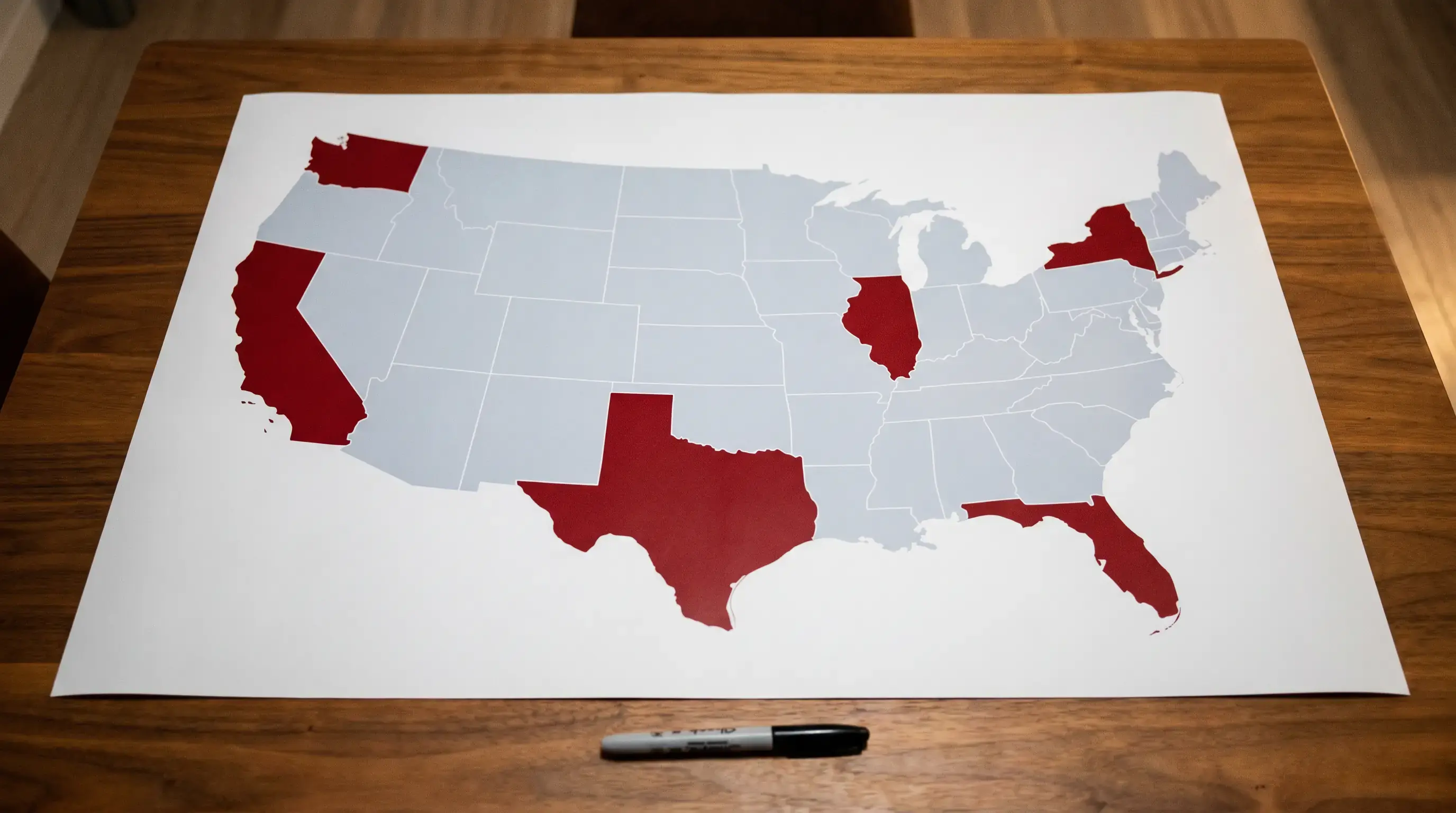
Fifth: the operator’s track record in the current regulatory environment. After the 2025 enforcement wave, operators who complied voluntarily — updating addresses proactively, communicating clearly about processing delays, maintaining genuine AMOE access in states where they continued to operate — demonstrated a commitment to the program’s integrity under pressure. Operators who disappeared from states without notice, who stopped crediting AMOE submissions during enforcement scrutiny, or who changed terms abruptly without communication demonstrated the opposite.
SC Amount per Request: The Most Direct Measure
The SC amount matters, but it needs to be evaluated in context. An operator offering five SC per request with a published processing window of four to six weeks effectively delivers less monthly SC throughput than an operator offering two SC per request with reliable seven-day processing. Monthly accumulation rate is a function of both amount per request and processing efficiency.
The math at the industry standard of one SC per request: at one submission per day, you’re looking at approximately 30 SC per month from a single operator. At two SC per request, that doubles to 60 SC per month. At five SC per request, you’d accumulate 150 SC per month if processing kept up with submission pace — which it typically doesn’t at daily volumes, given the standard processing lag.
Realistic monthly SC accumulation from AMOE at a single operator, factoring in processing delay, submission consistency, and the occasional rejected request, typically runs 15 to 50 SC per month depending on the operator’s program parameters. For the detailed comparison of how SC amounts and processing speeds compare across the major platforms, the operator comparison for SC per AMOE request breaks down the specifics.

Processing Speed and Crediting Consistency
In my experience, processing speed is a better quality signal than SC amount per request, because it reflects operational investment rather than a simple program parameter that anyone can set. Maintaining genuinely fast and consistent AMOE processing at scale requires real infrastructure: a reliable processing address, staffing for manual review, an efficient account matching system, and quality control for crediting accuracy.
Operators who have invested in that infrastructure tend to produce consistent results across weeks and months, including during high-volume periods. Operators who haven’t invested show their quality ceiling when submission volume increases — which happens regularly around promotional events, new player acquisition campaigns, and holiday periods. The processing window quoted in the terms is the ideal-case scenario; consistent delivery of that ideal case is what separates a reliable program from a nominal one.

Crediting consistency also means that rejected requests are the exception rather than the rule. An operator whose acceptance rate is high for properly formatted submissions from eligible accounts is operating with a matching system that works. An operator with elevated rejection rates for no apparent reason may have matching quality issues, processing capacity problems, or — more concerning — deliberate restriction practices designed to reduce SC liability.
Address Accessibility and Instruction Clarity
The final quality dimension — but not the least important — is whether the operator communicates everything you need to use AMOE successfully without any prior relationship with the platform. A first-time AMOE participant should be able to navigate from the operator’s site to a complete set of submission instructions, a specific mailing address, the required content, and the SC award amount in one session. If they can, the operator has built their AMOE program to be used. If they can’t, the program was built to exist on paper.
Address changes are a particular concern in the current environment. With multiple operators having exited states, closed operations, or restructured their processing infrastructure following the 2025 regulatory actions, addresses that were current a year ago may not be current today. Any quality evaluation should include a final verification step: check the operator’s current Sweepstakes Rules page for the address you’re about to use, regardless of what a previous submission used or what a third-party resource cites.
Choosing a Casino for AMOE: Common Questions
Is a higher SC-per-AMOE amount always better, or are there trade-offs to consider?
Higher SC per request is better in isolation, but not always better when you account for processing reliability and terms quality. An operator offering five SC per request with a 50% rejection rate produces the same expected monthly accumulation as an operator offering two SC per request with a 95% acceptance rate — and the latter is far less frustrating to work with. Evaluate SC amount, acceptance rate, and processing speed together rather than optimizing for any single variable. The operator with the best combination of reliable crediting and competitive SC amount is the right choice, not necessarily the one with the highest headline SC figure.
Do newer sweepstakes casinos tend to offer better AMOE terms than established ones?
Not systematically. Newer operators sometimes offer higher SC per request as an acquisition incentive during their launch period, which can make them appear more attractive on that one dimension. But new operators typically have less mature processing infrastructure, less established track records, and terms documents that haven’t been tested under high-volume conditions. Established operators have optimized their AMOE processing over years of operation and tend to be more reliable in terms of consistent crediting and predictable processing windows. For a long-term AMOE strategy, a proven track record generally outweighs a higher launch-period SC amount.

Written by the editors at Alternate Method of Entry Sweepstakes.