
AMOE Sweeps Coins Taxes US: IRS Reporting Rules
 Available in US
Tax compliance is the sweepstakes casino topic that players discover too late — typically when a 1099 form arrives in January and they realize they should have been tracking their redemptions as income. I’m not a tax attorney, and nothing here is legal or tax advice. But I’ve worked with enough compliance documentation in this space to give you the factual framework that determines when sweepstakes prize redemptions become a tax reporting matter. The short version: they can, and more players hit the threshold than they expect.
The industry generated approximately $3.4 billion in net revenue in 2024 after prize payouts — a figure that reflects real money flowing to real people. The commercial gaming industry posted $78.61 billion in gross revenue in 2025, with sweepstakes representing a meaningful portion of gaming activity broadly. The IRS treats sweepstakes prizes the same way it treats any other windfall income: if it’s over the reporting threshold, it’s taxable.
Table of Contents
- When Sweeps Coins Become Taxable Income Under IRS Code
- How and When to Report Sweepstakes Prize Winnings
- What Operators Must Report and When They Issue 1099s
- Operator Reporting: What They Issue and When They Issue 1099s
- State-Level Tax Considerations for Sweepstakes Prizes
- Sweepstakes Tax Questions Answered
When Sweeps Coins Become Taxable Income Under IRS Code
The IRS classifies sweepstakes prize winnings as ordinary income, not gambling income — a distinction that matters for how the income is reported but not for whether it’s taxable. All sweepstakes prizes are included in gross income for federal tax purposes. There is no minimum below which a sweepstakes prize is exempt from income tax, though there are reporting thresholds that determine when operators must issue official tax documentation.
The IRS requires operators to issue a Form 1099-MISC (or 1099-NEC depending on the nature of the prize) for prize winnings that meet or exceed $600 in a calendar year from a single operator. If your total Sweeps Coins redemptions from one platform equal or exceed $600 in a given year, you should expect a 1099 form from that operator by January 31 of the following year. The $600 threshold applies to the cash value of the redemption — meaning the dollar amount you received in your bank account, not the SC balance that was converted.

Below the $600 threshold, operators aren’t required to issue 1099s — but the IRS still expects you to report that income. The absence of a 1099 doesn’t change the taxability of the prize; it just means you’re responsible for tracking and reporting it yourself. Prizes of any amount that you don’t receive a 1099 for should still be included in your federal gross income on Schedule 1 as “Other Income.” This is a requirement that most low-volume sweepstakes participants ignore without consequence, but it’s technically the correct treatment under IRS rules.
How and When to Report Sweepstakes Prize Winnings
Federal tax reporting for sweepstakes prizes flows through Form 1040, typically via Schedule 1 (“Additional Income and Adjustments”). The relevant line is “Other Income,” where you report prize and award income that isn’t covered by a specific line item elsewhere on the return. If you received a 1099 from an operator, the income on that form gets reported here. If you didn’t receive a 1099 but had redemptions below $600, you should still report the aggregate amount — it just won’t be matched to a specific form that the IRS received from the operator.
The timing of reportability is the calendar year in which you received the cash or prize — not the year in which you submitted the AMOE requests that produced the SC, and not the year in which you accumulated the SC balance. Tax liability attaches to the redemption event, not the accumulation event. If you built up a large SC balance through daily AMOE submissions in 2025 but didn’t redeem until 2026, your tax obligation for those prizes falls in 2026.

One practical recordkeeping recommendation: maintain a log of each redemption event, including the date, the operator, and the cash amount received. This documentation supports your tax return and helps you verify that any 1099 forms you receive match your records. Operators occasionally make errors on tax documents — having your own records allows you to identify discrepancies and request corrections before filing.

What Operators Must Report and When They Issue 1099s
Operators have a federal reporting obligation for prizes above the $600 annual threshold. The 1099 requirement is a function of the prize payer’s legal obligation, not the recipient’s awareness — meaning operators are required to track redemptions per player per year and issue forms when the threshold is met, regardless of whether the player asks for documentation.
For AMOE participants specifically, reaching the $600 annual threshold requires substantial redemptions. At one SC per request and a $1 per SC redemption rate, you’d need 600 successful AMOE submissions credited and redeemed in a single calendar year to trigger the 1099 threshold — roughly two daily submissions per day to a single operator for the full year, at the conservative end of the SC award range. At five SC per request, you’d hit the threshold after only 120 credited and redeemed requests — about four months of consistent daily participation at one operator.
Players participating with multiple operators face a separate $600 threshold at each one. So a player who redeems $400 from Operator A and $400 from Operator B in the same year receives no 1099 from either (both below threshold) but has $800 in taxable sweepstakes income that they’re responsible for reporting on their own. This “below threshold, still taxable” scenario is the most common source of confusion I’ve encountered.
Operator Reporting: What They Issue and When They Issue 1099s
Operators who meet their 1099 obligations correctly send forms by January 31 following the calendar year in which the threshold was met. The form arrives by mail at the address you have on file, or in some cases through a digital delivery mechanism if you’ve opted into electronic documents. Verifying that your address and contact information is current with each operator you participate with is a basic step that prevents tax documents from going to an outdated address.
Some operators have been inconsistent in their 1099 compliance — either issuing forms incorrectly, missing the January 31 deadline, or failing to issue forms at all for reportable prizes. This doesn’t change your tax obligation, but it does create a documentation gap that can complicate your return if you’re audited. If you believe an operator should have issued a 1099 but didn’t, you can contact their support team to request the documentation, or request a substitute 1099-MISC from the IRS using Form 4852.
State-Level Tax Considerations for Sweepstakes Prizes
Federal income tax is the primary concern for most players, but state income taxes apply in most states that have a state income tax. The treatment of sweepstakes prizes at the state level generally mirrors the federal treatment — they’re ordinary income, taxable in the year received, subject to the state’s applicable income tax rate. Some states have specific rules about sweepstakes prize income, and a few states exempt small prize amounts from state income tax entirely. Checking the specific rules in your state of residence, ideally with a tax professional who knows state law, is the right approach for anyone with significant annual redemptions.
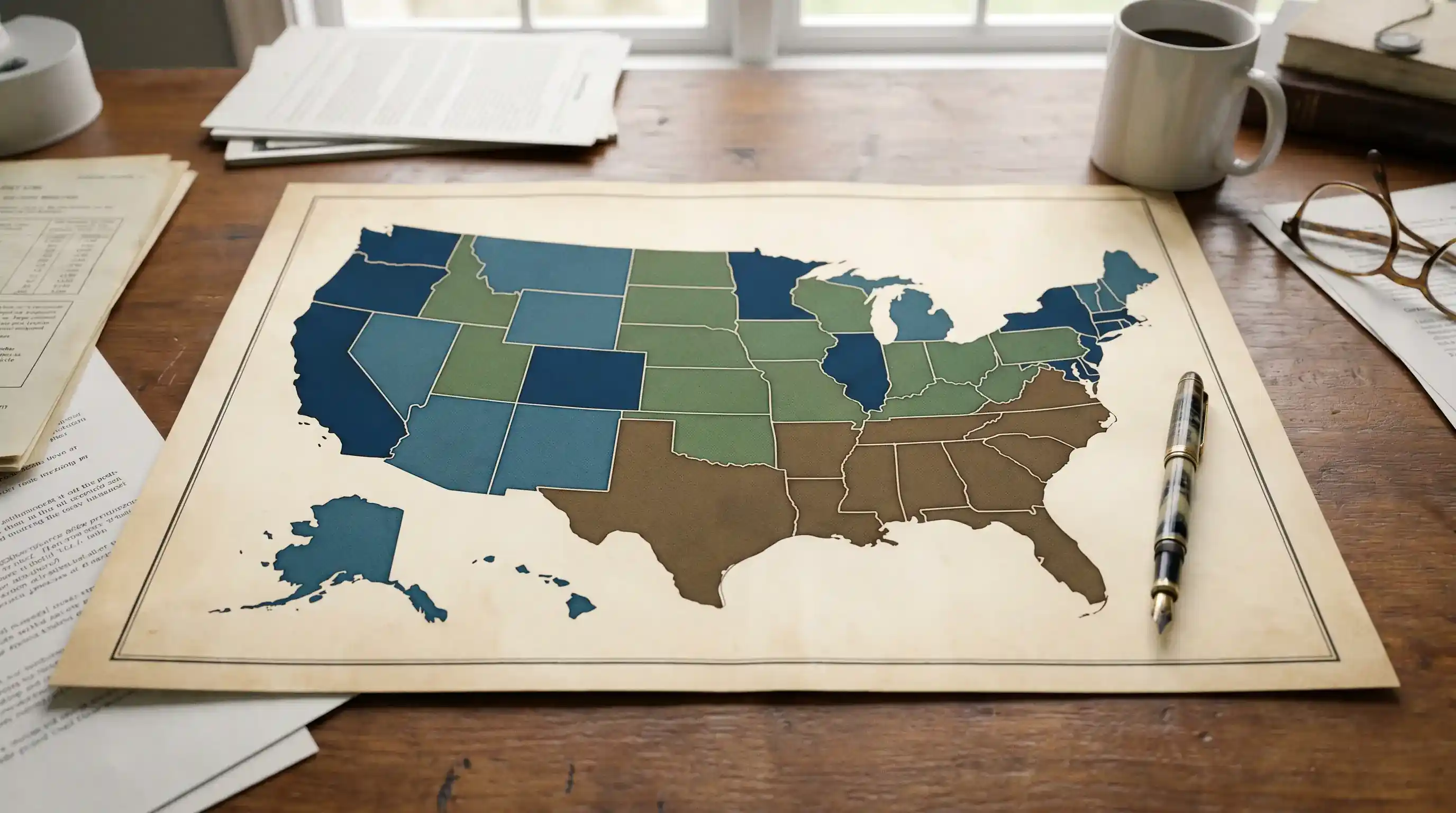
One state-level complication arises for players in states where sweepstakes casino operations were restricted during 2025. If a platform ceased operating in your state mid-year, you may have had outstanding SC balances that were forfeited or converted — the tax treatment of forfeited balances or forced conversions is not settled and may require specific guidance. The wagering requirements and redemption conditions that govern when SC are actually received as cash prizes are relevant here; for a deeper look at how those work, the guide to AMOE SC wagering and redemption conditions covers the mechanics that determine when your SC balance crosses into actual prize territory.

Sweepstakes Tax Questions Answered
Does it matter whether I received Sweeps Coins through AMOE or a purchase when calculating taxes on redemption?
No. The IRS cares about the prize received at redemption, not the method by which you earned the Sweeps Coins that produced the prize. Whether your SC balance came from AMOE requests, daily login bonuses, or was attached to a Gold Coin purchase, the tax treatment when you redeem those SC for cash is identical: ordinary income in the year received. The source of the SC is irrelevant to the tax calculation. What matters for tax purposes is the cash amount you received, the year in which you received it, and which operator paid it.
Are there any sweepstakes casino prize amounts below which no IRS reporting is required?
There is no amount below which sweepstakes prizes are exempt from federal income tax — technically, even a $5 redemption is taxable income. However, the operator’s 1099 reporting obligation doesn’t kick in until the annual total from that operator reaches $600. Below $600 from any single operator in a given year, you won’t receive a 1099, but you’re still technically required to report the income as Other Income on Schedule 1 of your Form 1040. As a practical matter, the IRS enforcement focus is on income reported on 1099s; sub-$600 sweepstakes prizes that aren’t reported are unlikely to trigger scrutiny, but the legal obligation to report them exists regardless.

Published by the Alternate Method of Entry Sweepstakes team.