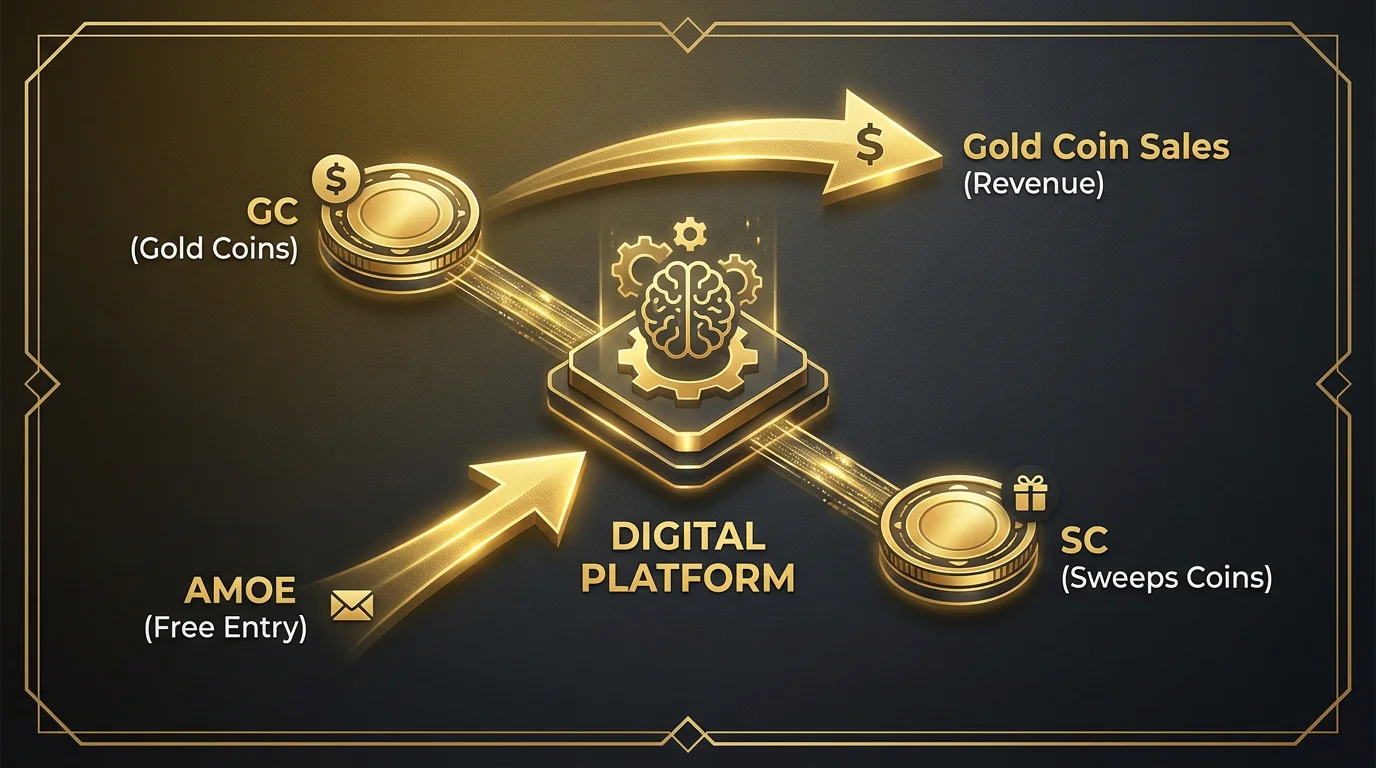
Start Playing AMOE Sweepstakes US: Free Casino Setup 2026
 Available in US
When someone new to sweepstakes casinos asks me the best way to get started without spending money, my answer is always the same: start with AMOE, understand the mechanics before you accumulate any significant SC balance, and build a routine before you think about scale. The 88% of sweepstakes casino users who never make a purchase are doing exactly this — participating through free channels and staying engaged with the games without ever getting to the Gold Coin purchase screen. The first steps matter, so let me give you the honest version of how to do them right.
The industry has expanded dramatically — over 186 verified platforms by 2024, and the age range of players is concentrated in the 25 to 44 cohort who are digital-native and financially aware. Most new players I’ve talked to are not confused about the mechanics once they’re explained clearly. The confusion comes from the terminology and the multi-step nature of the account setup. Let me simplify that.
Account Creation and Eligibility Verification Rules
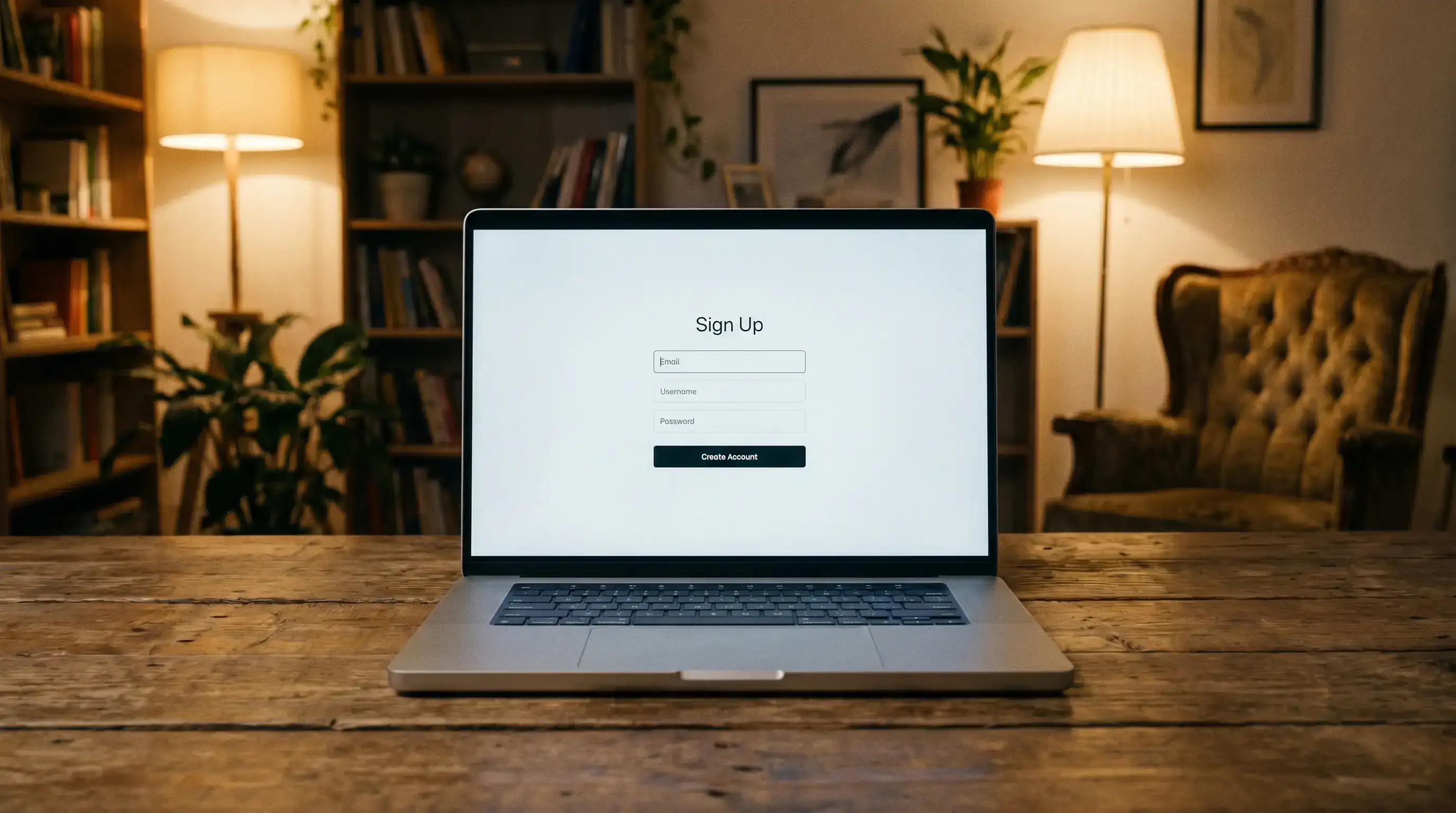
Before any AMOE submission, you need a verified account in good standing. AMOE requests that can’t be matched to a verified account don’t get processed — the operator has no one to credit the SC to. Account creation is step zero, and it matters to get it right the first time.
Start with a platform that clearly states its eligibility requirements on the sign-up page. The standard minimum age is 18, though some operators require 19 or 21 depending on their operational jurisdiction. You’ll need a valid email address and typically a physical U.S. mailing address. Some operators require age verification as part of registration; others defer that until your first redemption request. Either way, providing accurate information from the start protects you from account issues later.
Create your account using the email address you check regularly — this is the email that will receive any operator communications, including potential notifications about your AMOE submissions or SC crediting. Make a note of your exact username as it appears in your account settings. Not a variant, not an abbreviation — the exact character sequence. This username goes on every AMOE postcard you send to this operator, and a mismatch between what you write and what’s in the database is the most common cause of non-crediting.
Geographic eligibility varies by operator and has become more complex following the 2025 state restrictions. Before completing your account, verify that the operator serves your state. Most platforms display eligible states during registration, or list restricted states in the terms. Creating an account at a platform that doesn’t serve your state wastes your time and creates an account that can never successfully process AMOE submissions.

Your First AMOE Request: What to Do Before You Mail Anything
The most important AMOE preparation step is one that most beginners skip: reading the current Sweepstakes Rules document before you write a single word on a postcard. I know that’s not the exciting part, but the five minutes it takes saves you from mailing to the wrong address, including the wrong information, or using a format the operator doesn’t accept.
In the Sweepstakes Rules, you’re looking for: the current mailing address for AMOE submissions, the required information to include (most operators require name, username, email, and a request phrase), the format requirements (postcard only vs. envelope accepted, handwritten required vs. printed permitted), the SC award amount per submission, and the household limit (typically one per day). Write these down before you start writing your postcard.
For your physical materials: a standard 4 by 6 index card works fine as a postcard and meets USPS dimensional requirements. A ballpoint pen — blue or black ink — is the right writing instrument. Print your account information in clear block letters rather than cursive, especially for your username and email address. These are the fields where a single misread character creates a matching failure.
The daily limit of one submission per household means your first postcard establishes the pattern for every subsequent one. Get the format right on the first card so you’re not troubleshooting errors when you’ve built up a month of submissions. After your first submission, allow the full processing window — seven to fourteen business days — before expecting to see SC in your account. First-time submissions sometimes take longer because you’re a new account the system is encountering for the first time.

How to Track and Manage Your Sweeps Coins Balance
Sweeps Coins don’t have infinite shelf life. Most operators apply expiration policies to inactive SC balances — typically after 60 to 90 days of account inactivity. An account that sits dormant for three months can return to zero SC balance even if you’ve been diligently mailing postcards. Log in to each platform at least once per month to maintain active status on all accounts where you have a building SC balance.
Track your AMOE submissions with a simple log: date mailed, operator, SC balance before submission (noted at time of mailing), and SC balance after the expected processing window passes. This log serves two purposes: it helps you identify submission patterns that aren’t crediting correctly, and it gives you documentation if you ever need to contact support about a missing credit.
Redemption planning starts earlier than most beginners expect. If you’re aiming to reach the minimum redemption threshold — typically $25 to $100 in SC equivalent — at any given operator, calculate roughly how long consistent AMOE participation will take to get you there. At one SC per request per day for a single operator, reaching a $50 minimum takes roughly fifty days of successful daily submissions. Factoring in processing lag, this means your submission in week one arrives in your account in week three, and your week-three submissions arrive in week five. The SC accumulation curve is smoother than it feels when you’re watching it in real time.

Building a Routine: Free Play Across Multiple Operators
The most consistent free-play SC strategy I’ve seen from experienced participants is multi-operator participation at a manageable scale. Rather than submitting to twenty operators sporadically, they participate with five to eight operators consistently — one postcard each per day, addresses pre-verified quarterly, submission details memorized through repetition.
At five operators with an average of two SC per request each, consistent daily participation produces roughly 300 SC per month across the portfolio. At a $1 per SC redemption rate, that represents $300 in monthly prize-eligible currency — enough to reach minimum redemption thresholds at multiple operators within a few months and to maintain an ongoing stream of prize-eligible activity.
The multi-operator approach distributes your participation across platforms with different processing schedules, which smooths out the crediting lag. When one operator’s processing is running slow, others are continuing to credit normally. You’re not dependent on a single platform’s operational decisions for your entire free-play experience.
Keep your AMOE routine sustainable. The ideal cadence is one that requires ten to fifteen minutes per day total across all operators — writing, addressing, and dropping postcards in your mailbox. This is not a hobby that rewards heroic effort; it rewards consistent, correctly formatted submissions over months. For the complete mechanics of the mail-in submission process, the step-by-step mail-in AMOE guide covers everything you need to build that routine correctly from the start.

Beginner AMOE Questions
Do I need to verify my identity before I can receive Sweeps Coins through AMOE?
Most operators don’t require identity verification before crediting AMOE submissions — verification is typically triggered at the first redemption request rather than during account creation or SC accumulation. This means you can participate in AMOE and accumulate SC without completing a full identity verification process. However, when you do reach the minimum redemption threshold and request a cash prize payout, identity verification is standard and mandatory before the payment is processed. Starting the verification process proactively — submitting your ID and proof of address before you actually need to redeem — avoids delays when you’re ready to cash out.
Can I start playing games immediately with the Sweeps Coins I receive from my first AMOE request?
Yes, once the SC are credited to your account after the processing window, they’re immediately available for gameplay. The processing window is the only delay — typically seven to fourteen business days after the operator receives your postcard. Once credited, AMOE-earned SC have the same functionality as SC obtained through any other method. You can use them in any game that accepts SC at that operator, subject to any playthrough requirements the operator applies. One to five SC from a first AMOE request is a modest starting balance, but it’s enough to try the gameplay and understand how the platform works before deciding whether to continue.

Prepared by the Alternate Method of Entry Sweepstakes editorial staff.