
Sweepstakes Casino Business Model US: Gold Coin Revenue
 Available in US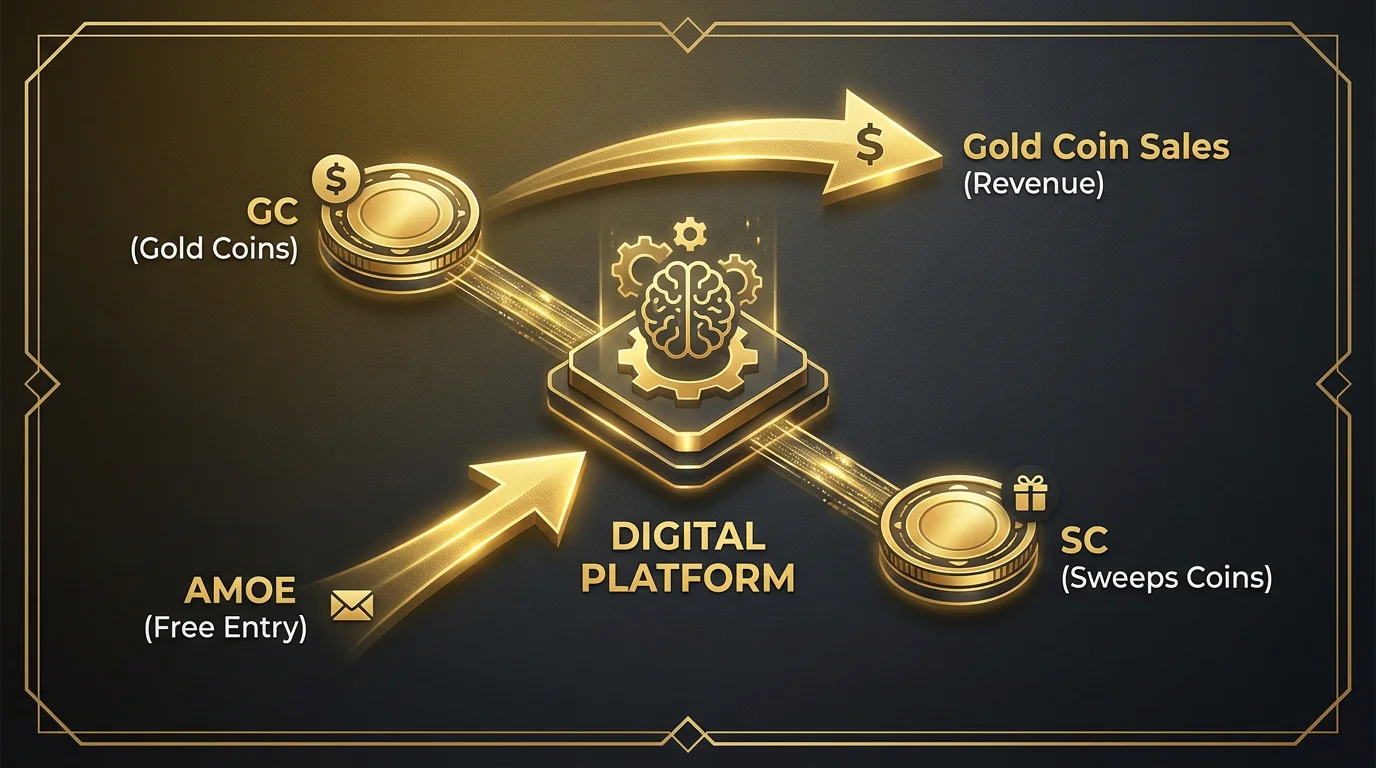
The sweepstakes casino business model is one of the more elegant commercial structures I’ve analyzed in the gaming space — and I mean “elegant” in the way an engineer might use the word, not as a compliment about ethics. The model solves a specific problem: how do you build a gambling-adjacent entertainment product that can operate nationally without state gaming licenses? The answer is the dual-currency architecture, with AMOE as the legal anchor. The financial mechanics are surprisingly straightforward once you understand the design.
Gold Coin Packages and Platform Monetization Strategies
The success of this unique approach is clearly reflected in the massive sweepstakes casino market size and revenue growth seen over the last few years.
Explore detailed industry analysis and player data on the leading sweepstakes casino research platform.
Sweepstakes casinos do not sell gambling. They sell entertainment credits. Specifically, they sell Gold Coin packages — bundles of the platform’s entertainment currency that have no cash value and can’t be redeemed for prizes. Gold Coins are the product; Sweeps Coins are the promotional bonus that accompanies purchase.
This structure is the commercial pivot point the entire model rests on. By framing the transaction as a purchase of entertainment credits rather than a purchase of gambling participation, operators stay outside the definition of gambling operators under most state laws. The SC bonus attached to each GC purchase — the coins that can eventually be redeemed for prizes — is legally a promotional sweepstakes award rather than a purchase consideration for gambling access.
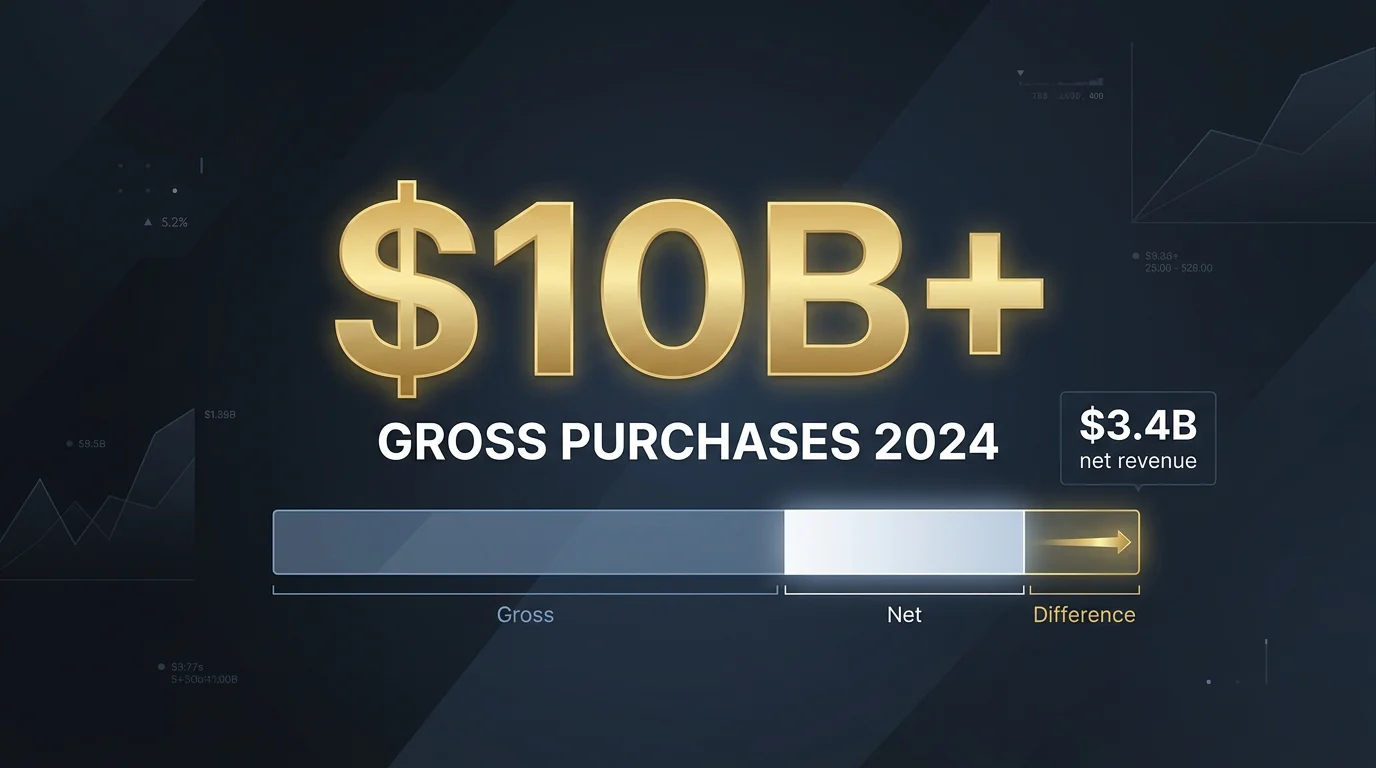
In 2024, Gold Coin package sales across the sweepstakes casino industry exceeded $10 billion in gross purchases. That figure represents the total value of entertainment credits sold, before prize payouts. Net revenue after prizes was approximately $3.4 billion — meaning operators returned roughly two-thirds of gross purchases as SC prize payouts. The margin structure looks thinner than traditional gaming businesses, but the scale compensates, and the per-user economics compound favorably with the player LTV dynamics we’ve covered elsewhere.
Converting AMOE Users to Paying Customers
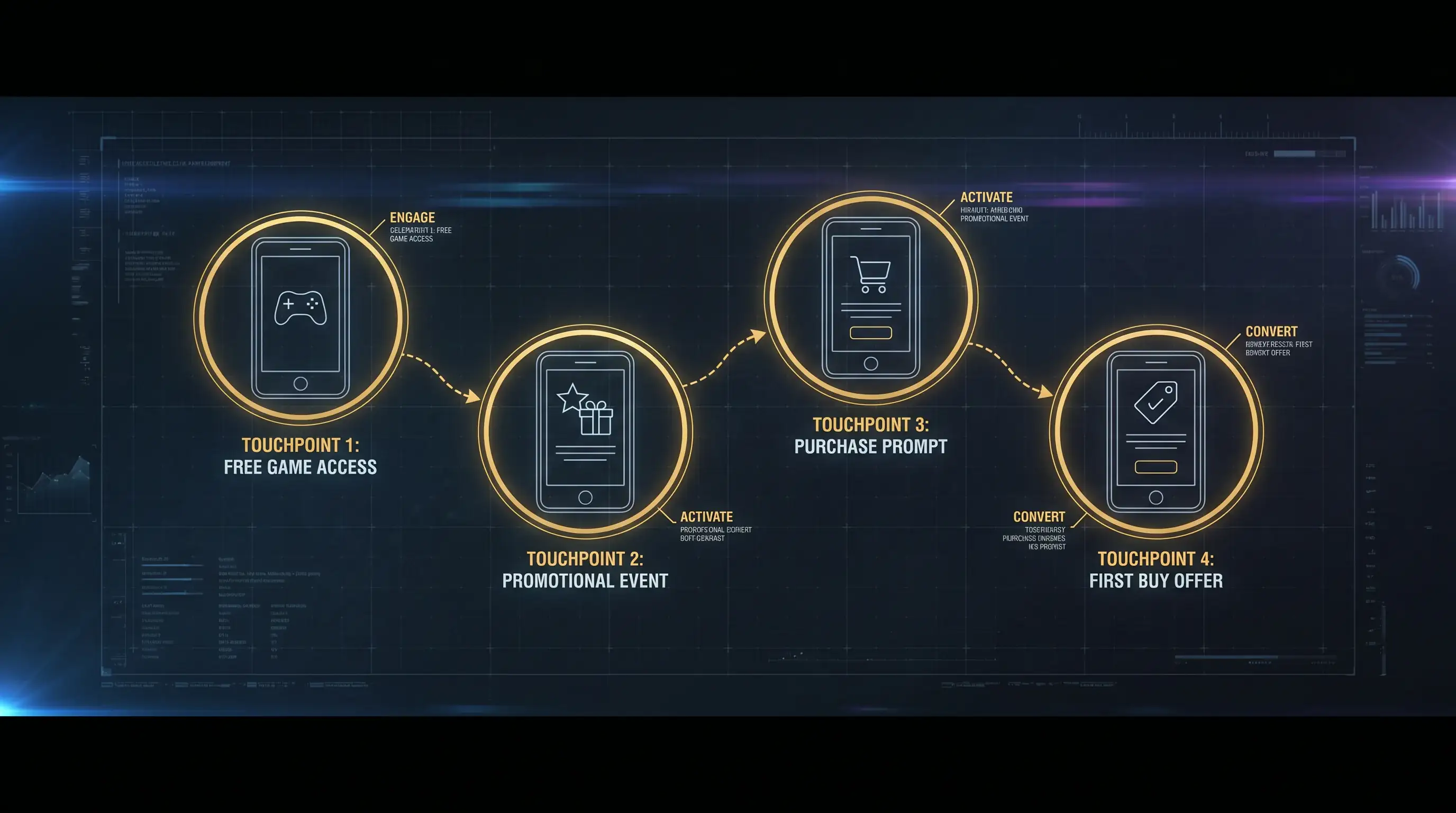
AMOE participants represent the top of the commercial funnel. They arrive through the free-entry pathway, receive a small SC award, engage with the platform’s games, and gradually become familiar with the product. That familiarity is the asset the platform is building during the free-play period — not SC expenditure on its own, but platform engagement that creates the conditions for the purchase decision.
The conversion rate from free-play to first purchase is deliberately not disclosed by operators, but the industry’s 12% overall purchasing rate gives some indication of the funnel dynamics. Of every 100 players who create accounts — many of whom arrived through AMOE or similar free-entry channels — roughly 12 eventually make a purchase. That’s not a high conversion rate by e-commerce standards, but the economics work because acquisition costs for free-entry participants are essentially zero beyond the processing cost of AMOE submissions.
The platform design elements that support conversion are consistent across operators: gamification features that create engagement loops, promotional events that deplete free SC at strategic moments, first-purchase offers calibrated to be unusually favorable, and persistent display of Gold Coin package options within the gameplay interface. None of this is hidden — it’s standard consumer platform design — but the cumulative effect on a player who started with AMOE participation is a gradual normalization of the purchase pathway.
Why the Model Scaled at 60-70% CAGR
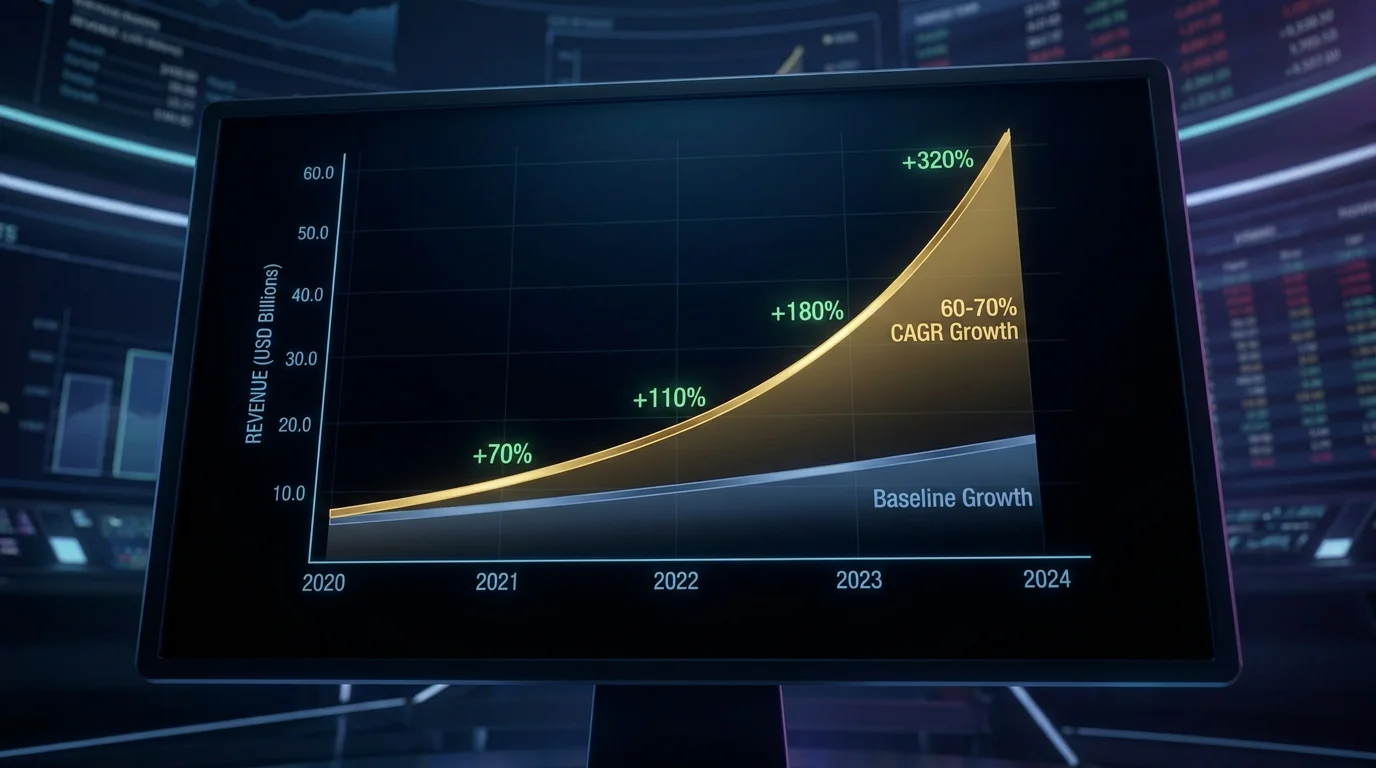
KPMG documented a 60 to 70% compound annual growth rate for the sweepstakes casino sector between 2020 and 2024. That’s extraordinary by any standard, and it happened for reasons that the business model explains directly.
The primary growth driver was the national addressable market. Licensed online gambling operated in seven states in 2024, serving a small fraction of the U.S. population. Sweepstakes casinos could serve players in most of the country from day one, with no state-by-state licensing requirement and no geographic barrier to customer acquisition. When you combine a national distribution capability with an industry growing at 60% annually, the absolute numbers become enormous quickly.
The free-entry acquisition model also scaled unusually well. Digital advertising costs per acquired user are substantial for most consumer products. The sweepstakes casino sector used AMOE and other free-entry messaging to create an additional acquisition channel that cost almost nothing per participant — just processing overhead. Marketing a “free” product is inherently more efficient than marketing a paid one, which is why the sector’s advertising footprint grew to represent half of all online casino advertising in the United States by early 2025.
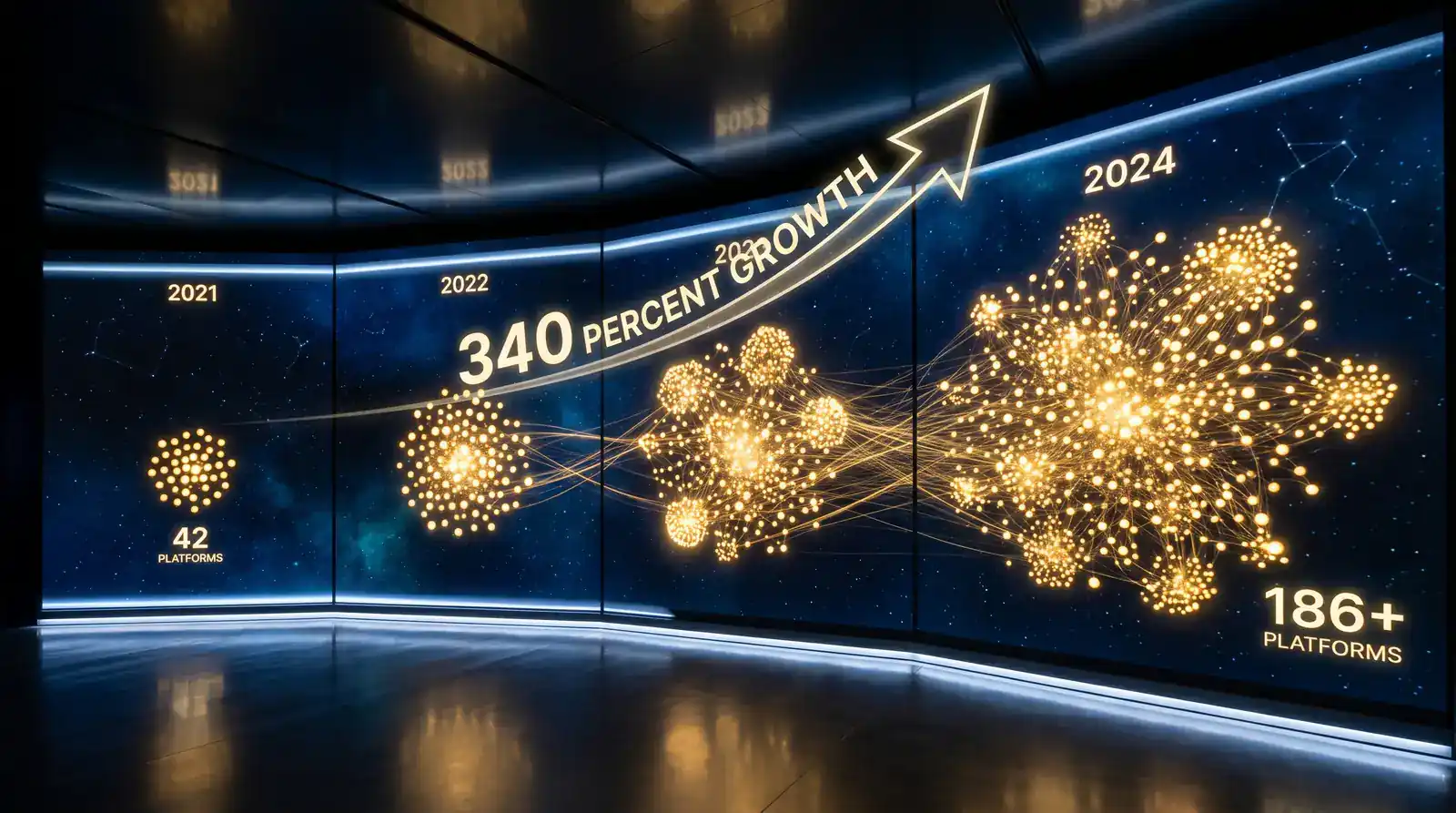
The network effects of rapid user growth also contributed. A larger player base means larger promotional events, bigger prize pools, and more social sharing — all of which attract additional users. The 340% growth in platform count (from a handful of operators in 2021 to over 186 by 2024) reflects how quickly new entrants entered the market once the model’s financial viability at scale became apparent.
How Bans Affect the Revenue Model
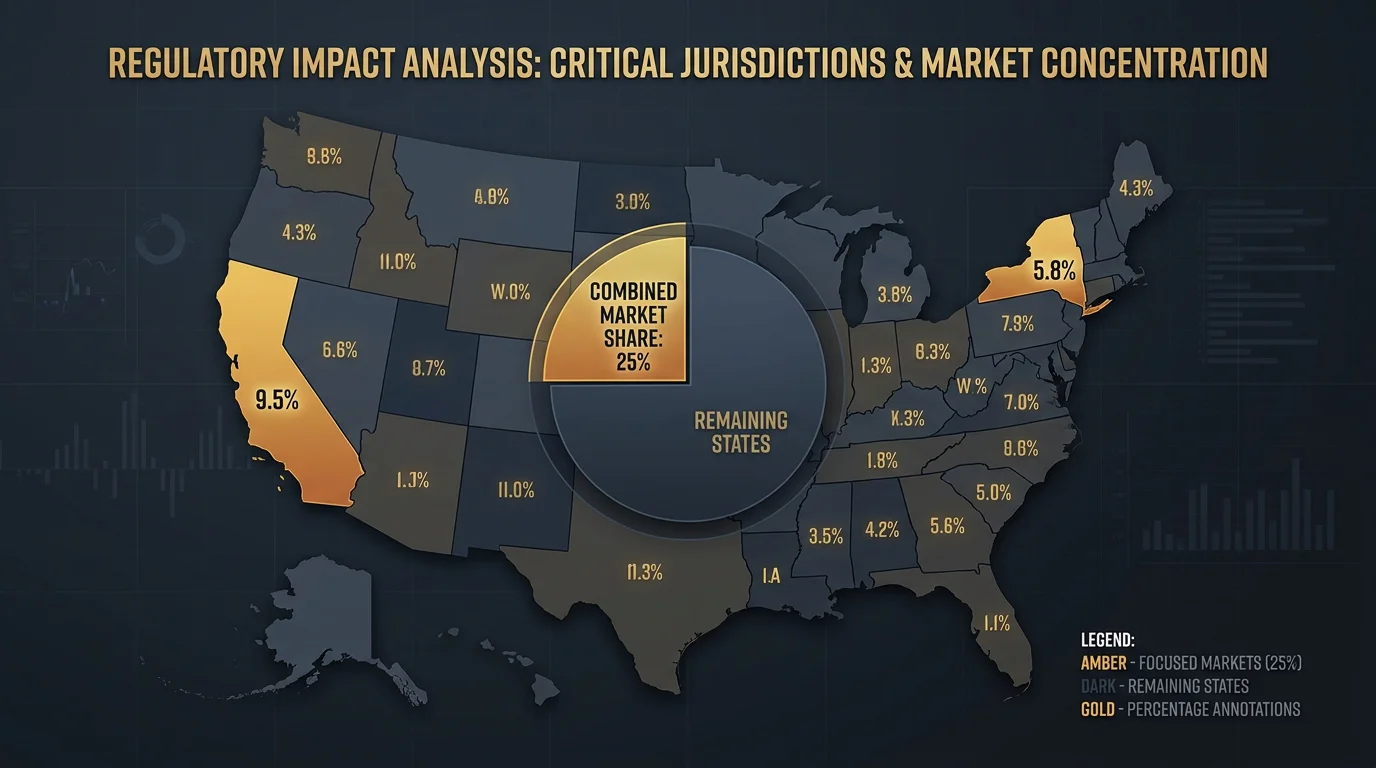
The 2025 legislative wave — six states restricting or banning sweepstakes casino operations — represents the first meaningful geographic constraint the model has faced. The revenue impact is quantifiable: California alone accounted for 17.3% of U.S. sweepstakes sales in 2025 ($2.42 billion), and New York contributed $762 million in 2024. Losing these two markets represents roughly a quarter of the industry’s national revenue base.
Eilers and Krejcik Gaming’s conservative forecast for 2026 projected a 10% decline in net revenue to approximately $3.6 billion, driven primarily by the geographic restrictions. The more aggressive scenario — if additional states move to restrict access and the federal legislative discussion produces action — could produce a more substantial contraction. KPMG’s upper-range projections for 2025 included scenarios where the market continued growing despite state restrictions; the actual outcome will depend on how many additional states act and whether a federal regulatory framework emerges that resolves the patchwork problem in either direction.
The business model has built-in resilience in the sense that the AMOE mechanism — the legal anchor — can operate in any jurisdiction where sweepstakes remain lawful. As long as there are states where the model is viable, operators can serve those markets nationally. The commercial risk is concentration: a model that grew by serving the full national market faces real revenue pressure when a quarter of that market closes. For the complete picture of how regulatory changes affected market access, the market size and growth analysis covers the revenue trajectory and state-level disruption in context.
Sweepstakes Casino Revenue Model: Questions
How do sweepstakes casinos pay out real cash prizes without being classified as gambling operators?
Prize payouts are structured as sweepstakes prize redemptions rather than gambling winnings. Because Sweeps Coins are legally defined as promotional credits awarded through a no-purchase-necessary sweepstakes rather than as gambling stakes, their redemption for cash is classified as claiming a sweepstakes prize. The same legal structure that governs promotional sweepstakes at consumer brands — the kind that appear in cereal box promotions or fast food contests — applies here at much larger scale. Operators are required to have available prize pools sufficient to cover all potential redemptions, but they operate those pools as promotional budgets rather than regulated gambling reserves.
Is the sweepstakes casino business model sustainable under increasing regulatory pressure?
The model faces genuine pressure, but ‘unsustainable’ depends heavily on the regulatory outcome. If a federal framework emerges that either legitimizes the sweepstakes structure with modest consumer protection requirements, or alternatively, requires state licensing for any gambling-adjacent digital product, both paths could produce a viable industry — just a smaller or differently structured one. The scenario most threatening to the current model is a state-by-state restriction wave that closes major markets without producing a federal resolution, leaving operators with a shrinking addressable market and no clear path to compliance. The 2025-2026 period is testing which outcome materializes.
Published by the Alternate Method of Entry Sweepstakes team.