Sweepstakes Casino Outlook US: 2026 Regulatory Changes
 Available in US
I’ve been watching this industry for long enough to know that the 2025 legislative wave wasn’t a peak — it was an inflection point. The question analysts and compliance practitioners are working through now isn’t whether more regulatory change is coming, but what form it takes and how quickly. The answer determines everything: whether AMOE programs survive in their current form, whether the platforms they anchor remain accessible to players in most of the country, and whether the industry consolidates into a smaller, more regulated version of itself or fragments under state-by-state prohibition.
Market Projections and Legislative Shifts for AMOE
The two most authoritative forecasts for the sweepstakes casino sector in 2025 and 2026 come from Eilers and Krejcik Gaming and KPMG. Their projections diverge in ways that reflect genuine uncertainty about the regulatory outcome rather than methodological disagreements.
KPMG’s upper-range projection for 2025 was gross industry revenue above $14.3 billion, with a conservative net scenario at $4.6 billion after prizes. These figures assumed continued market expansion in states without restrictions. On the EKG side, the conservative forecast for 2026 was a 10% decline in net revenue to approximately $3.6 billion, driven by the closure of California, New York, and other major markets following the 2025 enforcement actions. That 10% decline from a $10-billion-plus gross base represents billions in absolute revenue loss concentrated in geographic markets that represented roughly a quarter of the industry’s national presence.
The gap between KPMG’s growth scenario and EKG’s contraction scenario isn’t a data error — it reflects two different assumptions about regulatory velocity. If additional states move to restrict access in 2026, the contraction scenario becomes more likely. If the industry reaches a federal regulatory resolution or if the pace of state-level action slows, the growth scenario remains possible in the remaining accessible markets. As of mid-2026, the trajectory favors something between the two extremes: a smaller industry operating in a reduced but still substantial geographic footprint.

Bills, Votes, and Pending Decisions in 2026
The legislative calendar for 2026 includes active consideration of sweepstakes restrictions in states that watched the 2025 wave without acting. Several states that introduced bills in 2025 sessions without passing them carried those measures into 2026 — the legislative history is documented and the political dynamics that produced the original bills haven’t changed. States where regulated iGaming operators have significant lobbying presence and where there’s no competing sweepstakes industry advocacy tend to be higher-risk for restriction.
The federal dimension is moving more slowly. The Social Gaming Leadership Alliance’s explicit endorsement of federal regulation — Jeff Duncan’s “we want to be regulated and we want to pay taxes” position — has opened a policy conversation that didn’t exist in formal terms before 2025. Whether that conversation produces a bill, a hearing, or just more advocacy talking points in 2026 depends on federal legislative priorities that are difficult to predict. The iGaming expansion movement — licensed operators seeking to legalize real-money online gambling in new states — has complicated the federal picture, since some approaches to federal iGaming legislation would preempt sweepstakes models while others might coexist with them.
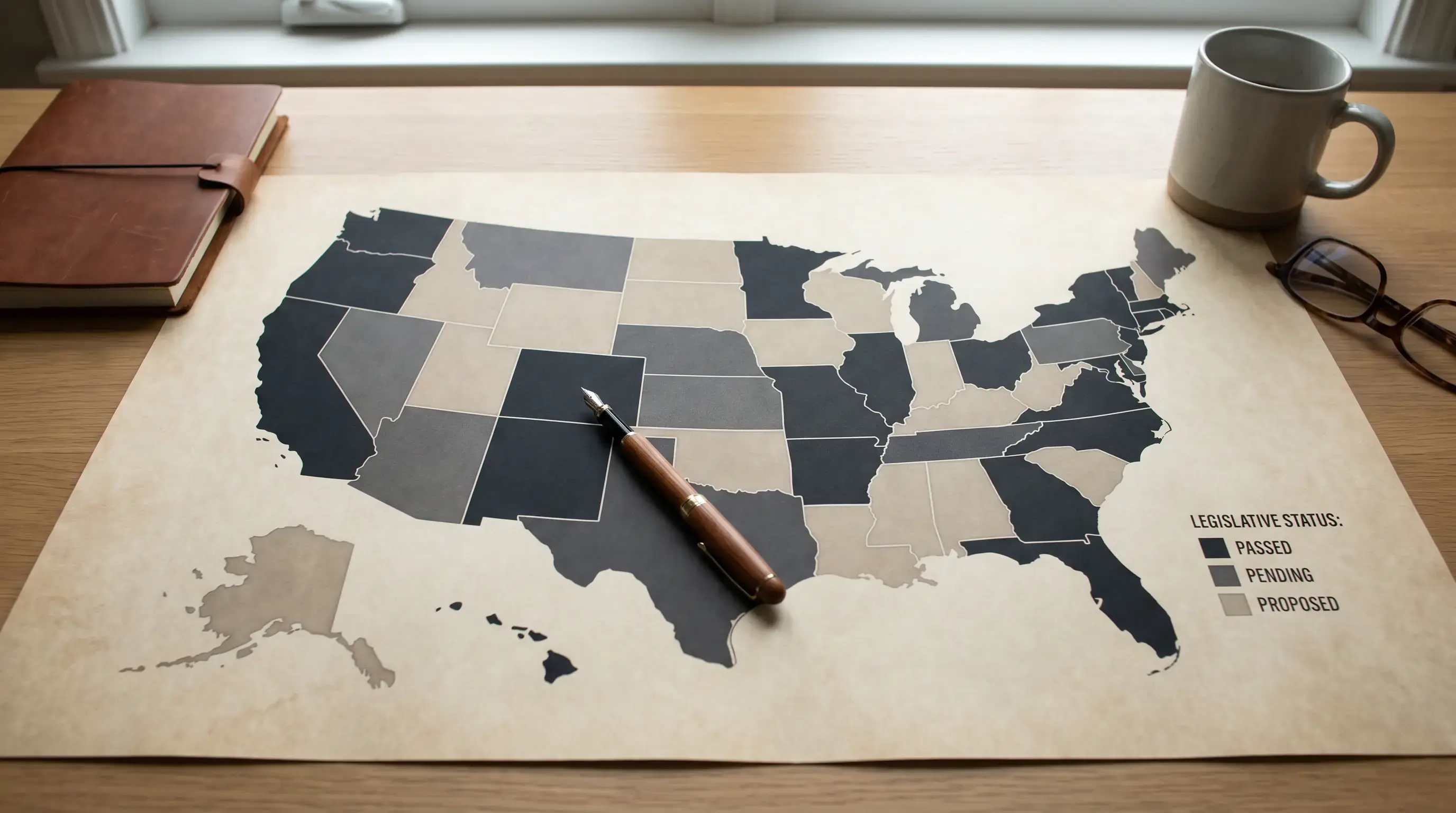
For AMOE specifically, the pending legislative landscape matters less than it might appear. AMOE is a feature of the sweepstakes model, not a separate policy target. Bills that restrict or ban sweepstakes casino operations affect AMOE access as a consequence of affecting platform operations overall. Bills that create licensing frameworks for sweepstakes gaming would likely require operators to maintain AMOE as a condition of license, potentially with stronger quality and accessibility standards than currently exist without regulation.

How AMOE Requirements May Change Under New Rules
If a formal regulatory framework emerges for sweepstakes casinos — whether federal or through state licensing structures — the AMOE requirement will almost certainly be codified rather than eliminated. The no-purchase-necessary principle is fundamental to the legal distinction between sweepstakes and gambling, and any regulatory framework that preserves the sweepstakes model would need to preserve and likely strengthen the AMOE requirement.
What might change is the quality standard. Current AMOE requirements derive from general sweepstakes law and FTC guidance rather than gaming-specific regulations. A formal gaming regulatory framework would likely impose more specific requirements: mandatory digital AMOE options alongside mail-in, minimum SC award amounts per request, maximum processing windows with enforcement teeth, clear disclosure requirements for AMOE instructions, and audit mechanisms for acceptance rates.
These kinds of quality standards would actually benefit players who use AMOE — they’d mean more reliable processing, clearer instructions, and operators who can’t maintain nominal AMOE programs as a compliance facade. The regulatory direction, if it arrives, is likely to make AMOE better rather than eliminating it.

What Regulatory Change Means for Free-Play Access
Stephen Piepgrass of Troutman Pepper Locke made the most concise long-term prediction I’ve encountered: it’s unlikely that sweepstakes casinos can continue in their current form without a clearer legal framework. What that means for free-play access depends heavily on which framework emerges.
Under a federal licensing model, free-play access through AMOE would likely continue — perhaps with improved standards. The acquisition value of AMOE participants to operators is well-established, and operators would have financial incentive to maintain quality AMOE programs even in a regulated environment. The difference would be formal accountability: an operator with a dysfunctional AMOE program would face regulatory consequences rather than just reputational risk.
Under continued state-by-state restriction without federal resolution, free-play access fragments geographically. Players in states that maintain a permissive regulatory environment continue to have access; players in restricted states lose it. The current trajectory produces this outcome in the near term — six states restricted in 2025, more potential restrictions in 2026, with no federal resolution in sight. The multi-operator AMOE strategy that works well today becomes progressively less viable as the universe of accessible operators shrinks for players in restricted states.
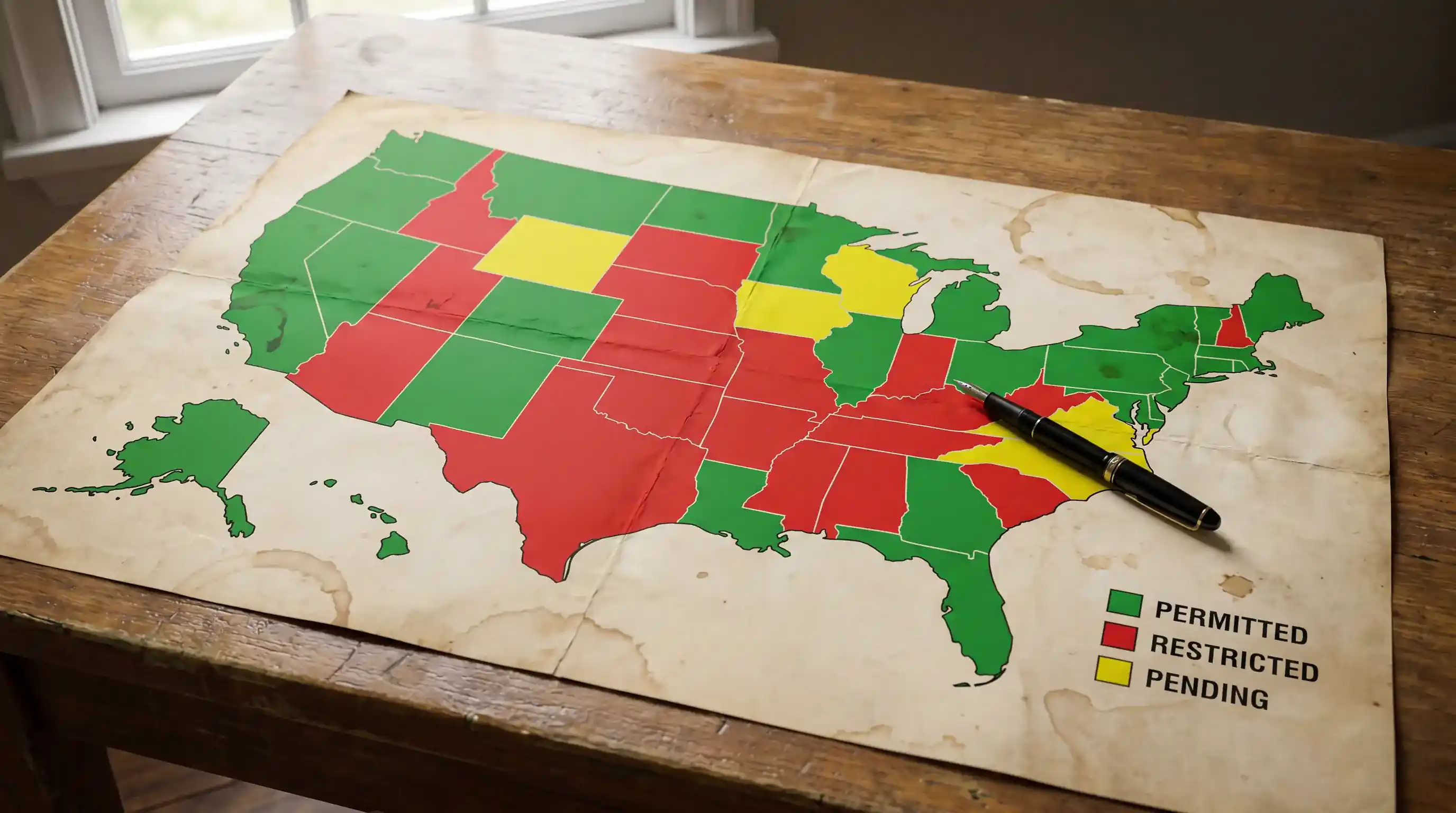
The scenario that would most disrupt free-play access entirely — a complete prohibition on the sweepstakes model nationally — is the least likely of the scenarios, but not zero probability. The 100+ class-action lawsuits from early 2026 and the sustained AG enforcement pressure are pushing in that direction, and the industry’s ability to mount a credible defense in every jurisdiction simultaneously is finite. Players with significant SC balances at any single operator should keep the redemption timeline in mind given the operating environment. For a comprehensive look at the state-level restrictions already in effect and their specific impact on AMOE access, the state ban tracker and AG action summary provides the current-state picture.

Sweepstakes Casino Future: Forward-Looking Questions
If sweepstakes casinos are federally regulated, will AMOE still be legally required?
Almost certainly yes. The NPN principle — which AMOE fulfills — is foundational to the distinction between a sweepstakes and a lottery. Any federal regulatory framework that preserves the sweepstakes model would need to preserve the NPN requirement, which means AMOE stays. What’s more likely to change is the quality standard: federal regulation would probably impose minimum SC award amounts, maximum processing windows, mandatory digital AMOE options, and audit requirements for acceptance rates. The result would be more rigorous AMOE standards rather than the elimination of AMOE.
Which sweepstakes casino operators are best positioned to survive a major regulatory shift?
The operators best positioned for a regulatory transition are those that have invested in genuine compliance infrastructure: real AMOE programs with transparent instructions and reliable processing, responsible gaming tools, clean terms documents without excessive reservation-of-rights language, and documented track records of honoring redemptions consistently. These operators can adapt to a licensing framework more easily than operators who’ve relied on nominal compliance. Operators with established legal and compliance teams — particularly those whose principals have expressed openness to regulation — also have a structural advantage in navigating a transition period. I don’t maintain operator rankings, but these are the evaluation criteria that matter under a regulatory transition scenario.
Published by the Alternate Method of Entry Sweepstakes team.