AMOE Processing Times US: 2026 Sweeps Coins Delivery
 Available in US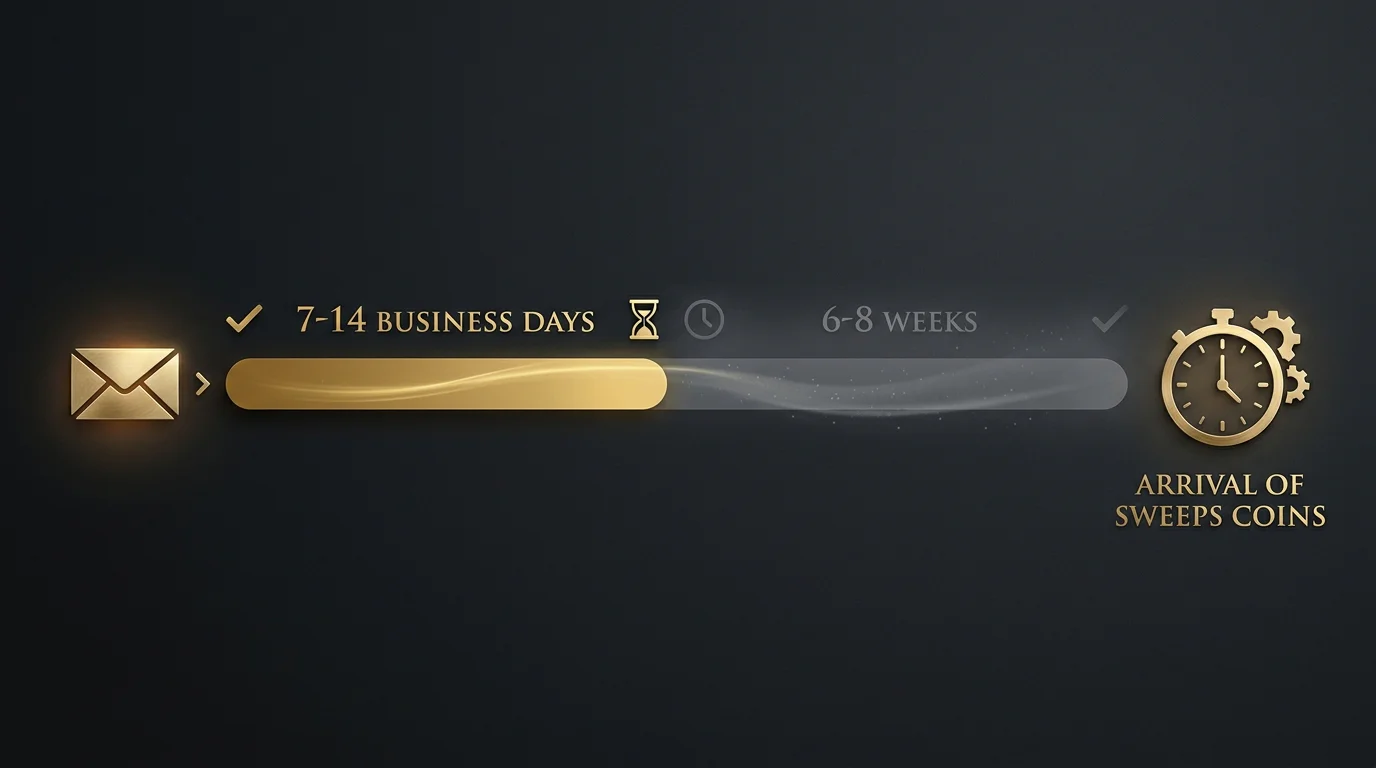
The expectation gap around AMOE processing time is one of the most consistent frustration sources I’ve seen in player feedback. Someone mails a postcard, waits a week, nothing shows up, assumes it was lost or rejected, and contacts support — only to be told processing is currently running three to four weeks. This gap isn’t malicious on the operator’s part; it’s a function of how manual mail processing scales at high volume. But it’s also a gap that better upfront communication could close. Let me give you the realistic numbers, because the “seven to fourteen business days” quoted in most terms documents tells only part of the story.
Standard Turnaround Times and Casino Processing Delays
Seven to fourteen business days is the baseline window that most sweepstakes operators publish for AMOE request processing. Business days means Monday through Friday, excluding federal holidays. At the low end — seven business days — you’re looking at roughly ten calendar days if there are no intervening weekends. At the high end — fourteen business days — you’re at three calendar weeks. That’s the standard range under normal operating conditions, which assumes reasonable submission volume and no logistical disruptions.
What does “processing” actually include in this window? The timeline starts when the operator receives your postcard, not when you mail it. For postal mail, transit time from most locations within the continental U.S. runs one to three business days for standard first-class postcard delivery. That transit time adds to the total clock without being part of the “processing” window the operator quotes. So if you’re in California mailing to a processing center in Florida, you’re potentially looking at two days of transit before the seven-to-fourteen-day processing window even begins.
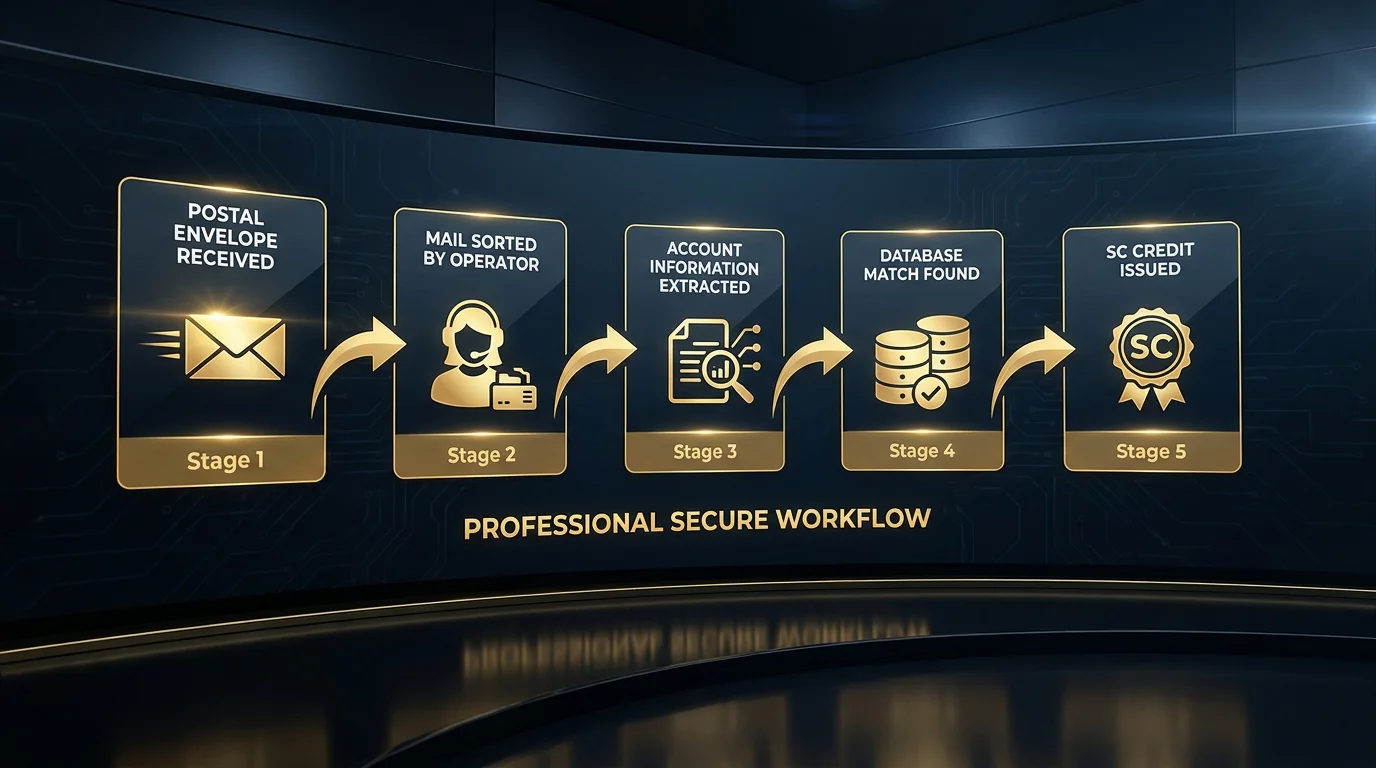
The processing steps themselves involve receiving the physical mail, sorting it by operator or campaign, extracting and recording the account information, matching it to a verified account in the operator’s database, and issuing the SC credit. At an operator processing hundreds of submissions daily, this is a labor-intensive workflow — particularly the manual reading and data entry phase. Automated systems help with volume but don’t eliminate human review entirely, especially for submissions with handwriting that requires interpretation.
Why Requests Get Delayed and What Causes 6-8 Week Waits
The six-to-eight-week scenario — documented by compliance researchers and referenced in platform terms at several operators — represents the tail of the processing distribution rather than the norm. But it happens often enough that players should understand why before writing off a submission as lost.
The most common driver of extended delays is volume spikes. When an operator runs a promotional event, increases its advertising spend, or experiences a surge in new player registrations, AMOE submission volume can temporarily exceed the processing team’s capacity. The backlog that results extends processing times for every submission in queue, including ones that were mailed before the surge. This is the AMOE equivalent of what happens to your online order delivery estimate when a retailer runs a major sale — the infrastructure handles the volume, but it takes longer than normal.
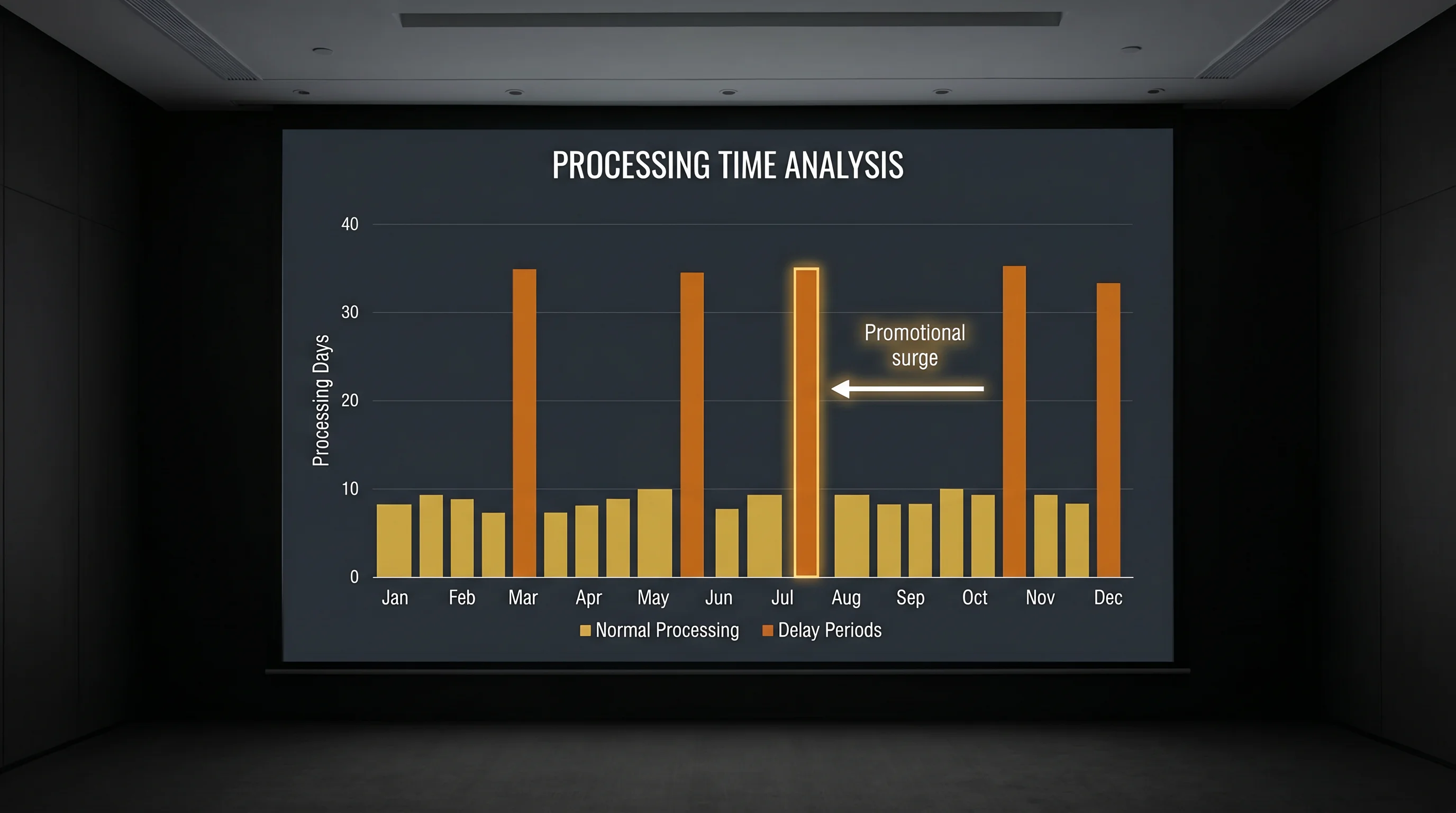
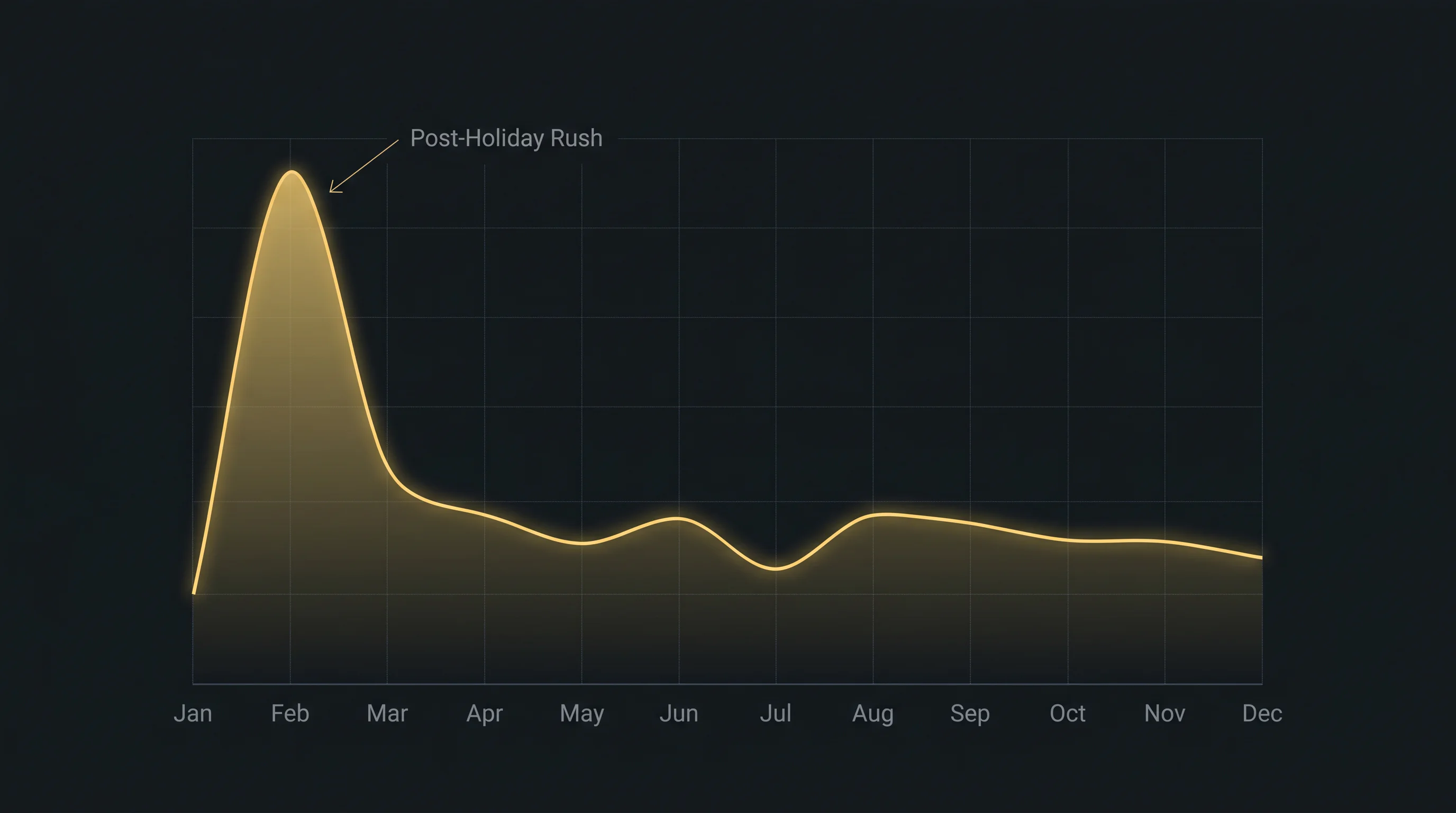
Seasonal patterns matter too. Post-holiday periods typically see elevated AMOE submission volumes as new users — who received gift cards to fund Gold Coin purchases or who were introduced to the platform over holiday social gatherings — begin participating. January and February are historically higher-volume months at many operators, which can extend processing times industry-wide.
A third delay category involves submissions that require manual review because of account matching issues — not outright rejections, but entries where the information provided doesn’t automatically match a unique account and a human needs to investigate. These sit in a separate queue that moves more slowly than clean automatic matches. If your handwriting is difficult to read, or if your account information changed recently (new email, different username variant), your submission is more likely to land in this slower queue.
Holiday periods affect postal transit as well as operator processing. Mailing an AMOE postcard the week before Thanksgiving adds uncertainty to both the transit stage and the processing stage. Players who maintain consistent monthly AMOE routines account for this by slightly increasing their submission frequency in October to create a buffer for the slower holiday period.
Processing Speed by Operator: Who Is Fastest?
Processing speed varies meaningfully across operators, and the variation correlates with how much operational investment they’ve made in their fulfillment infrastructure. Larger operators with dedicated AMOE processing teams — not outsourced to third-party administrators — tend to run faster than smaller operators handling AMOE as a side process. Operators who have implemented digital AMOE options alongside mail-in have typically built the backend systems to handle both formats efficiently, which often benefits their mail-in processing as well.
The one-per-day limit means the maximum rate of SC accumulation through AMOE is capped regardless of processing speed. At one SC per request and one request per day, the ceiling is roughly 30 SC per month from a single operator. Processing speed determines when those SC land in your account, not how many you ultimately receive. A faster processor means you can see the results of your submissions sooner; it doesn’t change the arithmetic of maximum monthly accumulation.
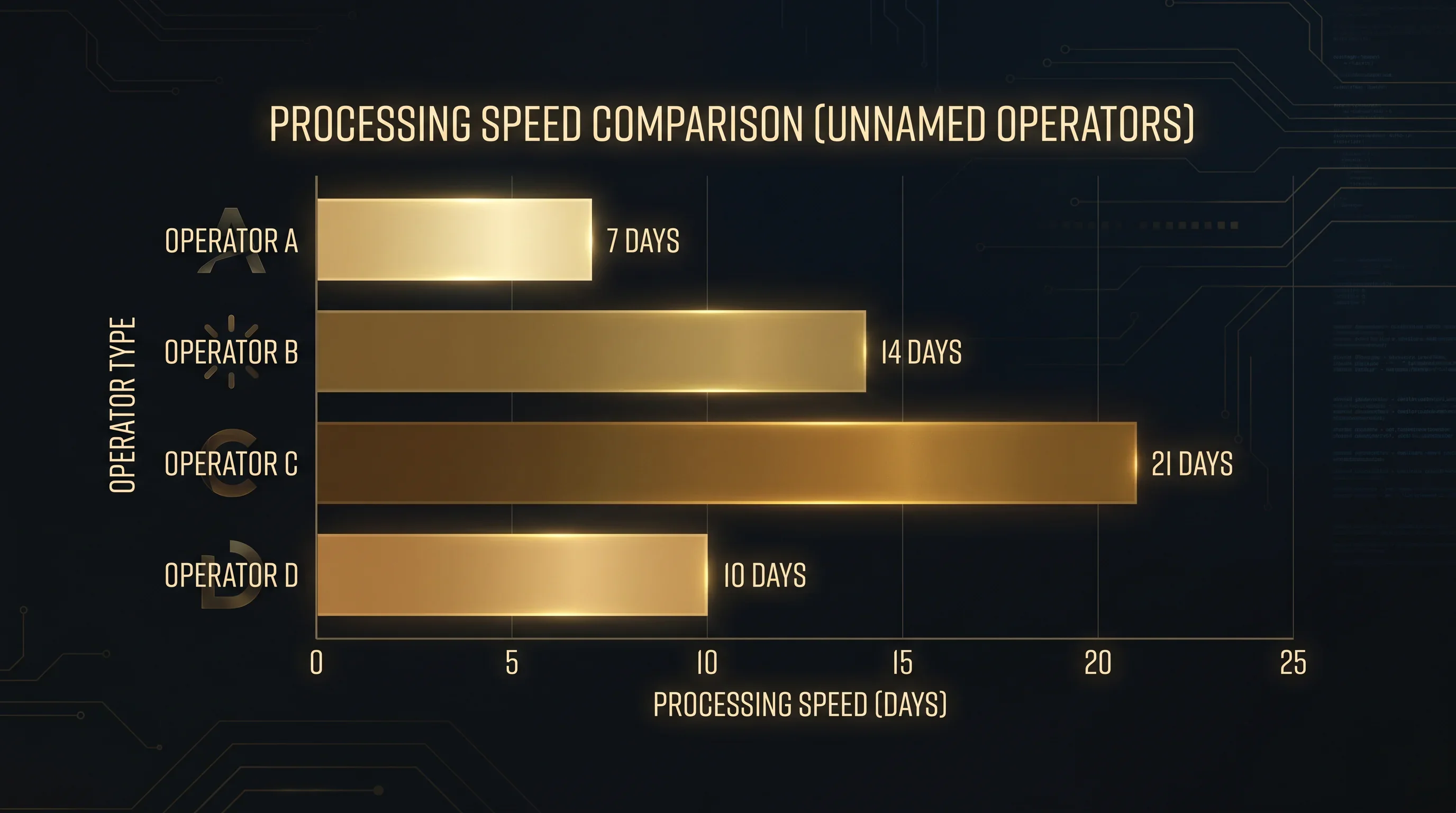
Operators that have publicly committed to specific processing windows in their terms — rather than hedging with vague language like “we aim to process within a reasonable time” — are generally the more reliable performers. A written commitment to seven-to-fourteen business days reflects both organizational confidence and at least some accountability mechanism. For a comparison of how SC amounts, processing speed, and other AMOE variables stack up across operators, the operator comparison for SC and processing details is the right reference point.
What to Do If Your Sweeps Coins Haven’t Arrived
The appropriate intervention point — when waiting crosses into action — is after the maximum quoted processing window plus a reasonable buffer for postal transit. If an operator quotes seven to fourteen business days and you’ve been waiting twenty calendar days from the date you mailed (not twenty business days), that’s a reasonable point to follow up. If they quote fourteen business days and it’s been thirty-five calendar days, following up is clearly appropriate.
When contacting support, provide the mailing date, the address you used, and the account information you included on the postcard. The more precise your inquiry, the more useful the response. If you have a tracking confirmation (available if you sent via USPS Certified Mail rather than standard postcard — an option some players use for their first submission to verify the address), include that too.

If support confirms that your request was not received, the most productive response is to verify the current mailing address and resubmit. Mailing addresses do change, and a submission sent to an outdated address simply won’t arrive. If support confirms the request was received but not yet processed, the only option is continued waiting. Escalating to repeated contacts while a request is in the normal processing queue rarely accelerates the timeline and sometimes creates additional friction in the support relationship.
AMOE Processing Time: Common Questions
Does the distance of my mailing address from the casino’s processing center affect how quickly I receive my SC?
Postal transit time does affect the total clock between when you mail and when your SC arrive, but it doesn’t affect the operator’s processing window. Postal transit for standard first-class postcards within the continental U.S. runs one to three business days regardless of distance — the postal network routes efficiently within those timeframes. The operator’s quoted processing window begins when they receive the mail, not when you send it. So total time is transit plus processing, and the transit component adds two to four calendar days at most.
Is there a way to track whether my AMOE request was received and is being processed?
Standard postcard mail has no built-in tracking. If you send via USPS Certified Mail, you’ll receive a tracking number that confirms delivery. This is more expensive than standard postcard postage and more cumbersome — it requires an envelope rather than a bare postcard. Most players don’t use it for routine submissions, but it can be worth the extra cost if you want confirmation when testing a new operator’s address for the first time or if you have reason to believe previous submissions haven’t been arriving.
Created by the ”Alternate Method of Entry Sweepstakes” editorial team.