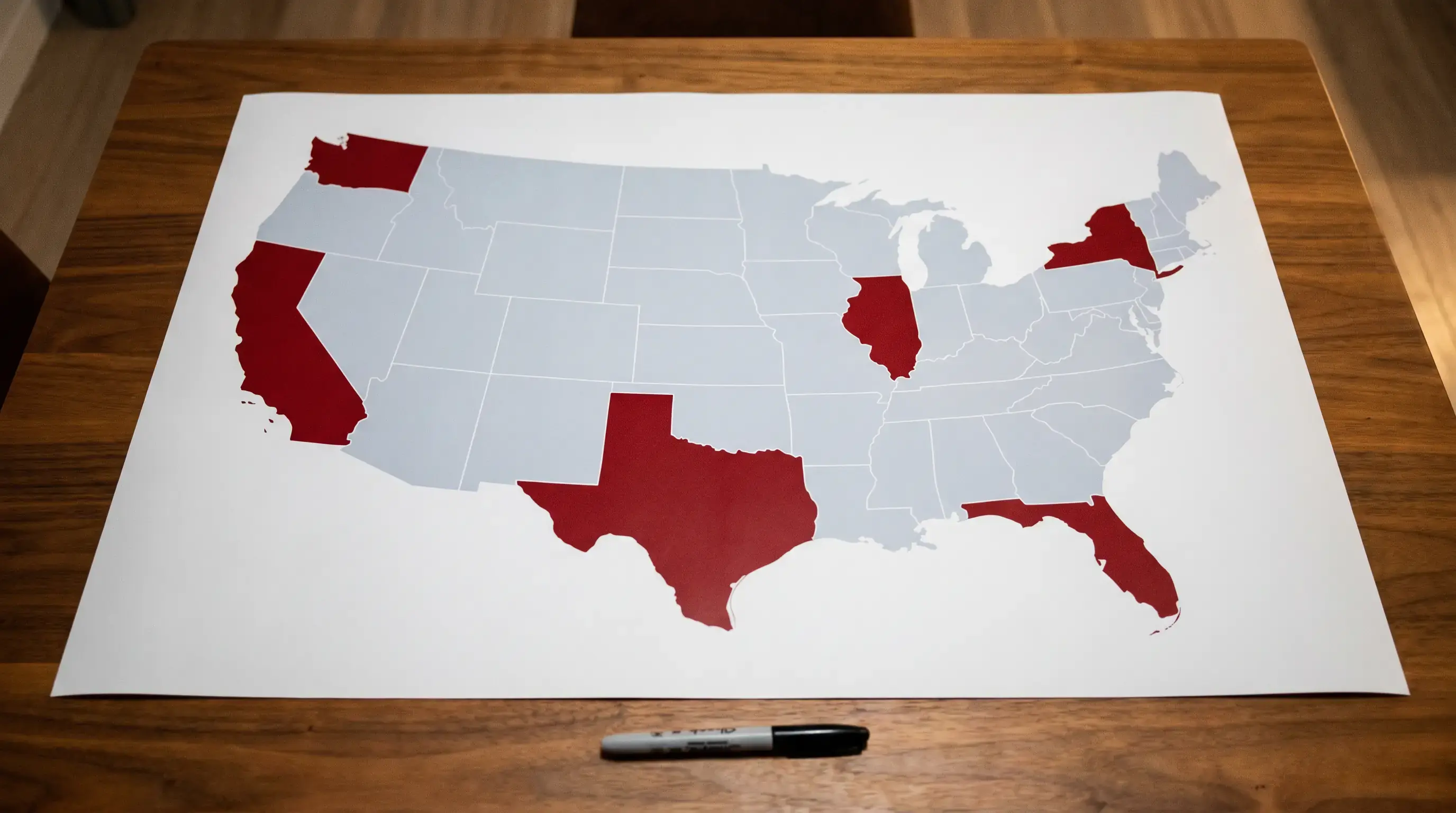
AMOE vs Paid Entry Odds US: Sweepstakes Win Rates 2026
 Available in US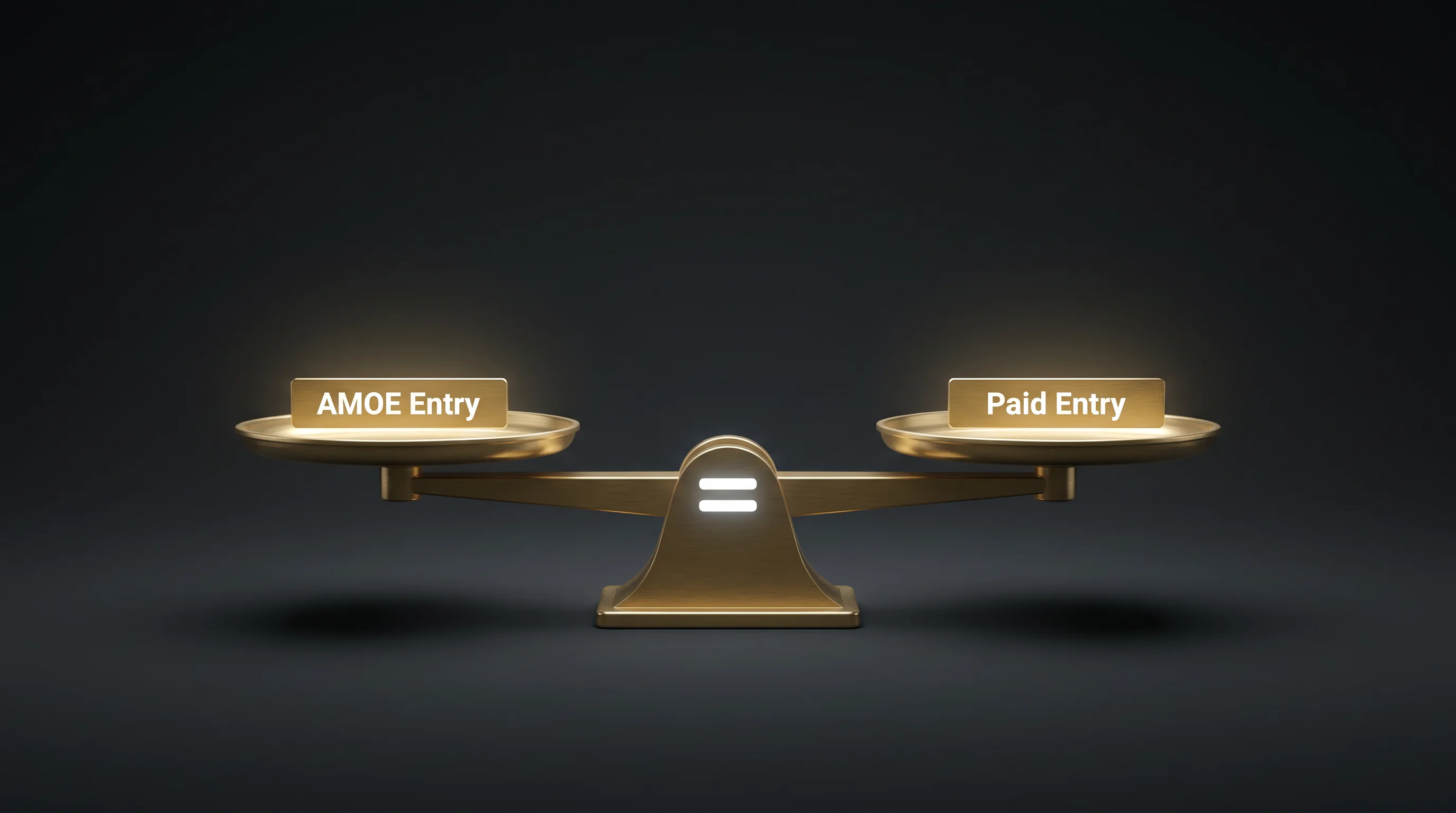
Players ask me this more than almost any other question: “Does buying Gold Coins give you better odds?” The answer has a legal dimension and a practical dimension, and they’re not quite the same answer. Understanding both is important if you’re deciding whether to ever spend money at a sweepstakes platform or whether the AMOE pathway is genuinely sufficient for the experience you’re looking for.
Equal Odds Requirements for Paid and Mail-In Entries
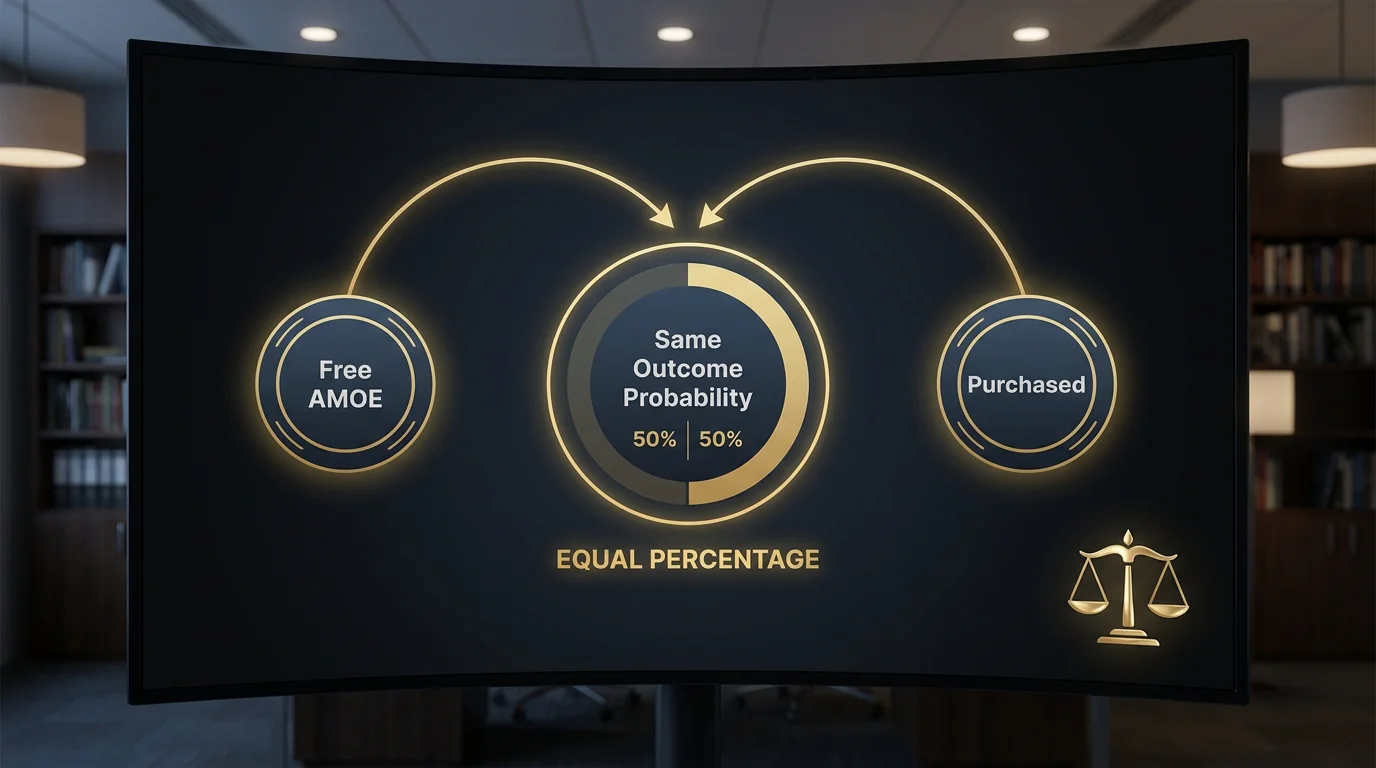
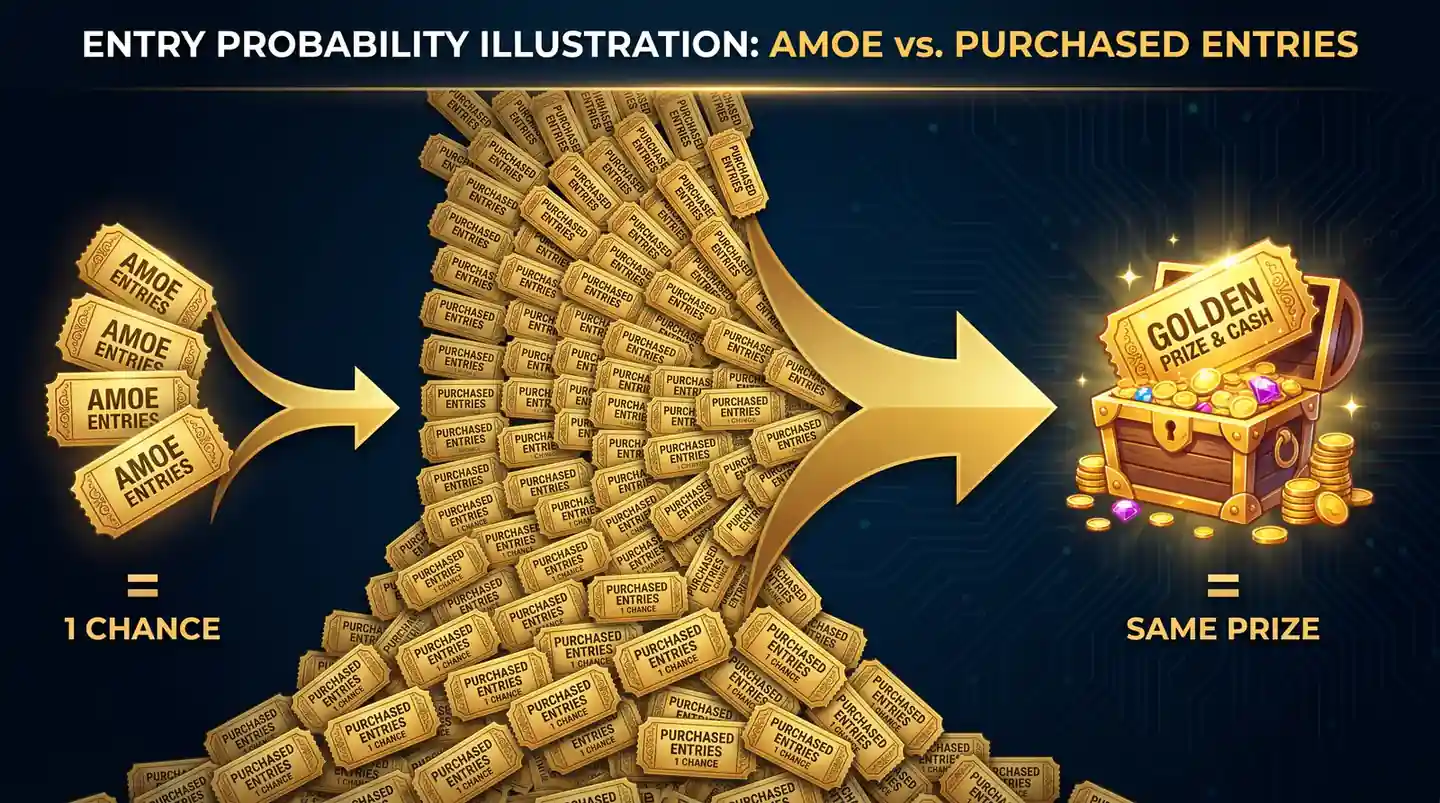
The equal odds requirement isn’t a nicety — it’s structural. The entire legal foundation of the sweepstakes casino model rests on the no-purchase-necessary principle: buying Gold Coins cannot be a requirement to participate, and cannot improve your probability of winning. If purchasing demonstrably improved odds, the purchase would reintroduce “consideration” into the three-element lottery test. Consideration-plus-chance-plus-prize equals illegal lottery. That’s exactly what sweepstakes law is designed to prevent, and it’s why the equal treatment of AMOE and paid entries is a legal requirement across all 50 states, reinforced by FTC guidelines.
In sweepstakes law terms, Sweeps Coins are Sweeps Coins regardless of how you obtained them. An SC earned through a mail-in AMOE request has the same legal status as an SC awarded as part of a Gold Coin purchase package. When you use either to play a game, the random number generator determines the outcome based on the game’s stated mechanics — not on the source of your SC balance. Operators who programmed differential odds for AMOE-sourced SC versus purchase-sourced SC would be both violating sweepstakes law and exposing themselves to the kind of fraud and deceptive practice claims that have fueled the wave of class-action litigation in 2025 and 2026.
Payout Rates at Sweepstakes Casinos: The 68-72% Range
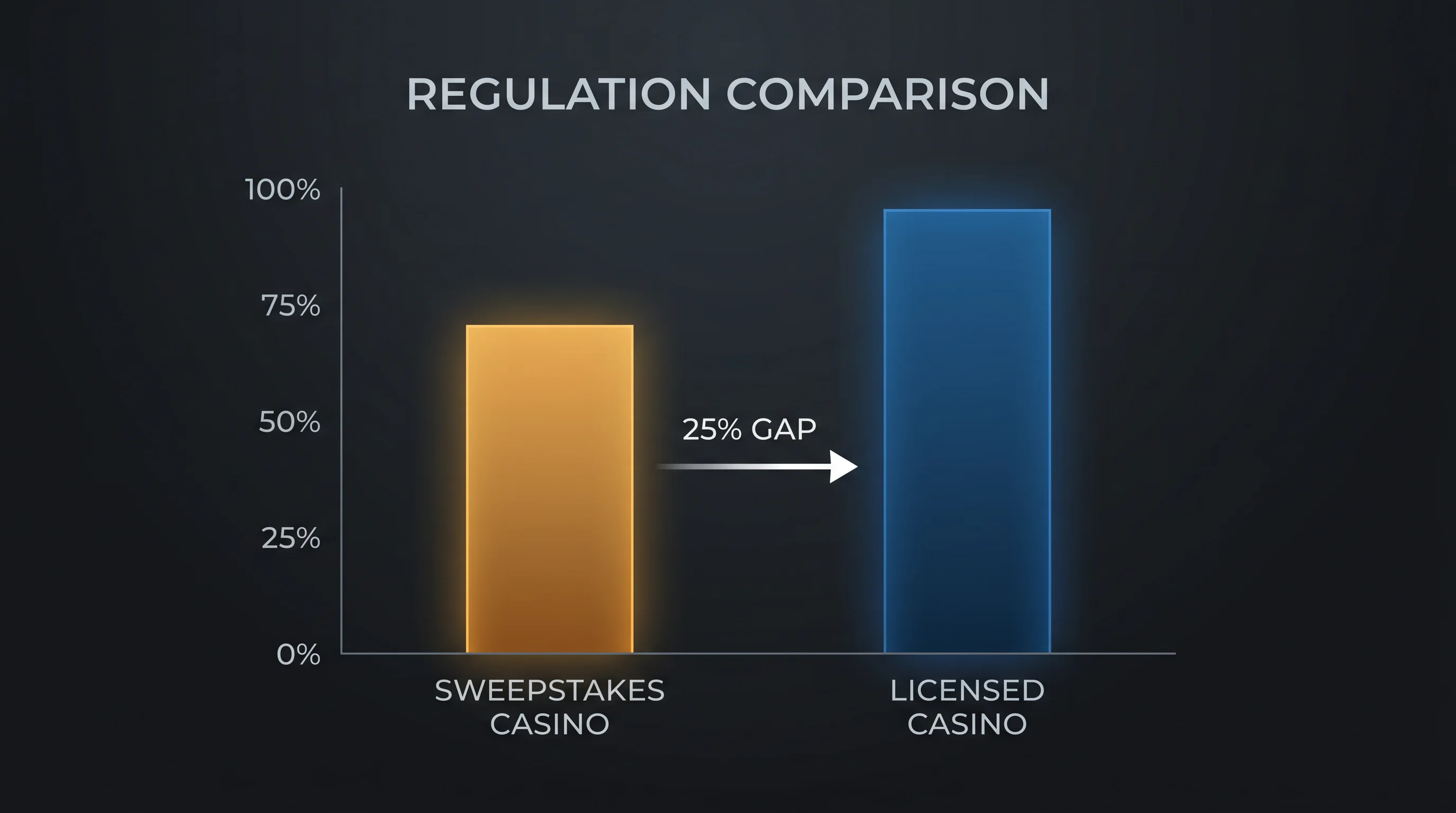
The payout rate question — what percentage of wagered SC the platform returns to players on average — is where the comparison between sweepstakes casinos and licensed platforms becomes uncomfortable. Industry analyses of sweepstakes casino SC gameplay estimate payout rates in the 68 to 72% range. At licensed online casinos, certified payout rates typically run 94 to 97%. That’s a gap of roughly 22 to 29 percentage points in expected player return.
Several caveats apply here. Sweepstakes casino games are not subject to the same mandatory independent certification requirements as licensed gambling games — which means the 68-72% estimates come from third-party analysis and player-reported data rather than audited operator disclosures. It’s possible that the actual payout rates are higher or lower, and that different game categories within the same platform have different rates. The absence of a certification requirement makes precise comparison difficult.
What the payout rate tells you, at whatever level it actually sits, is the expected value of your SC over time. If the payout rate is 70%, and you start with 100 SC, you expect to have 70 SC remaining after one full cycle of play — assuming you play everything out without adding more SC. AMOE-earned SC aren’t exempt from this math. The “free” acquisition cost of AMOE entries doesn’t change the expected behavior of those SC once they’re in your account and being used for gameplay.
Practical Advantage of Volume: Per-Entry Value vs. More Entries
The most nuanced point in the odds conversation is one that Shawn Fluharty of the National Council of Legislators from Gaming States raised directly: the redeemability in real money is the central issue, regardless of how the entry mechanism is structured. His point, from a regulatory perspective, is that the sweepstakes framing doesn’t change the functional experience of playing for something real. From a player perspective, his observation points to something else: the practical “advantage” of purchased entries isn’t better per-entry odds — it’s more entries.
When a player buys a Gold Coin package that includes bonus SC, they receive significantly more SC than they could accumulate through AMOE in a comparable timeframe. At one to five SC per AMOE request per day, a player relying entirely on AMOE accumulates between 30 and 150 SC per month from a single operator. A single mid-tier Gold Coin purchase might award several hundred bonus SC. More SC means more gameplay, which means more statistical opportunities for favorable outcomes — not per-entry odds advantages, but volume advantages.
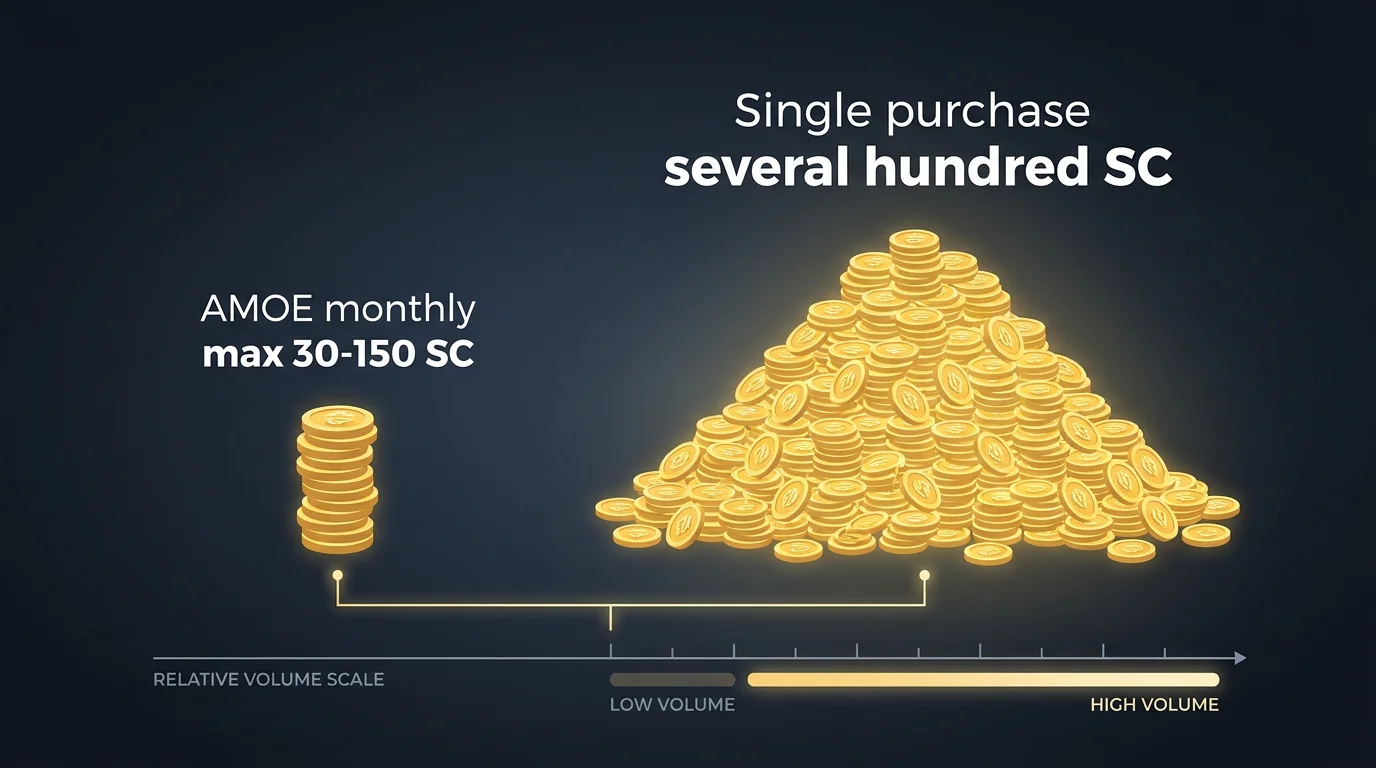
This volume dynamic is worth being clear-eyed about. The legal requirement of equal odds per entry is genuine and meaningful. The practical reality is that players who purchase accumulate vastly more entries per unit time than players who rely on AMOE alone. Over time, the volume difference produces measurable outcome differences even with identical per-entry odds. For players evaluating whether to remain in the free-play cohort versus making purchases, this is the honest version of the odds conversation — not that your free entries lose more often, but that you have fewer of them.
Marketing Language That Implies Paid Entries Win More
The advertising space around sweepstakes casinos includes language that, while technically accurate, creates impressions that edge toward the misleading. Phrases like “boost your chances with our Gold Coin packages,” “more coins, more opportunities,” and similar framings are legally defensible — more coins does mean more entries, and more entries does mean more statistical opportunities. But the framing can create an impression that paid participation is fundamentally different in kind, not just in quantity, from free AMOE participation.
This is an area where regulatory scrutiny has focused. Marketing that implies purchasing improves odds — as opposed to increasing the number of entries — would cross into deceptive territory. Some of the class-action litigation against sweepstakes operators includes claims based on exactly this kind of advertising, where plaintiffs allege that the marketing created a reasonable expectation of outcome improvement from purchasing that the actual legal structure doesn’t support.

From a player decision standpoint, the practical guidance is: if you’re evaluating whether to spend money at a sweepstakes casino, the honest question is whether you want to play more, not whether you want to win more per play. Your AMOE entries win at the same rate as purchased entries — you just have fewer of them. The complete comparison of free SC methods covers the practical SC accumulation strategies for players who prefer to stay in the free-play cohort.
AMOE Odds Questions
Is there any auditing or certification process that verifies sweepstakes casino payout rates?
Unlike licensed online gambling, sweepstakes casinos are not required to have their games independently certified for payout accuracy in most jurisdictions. Some operators voluntarily engage testing laboratories to audit their random number generators and payout rates, and a few publish those audit results as a transparency measure. However, this is not a universal requirement, and the majority of sweepstakes casino games operate without independent certification of the kind that licensed casino games must meet. Players interested in verified payout accuracy should look for operators that voluntarily publish audit reports.
If AMOE entries must have equal odds, why do operators set such low SC amounts per request?
The SC amount per AMOE request — typically one to five SC — is set for business reasons related to player acquisition cost, not to disadvantage free entries. From the operator’s perspective, each AMOE request represents both a compliance cost (fulfillment processing) and an SC liability (coins that can be redeemed for cash prizes). Lower per-request amounts reduce that liability while still meeting the legal requirement for a genuine free entry pathway. The amount is set at the point where the program is both legally functional and financially sustainable for the operator — not at the point that would most benefit the player.
Created by the ”Alternate Method of Entry Sweepstakes” editorial team.