AMOE Sweepstakes Red Flags US: Spotting Unfair Casino Terms
 Available in US
In nine years of reviewing operator compliance practices, I’ve seen AMOE programs that work exactly as they should — clear, accessible, reliably processed, genuinely valuable. I’ve also seen AMOE programs that appear compliant on their face but are structured in ways that make successful participation practically difficult. The difference matters legally, and it matters to players who are counting on that free entry pathway to function.
By early 2026, more than 100 class-action lawsuits had been filed against sweepstakes operators. A recurring thread in that litigation is the claim that AMOE programs were not genuinely functional — that the free entry pathway was nominal rather than real. Here’s how to evaluate whether an operator’s AMOE falls on the legitimate or problematic side of that line.
Hidden Instructions and Blocked Mailing Addresses
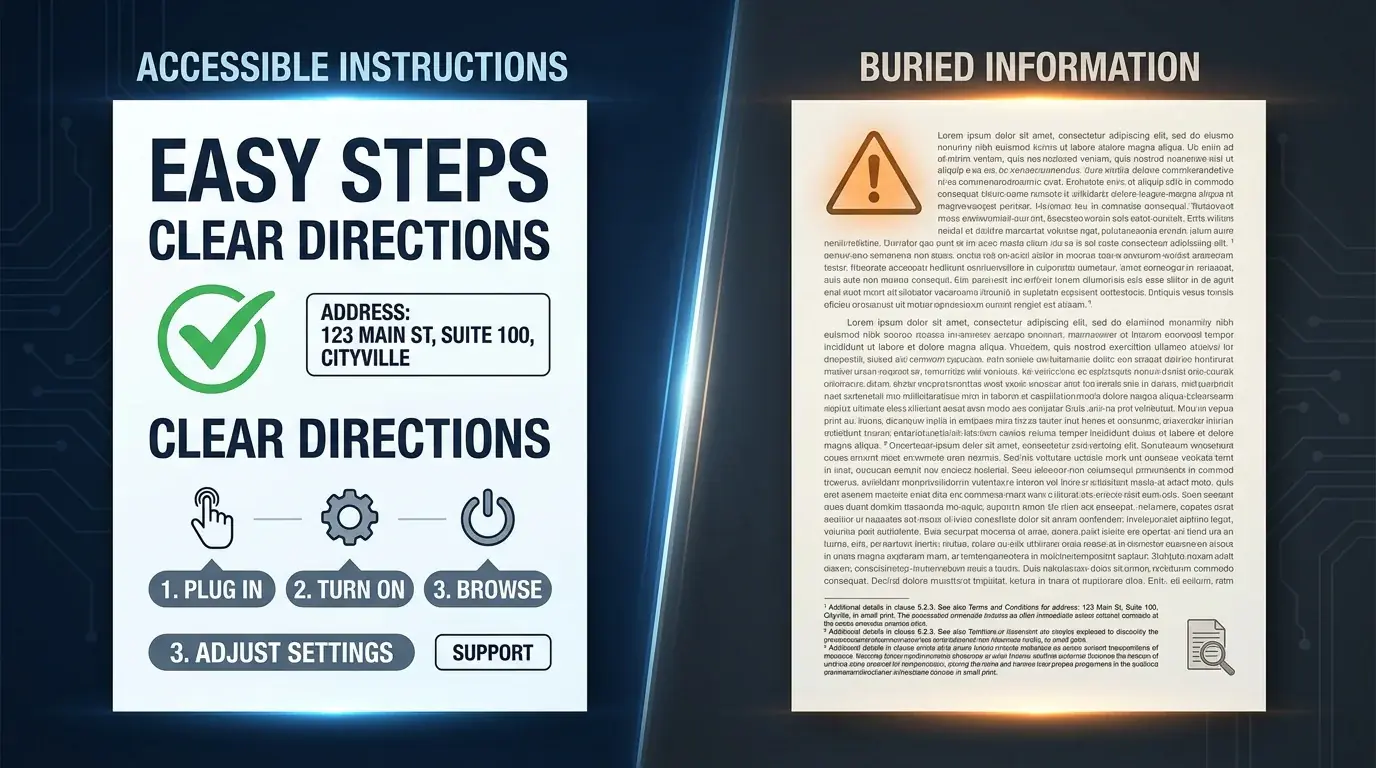
The most fundamental test for AMOE legitimacy is whether you can find the instructions without jumping through hoops. A compliant operator treats AMOE as a required public feature — the mailing address, the required information, the format, and the SC award amount should all be clearly stated in the Sweepstakes Rules document, which should be accessible from the site footer or any promotional page without needing to log in, contact support, or navigate through multiple menus.

Any operator that requires you to contact customer support just to obtain the AMOE mailing address is, as a 2025 legal analysis put it, engaging in behavior that constitutes a direct violation of sweepstakes law and a serious warning sign. The logic is unambiguous: if the free entry pathway requires prior interaction with the operator before you can even use it, you’re no longer dealing with a freely and independently accessible alternative method of entry. You’re dealing with a gated process — and gating is the opposite of what the NPN requirement demands.
Similar concerns arise when AMOE instructions appear only in buried footnotes, in documents that require account login to access, or in FAQ entries that are several layers deep in a help center structure. These aren’t necessarily intentional evasions in every case — sometimes they reflect disorganized site architecture rather than deliberate obstruction. But the practical effect on players is the same: the free entry pathway is harder to use than it should be, and participants who don’t persist through the friction are effectively denied access to the AMOE they’re legally entitled to.
Unusually High Rejection Rates as a Pattern
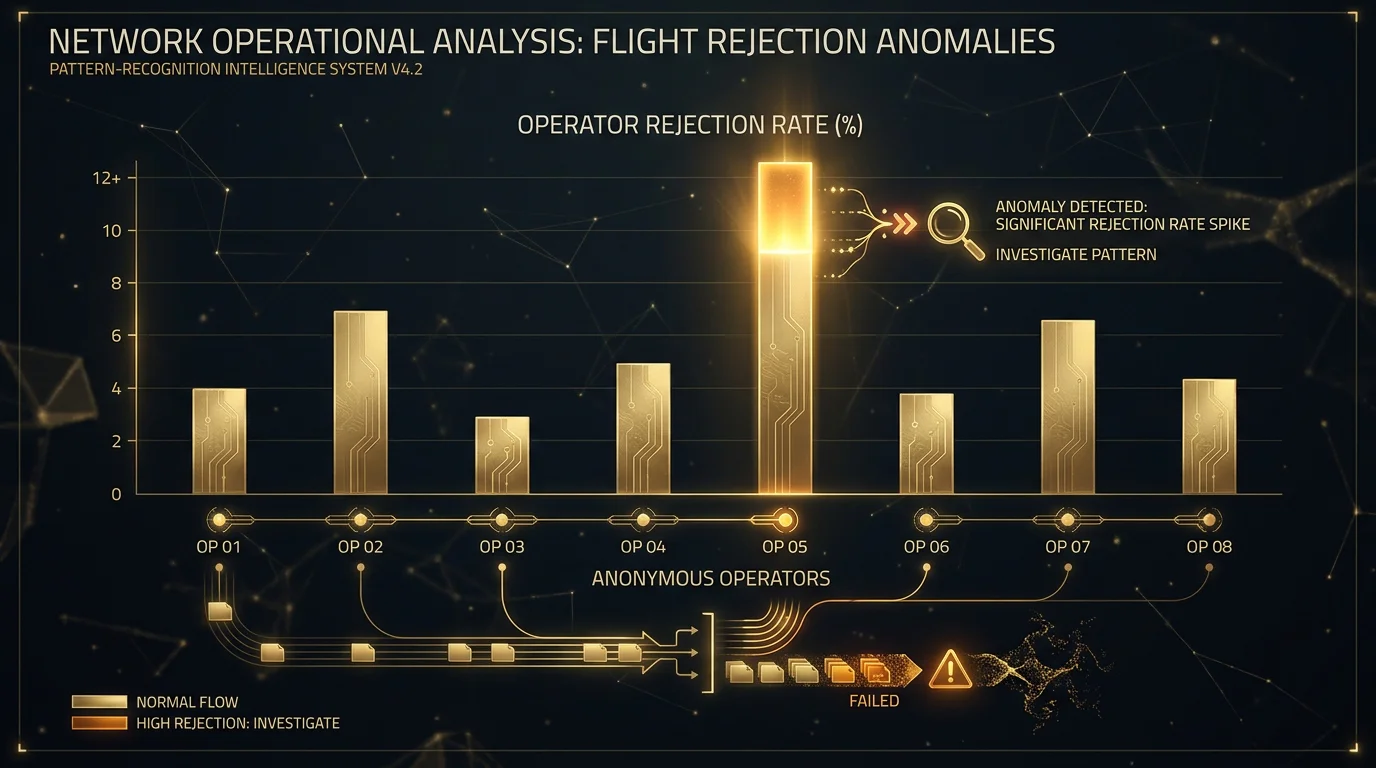
Some rejection is normal — players misspell usernames, use outdated addresses, forget required fields. A reasonable operator processing AMOE at scale will see a failure rate that reflects these inevitable player errors. What constitutes an “unusually high” rejection rate is harder to quantify without access to operator data, but there are observable signals.
The first signal is pattern: if your requests to a specific operator fail at a much higher rate than your requests to other operators, and you’re using the same careful process for both, the operator’s acceptance criteria or matching process may be the variable. A single failed request proves nothing; five consecutive failed requests at one operator while others process normally is a pattern worth investigating.
The second signal is community documentation. Player forums, review sites, and compliance watchdog resources tend to accumulate reports of systematic AMOE problems at specific operators. These reports are anecdotal and not independently verified, but when the same operator generates a disproportionate share of non-crediting complaints, the volume itself is informative. The NPN requirement in U.S. sweepstakes law applies across all 50 states — any operator whose AMOE program doesn’t genuinely work at scale is operating at legal risk, and that risk tends to surface in player complaints before it reaches regulatory attention.
Systematic Delays: When Processing Time Becomes a Barrier
Processing delays exist at every operator, and the standard range of seven to fourteen business days — extending to six to eight weeks under heavy volume — is a real operational constraint, not necessarily a warning sign. What distinguishes an operational delay from a structural barrier is the consistency and scale of the delay pattern.
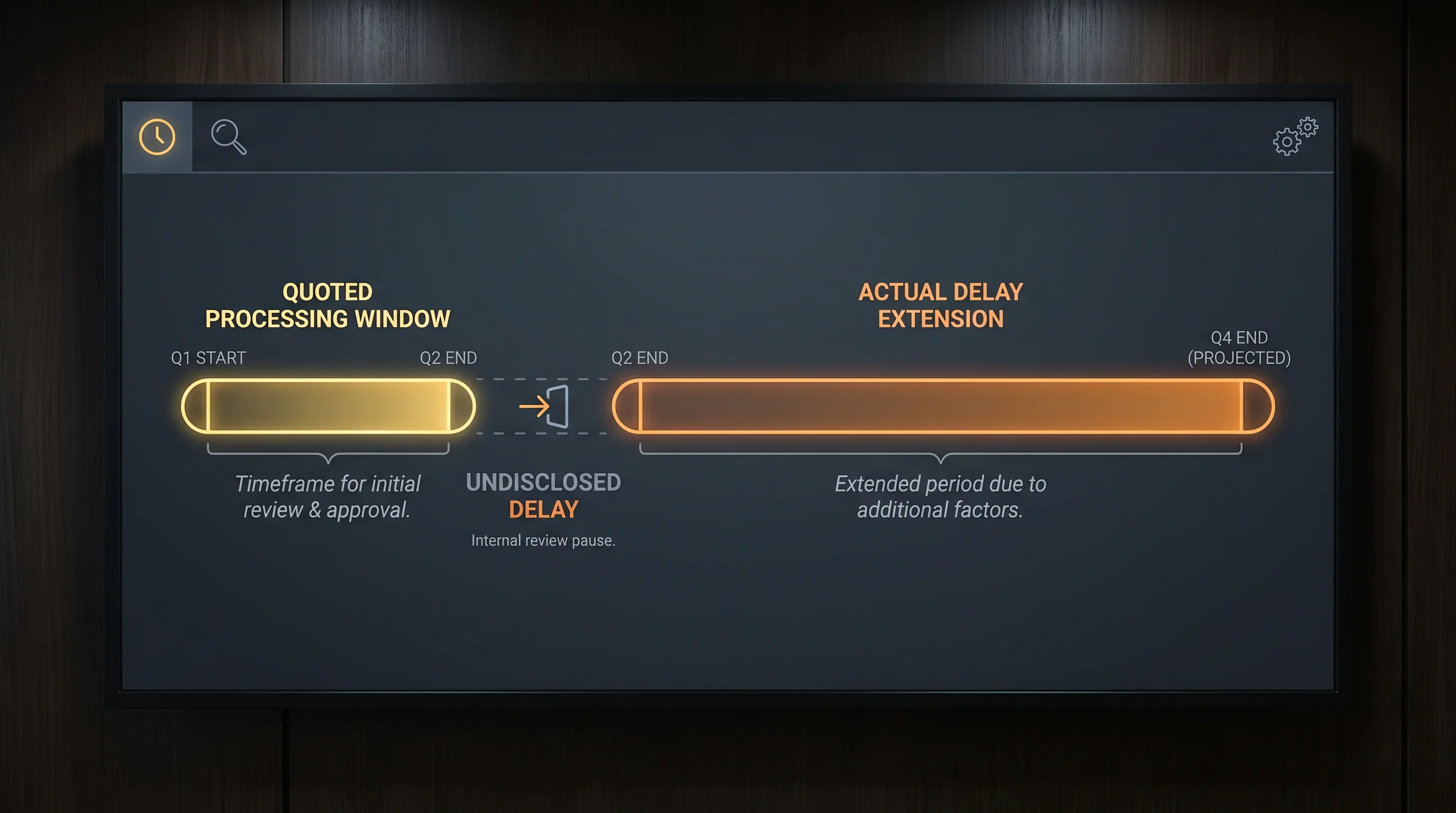
An operator whose quoted processing window is fourteen business days, and who actually processes within that window 90% of the time, is behaving consistently with their disclosed terms. An operator who quotes fourteen business days but routinely takes eight to twelve weeks, doesn’t acknowledge the discrepancy when contacted, and offers no credible explanation is exhibiting a different pattern. If the systematic nature of the delay serves the function of discouraging AMOE participation — players who wait two months for every submission will eventually stop submitting — then the delay has the same practical effect as an overt restriction, even if the operator maintains it’s just a backlog.
The test I apply when evaluating processing delay patterns: does the operator communicate proactively when processing times are running above their quoted window? Operators who notify users about extended processing — “we’re currently experiencing higher than normal volume, current processing time is approximately three to four weeks” — are demonstrating functional transparency. Operators who maintain the fourteen-business-day quote while silently running four to eight weeks are not.
What to Do When You Suspect AMOE Abuse
If you’ve identified a pattern that suggests an operator’s AMOE program is not functioning as it should, you have several legitimate options.
Document the pattern before taking action. Record the dates of your submissions, the account information you included, the addresses you used, and the dates you followed up with support. This documentation supports any inquiry and, if the situation escalates, any formal complaint. Keep any support responses you receive — they’re timestamped evidence of the operator’s position.
Contact customer support with a specific, factual inquiry. Avoid emotional language; focus on dates, amounts, and the specific discrepancy between promised processing time and actual experience. Operators with functioning support teams will typically investigate and respond constructively if the issue is real. Support teams at operators with structural AMOE problems tend to respond with form answers that don’t engage with the specifics — which itself is informative.
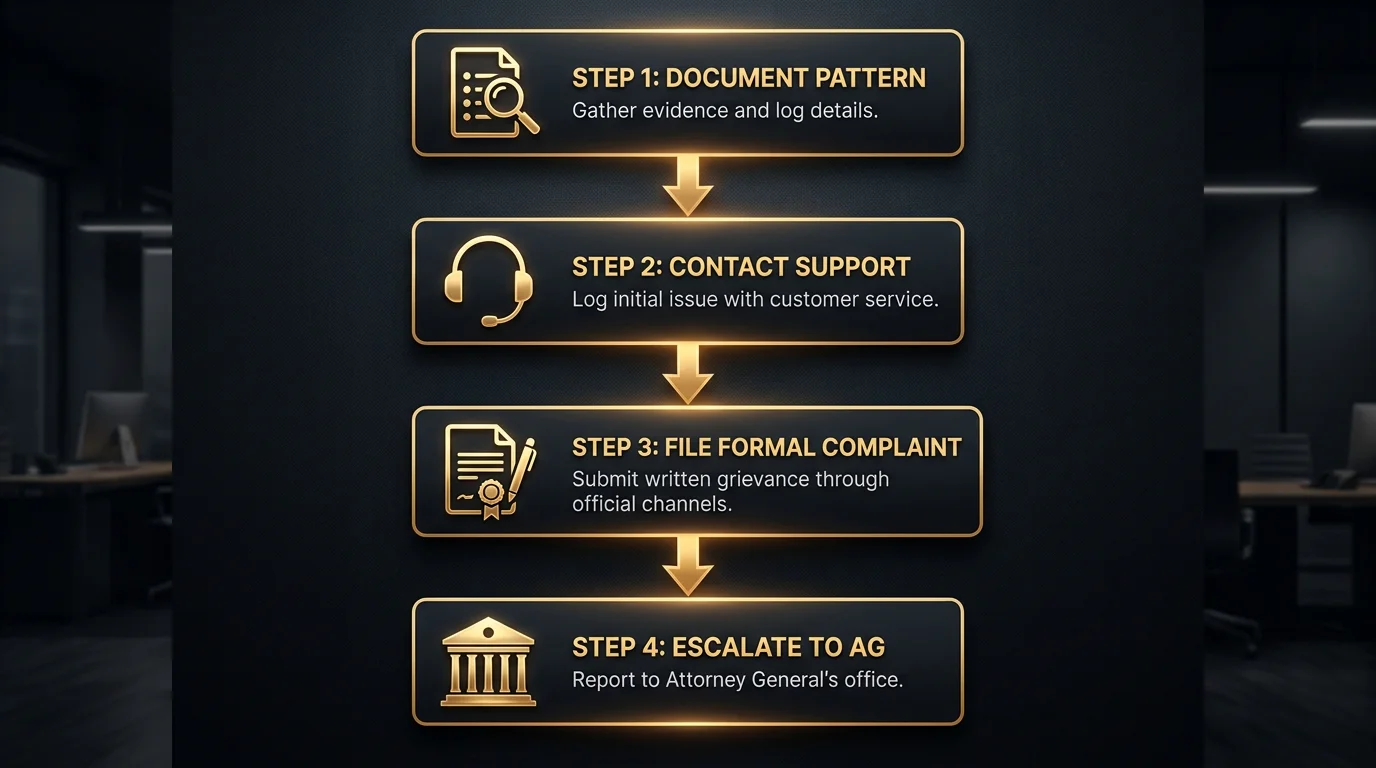
If support doesn’t resolve the issue, escalate to formal complaint channels. Your state attorney general’s consumer protection division accepts complaints about sweepstakes promotions, and the FTC accepts consumer complaint reports as well. These complaints rarely produce individual resolution, but they contribute to the regulatory data collection that triggers investigations at operators with systematic issues. The concentration of class-action litigation that reached 100+ suits by early 2026 started with accumulated regulatory complaints, not with lawsuits filed in a vacuum.
The broader context for evaluating operator reliability — what the terms actually commit the operator to, what flexibility they’ve reserved — is covered in more detail in the guide to AMOE terms and conditions.
AMOE Red Flags: Quick Reference
Where can I file a complaint if a sweepstakes casino refuses to process my legitimate AMOE request?
The primary channels are your state attorney general’s consumer protection office and the FTC’s consumer complaint portal at reportfraud.ftc.gov. For sweepstakes-specific issues, the FTC’s guidelines on prize promotions provide the relevant regulatory framework. If the operator is a member of the Social Gaming Leadership Alliance, that organization has also indicated a commitment to addressing member compliance issues. Document your complaint with dates, submission details, and any support correspondence before filing. The more specific your complaint, the more useful it is to investigators building pattern evidence.
Are there any third-party watchdogs or review sites that track AMOE compliance issues?
No dedicated regulatory body specifically tracks AMOE compliance at the operator level. Player-facing review sites, forum communities focused on sweepstakes participation, and consumer advocacy organizations that track sweepstakes promotions all collect some of this information informally. Compliance analysts and legal researchers monitor the industry through regulatory filings, AG actions, and litigation records rather than real-time operator audits. The most reliable signal for AMOE reliability remains the volume and specificity of player complaints combined with how the operator’s support team responds to inquiries. An operator with consistent, specific non-crediting complaints that support can’t resolve is exhibiting a pattern worth avoiding.
Prepared by the Alternate Method of Entry Sweepstakes editorial staff.