Multiple AMOE Requests US: Daily Limits and Account Rules
 Available in US
I still get this question more than almost any other: “Can I just send a bunch at once and get caught up?” The answer is no, and the reasons why reveal something important about how AMOE programs are actually structured. Frequency limits aren’t bureaucratic friction — they’re part of the legal architecture that makes these programs valid under sweepstakes law. Understanding them also helps you avoid accidentally triggering a household limit that voids legitimate entries you didn’t realize were in conflict.
Daily AMOE Limits Across Top Sweepstakes Operators
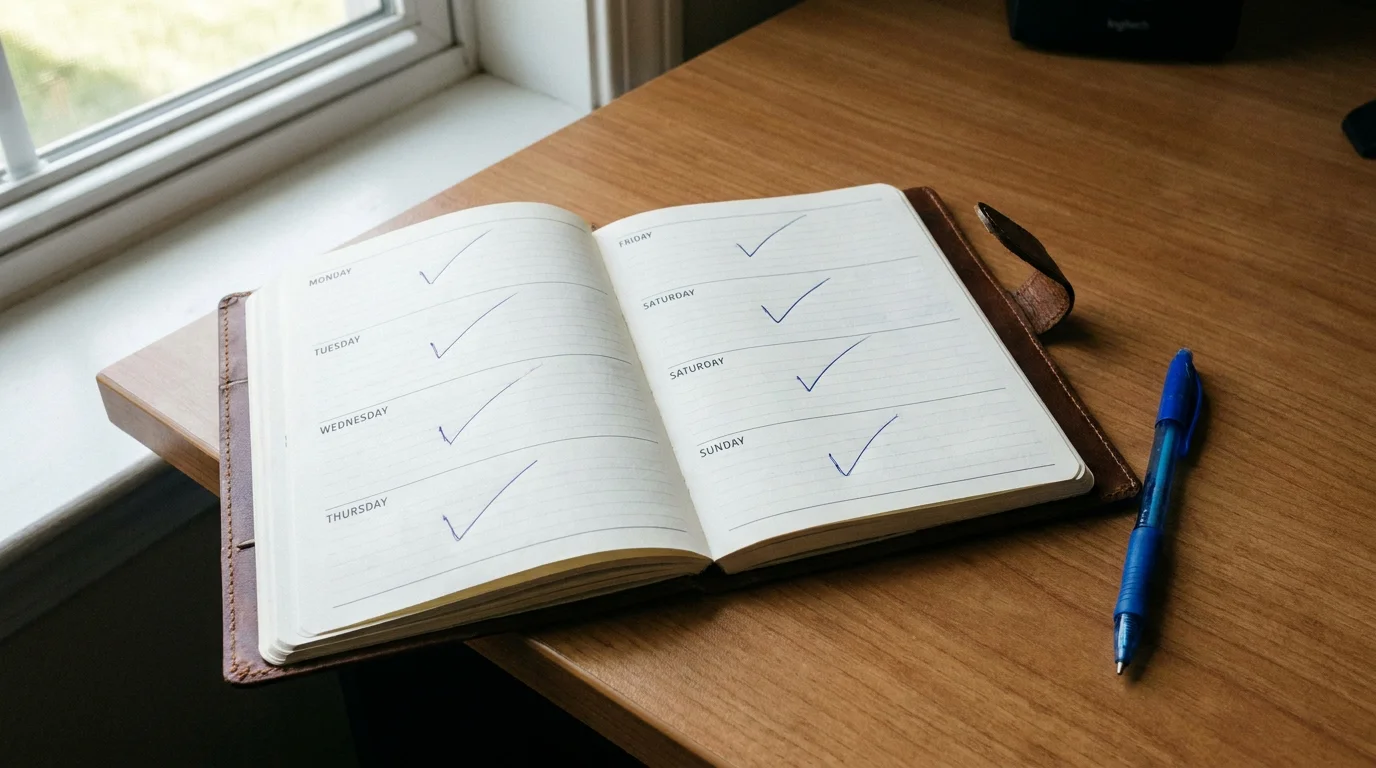
The industry standard is one AMOE request per household per day per operator. This isn’t a coincidence — it reflects a deliberate compliance posture that most operators adopted to demonstrate that their AMOE programs represent genuine individual participation rather than a token mechanism for mass entry generation.
In practice, the daily limit means that the maximum number of AMOE requests you can submit to a single operator is one per calendar day. At thirty days per month, that’s a theoretical maximum of thirty submissions. The word “theoretical” matters here because the standard processing window runs seven to fourteen business days — meaning the batch you mail in week one will still be processing when you’re on week three. Your Sweeps Coins balance won’t reflect each submission as it’s mailed; it reflects what’s been processed, which creates a lag that can make it look like your requests aren’t working when they’re simply in queue.
Some operators set their limit lower than the industry standard — two or three submissions per week rather than one per day. Others cap total monthly AMOE requests rather than applying a daily rule. The only reliable way to know your specific operator’s policy is to read their current Sweepstakes Rules document, not the FAQ, not third-party summaries. The Rules document has legal force; the FAQ is informal and may be outdated.
For digital AMOE formats — web form, email, in-app — the same daily limit applies. Submitting via web form in the morning and mailing a postcard in the afternoon on the same day at the same operator typically counts as two submissions against a single-day allowance.
How Operators Define a Household — and Why It Matters
The “household” definition is where things get genuinely complicated, and I want to be precise about it because errors here can invalidate otherwise legitimate submissions.
Most operators define “household” as individuals residing at the same physical address. This is a geographic definition, not a familial one — it’s about your mailing address, not your relationship to other account holders. If you and a roommate each have separate accounts at the same operator and both submit AMOE requests on the same day from the same address, you may hit the household limit depending on how that specific operator applies it.
There are two common operator approaches to the household rule. The first treats “one per household per day” as meaning one submission total, regardless of how many individual accounts are registered at that address. The second treats each verified account holder at the address as eligible for their own daily submission, making the limit per-account rather than per-address. These two interpretations produce very different outcomes, and they’re not always clearly specified in the operator’s terms.
When terms are ambiguous, I recommend treating the stricter interpretation as the default assumption. If you later clarify with the operator’s support team that your household is eligible for multiple daily submissions, you can adjust. Starting with the restrictive interpretation protects you from accidentally exceeding the limit under an unknowingly aggressive reading of the rules.
Can Family Members at the Same Address Each Send a Request?

This is the question I get from couples and multi-adult households most often, and the honest answer is: it depends on the operator, and you need to verify before assuming eligibility.
Some operators explicitly state in their Sweepstakes Rules that individuals residing at the same household may each submit one AMOE request per day, provided they each have their own account and each request is made in their own name. This is the more permissive model and is common among larger, more established platforms.
Others define their household limit in a way that makes all residents at an address collectively subject to a single daily allowance. Under this model, if two people at the same address both submit on Tuesday, only one submission will be honored — the other will be treated as a duplicate and rejected.
For the industry standard of one AMOE request per day, this ambiguity has real financial stakes for households where multiple adults participate. If two people each mail thirty submissions per month to the same operator, and the operator’s household limit is per-address rather than per-account, half of those submissions may be quietly discarded — with no notification to either party. The total out-of-pocket cost for sixty submissions (roughly $39 to $45 in postage and materials) produces the same return as thirty. That’s not a catastrophic loss, but it’s avoidable.
Before establishing a multi-account household AMOE strategy at any operator, email their support team with a direct question: “Does your household AMOE limit apply per account or per physical address?” Save the response. If their answer conflicts with what actually happens to your submissions, you have documentation to support a support inquiry.
What Happens If You Send More Than Allowed

The outcome for over-limit submissions varies by operator, but the most common result is simple: the excess entries are discarded. You don’t get a warning, a partial credit, or a notification. Your daily limit is your daily limit, and going over it produces zero additional benefit while consuming your postage budget.
In cases where an operator detects what appears to be systematic over-submission — multiple daily requests from the same household over an extended period — there’s a more significant risk. Some operators flag accounts for review in this scenario and may restrict or suspend AMOE participation for the flagged address. This outcome is less common but documented, and it’s the reason I’d rather see players submitting at the correct frequency consistently than testing the limits and potentially losing access entirely.
Over-submission due to misunderstanding the rules is treated differently from deliberate circumvention in most cases. If you genuinely didn’t realize you’d exceeded the household limit, a calm, factual inquiry to support may result in the restriction being lifted. Operators generally want to maintain their AMOE programs — they don’t benefit from alienating legitimate participants. But the goodwill-based resolution path is less reliable than simply not exceeding the limit in the first place.
For the mechanics of the submission process itself — what to write, how to format the postcard, and how to confirm your request has been received — the complete mail-in AMOE guide covers the step-by-step process in detail.
Multiple AMOE Requests: Rules and Limits
If I have accounts at three different sweepstakes casinos, can I send an AMOE request to each one on the same day?
Yes. The daily household limit applies per operator, not across all sweepstakes platforms collectively. Having accounts at three separate operators and submitting one AMOE request to each on the same day is entirely consistent with the rules, provided each submission meets that operator’s individual requirements. Your daily limit at Operator A is independent of your daily limit at Operator B and Operator C. This is actually the basis of a multi-operator AMOE strategy — participating with several platforms to accumulate SC from multiple sources simultaneously.
Does mailing multiple requests in one envelope to the same casino count as one or multiple entries?
Most operators treat this as a single submission at most, and some will reject all entries in a combined mailing as a household violation. The physical format of your mailing — one envelope or many — does not override the one-per-day limit. If you mail two completed postcards in a single envelope to the same operator on the same day, you’re likely to have both discarded or only one honored. Mail one postcard per day per operator, in its own properly addressed format, and you stay within the rules.
Created by the ”Alternate Method of Entry Sweepstakes” editorial team.