AMOE Sweepstakes Expert Opinions US: Legal Perspectives
 Available in US
I’ve been in rooms where sweepstakes industry advocates and anti-sweepstakes legislators are both making their cases, and one thing strikes me about those conversations: the sharpest disagreements aren’t about facts. Everyone has access to the same revenue figures, the same enforcement data, the same player behavior statistics. The disagreements are about what those facts mean — about whether an industry that generates $10 billion using a sweepstakes structure is a legitimate promotional marketplace or a sophisticated regulatory arbitrage. Here are the most substantive positions I’ve encountered from people who actually know the details.
Operator Arguments and SGLA Self-Regulation Proposals
The Social Gaming Leadership Alliance has been the most organized industry voice in the regulatory debate, and Jeff Duncan — the organization’s executive director and a former U.S. congressman from South Carolina — has made the case with unusual directness. “We want to be regulated, we want to pay taxes,” he told a conference in December 2025. That statement, coming from an industry executive, is worth pausing on. It’s not a defensive posture; it’s a proposal.
The SGLA’s argument is that sweepstakes casinos operating under the current legal model are doing so in compliance with existing law, that their member operators have invested in financial security, privacy, responsible gaming, and consumer protections, and that the appropriate response to regulatory concerns is a federal framework rather than state-by-state prohibition. The analogy Duncan’s organization draws is to other industries that started unregulated, grew rapidly, and eventually became subject to formal licensing — where the regulatory framework ultimately benefited both consumers and compliant operators by establishing clear standards and eliminating bad actors.
The SGLA’s position on AMOE is consistent with this framework: member operators are committed to genuine, accessible free entry pathways that meet the NPN requirement. Bryan Schroeder, general counsel at ARB Interactive, framed the political context bluntly: “Transparently, in my opinion, social plus operators are being used as pawns in the approved iGaming question. Most of the iGaming bills have been tied to attacking sweepstakes.” The argument is that the regulatory pressure is partly competitive — licensed gambling operators supporting legislation that would restrict their unregulated competitors.
The Legislative Perspective: Why States Are Moving to Ban
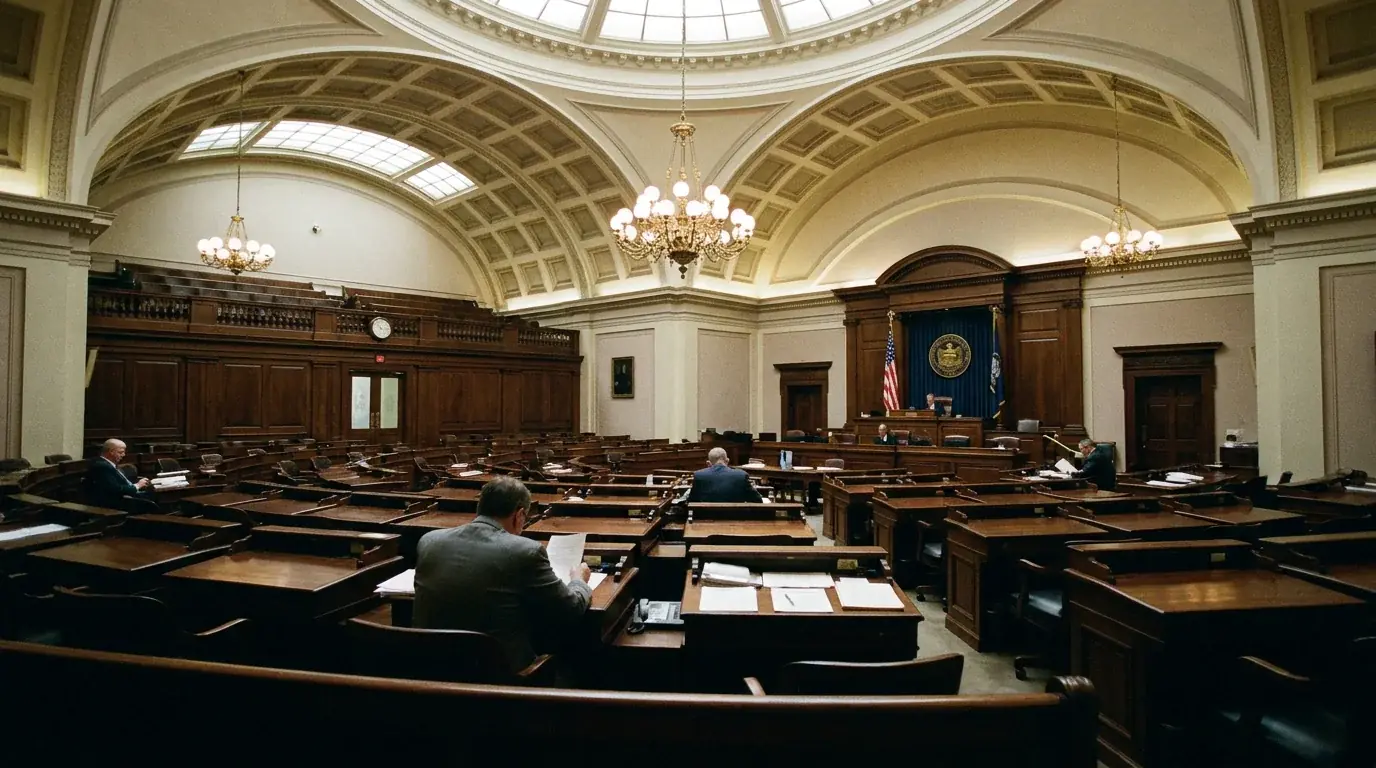
On the other side of the debate, the legislators and attorneys general who moved against sweepstakes casinos in 2025 made arguments that deserve fair representation. Shawn Fluharty, West Virginia delegate and president of the National Council of Legislators from Gaming States, captured the legislative consensus: “Rarely do we agree as legislators, but on this question we agree that this represents illegal gambling operations.”

The legislative argument isn’t primarily about AMOE mechanics. It’s about functional equivalence: when a platform looks, feels, and behaves like a casino from the player’s perspective — when 80% of users spend money monthly, when half spend weekly, when the games are slot mechanics and card games and the payouts are real cash — the sweepstakes legal structure starts to look like a technicality rather than a substantive distinction.
Fluharty’s follow-up position — that “the redeemability in real money is the real problem” — gets at the core legislative concern. The AMOE mechanism satisfies the no-purchase-necessary technical requirement. But if regulators start from the premise that any product where cash changes hands based on randomized game outcomes is gambling regardless of its structural classification, then the AMOE’s role as a legal shield becomes contestable. By early 2026, more than 100 class-action lawsuits were testing that contestability in courts across multiple jurisdictions.
Legal Counsel on the Long-Term Viability of the AMOE Model
Independent legal experts have been more cautious than either operators or legislators about predicting outcomes, but the directional signals from legal practitioners are informative. Stephen Piepgrass of Troutman Pepper Locke, a law firm with deep gaming practice expertise, offered the most succinct assessment: “In the long run, it is unlikely that sweepstakes casinos can continue operating in their current form without a clearer legal framework.”

That observation isn’t a prediction of prohibition — it’s a prediction of change. The current “no explicit prohibition” situation in most states is not the same as legal certainty. Operators who’ve been relying on the absence of enforcement as implicit permission are operating in an environment that Piepgrass and other gaming lawyers characterize as inherently unstable. The accumulation of AG actions, class-action suits, and state legislation in 2025 represents exactly the kind of “clearer legal framework” moment that practitioners have been anticipating.
What that framework looks like matters enormously for AMOE specifically. If the resolution is a federal licensing regime that permits sweepstakes gaming with consumer protection requirements, AMOE would presumably remain a required element of the model’s legal structure. If the resolution is state-by-state prohibition under existing gambling statutes, AMOE becomes irrelevant because the platforms it anchors would no longer be operating. The middle paths — conditional licensing in specific states, federal preemption, voluntary compliance frameworks — produce varying AMOE implications depending on the specifics.
Three Possible Regulatory Outcomes for Sweepstakes Casinos
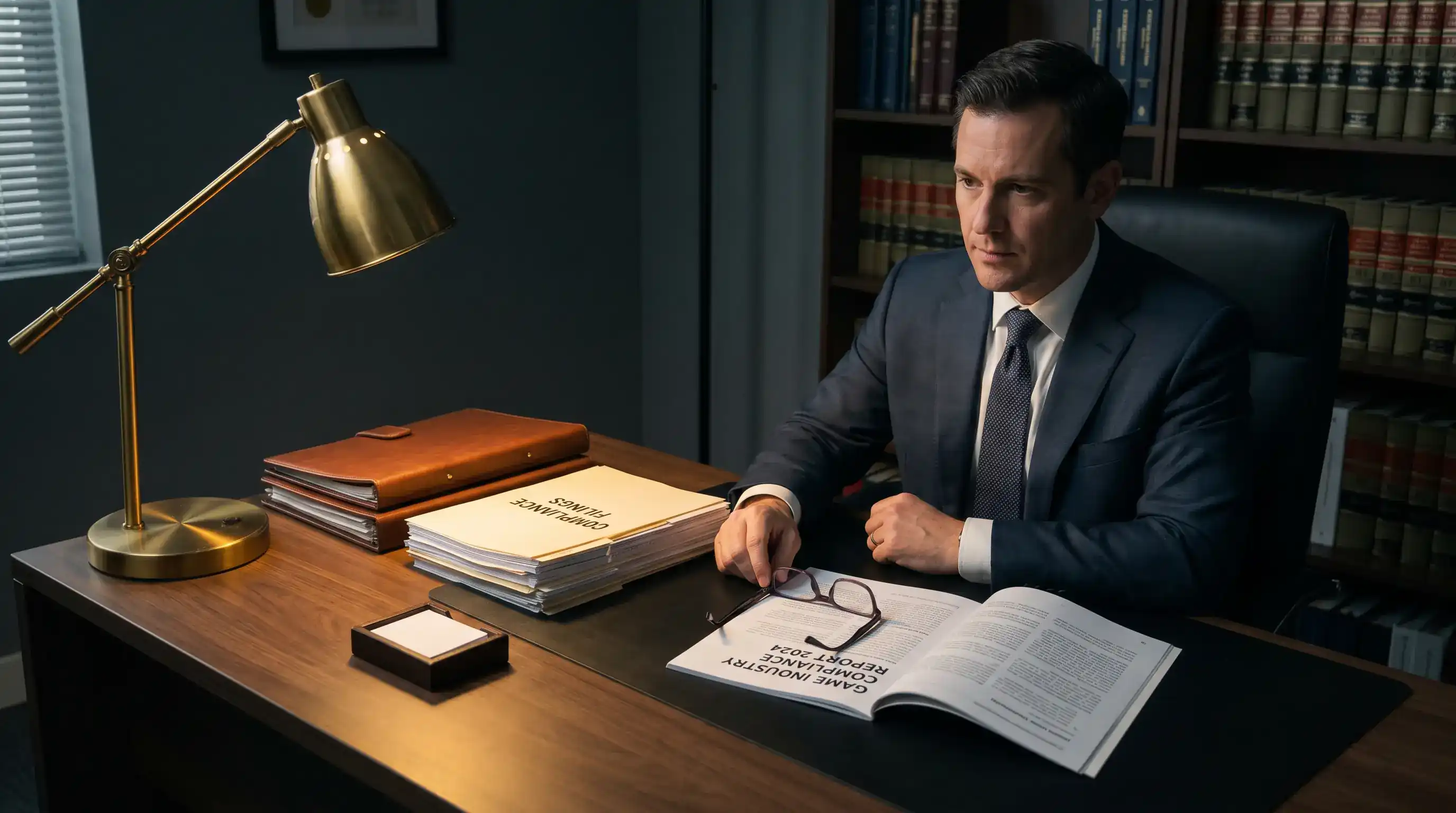
Based on the legislative trajectory as of mid-2026, three broad scenarios have emerged in policy discussions, and each has distinct implications for AMOE.
The first scenario is federal regulation. A national sweepstakes gaming licensing framework — which the SGLA has advocated for — would likely preserve the dual-currency structure and the NPN requirement while adding consumer protection mandates, tax obligations, and compliance standards. Under this scenario, AMOE would remain legally necessary and its quality standards might actually improve under regulatory oversight. The SGLA’s explicit endorsement of this outcome makes it politically possible, though federal legislative timelines are unpredictable.
The second scenario is continued state-by-state fragmentation. More states restrict access, the national addressable market shrinks, and operators who survive consolidate in the remaining states where the model is viable. AMOE programs continue to operate in legal states; the industry is smaller and geographically concentrated. This scenario produces persistent legal uncertainty for the industry without resolving the underlying regulatory question.
The third scenario is successful industry adaptation — where operators voluntarily adopt consumer protection standards similar to licensed casino requirements, build the responsible gaming infrastructure that regulators have requested, and use that demonstrated compliance posture to resist further legislative restriction. The SGLA’s “we want to be regulated” position is a version of this scenario in progress. Whether regulators accept voluntary compliance as sufficient, or continue pushing for formal licensing, is the key variable. For a closer look at what the 2025 state bans mean for AMOE access in practice, the comprehensive state ban tracker covers each affected jurisdiction.
Expert Opinions and Regulation: Questions
Is there a unified federal proposal to regulate sweepstakes casinos under a single framework?
As of mid-2026, no formal federal legislation has been introduced specifically to regulate sweepstakes casinos as a category. The SGLA has been the most prominent voice calling for federal standards, but converting that advocacy into a legislative proposal with congressional support requires alignment among stakeholders with competing interests — licensed gambling operators, state governments that prefer to maintain their own jurisdiction, and federal legislators navigating a politically complex issue. The absence of a unified federal proposal doesn’t mean one won’t emerge; it means the process is in early stages.
Do sweepstakes casino operators and regulated casino operators agree on anything regarding AMOE rules?
There is actually surprising agreement on one narrow point: both groups generally support the NPN requirement as written. Licensed casino operators don’t object to sweepstakes platforms being required to offer free entry — they object to the entire model operating without licensing and taxes. Sweepstakes operators support the NPN requirement because it’s the legal foundation of their platform. What the two groups disagree about is whether satisfying the NPN requirement is sufficient to justify operating without a gaming license. That’s a structural disagreement about regulatory frameworks, not about AMOE mechanics specifically.

Created by the ”Alternate Method of Entry Sweepstakes” editorial team.