Digital AMOE Sweepstakes US: Online Entry Methods 2026
 Available in US
For the first several years I worked in sweepstakes compliance, mail-in was the only AMOE format anyone talked about. That’s changed. More operators now offer web form, email, or in-app digital AMOE options alongside traditional postal entries — and for players who don’t want to stock postcards and stamps, these digital pathways matter. They also come with their own compliance quirks, and at least one state has decided that digital alone isn’t enough.
Understanding how digital AMOE works — and where it falls short — is increasingly relevant as the industry shifts. The standard allows one AMOE request per day per household at most operators, and digital submissions count toward the same limit as postal ones. The mechanics change; the limits don’t.
Online Web Form and Email AMOE Submission Rules

Three distinct digital AMOE formats have emerged across the industry, and they work quite differently from each other both in execution and in how operators handle them on the backend.
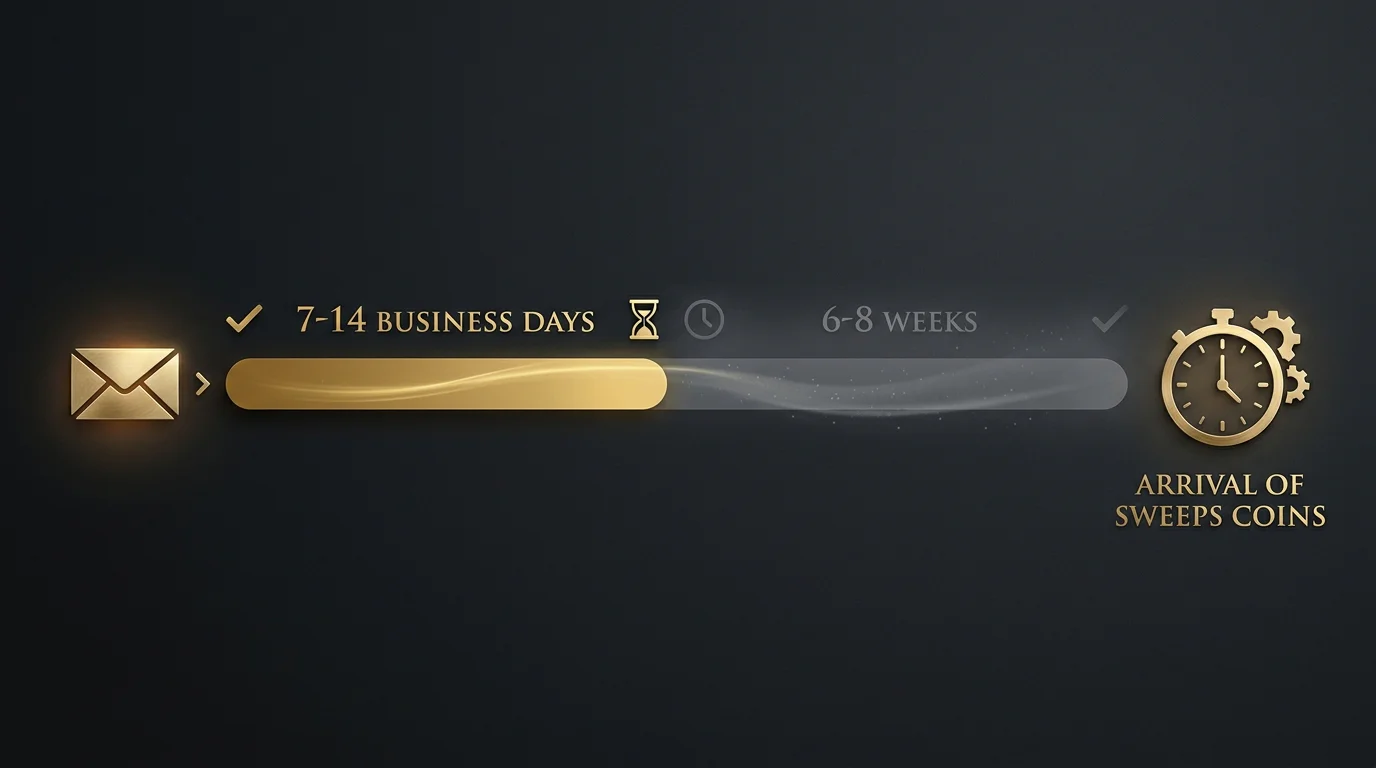
Web form AMOE is the most structured option. The operator hosts a dedicated page where you enter your account information — typically username, email, and sometimes player ID — and submit. The form validates required fields before submission, which reduces rejection rates compared to mail-in. The confirmation is usually immediate, and processing time for crediting the Sweeps Coins tends to be faster than postal methods, often within 24 to 72 hours rather than the standard seven-to-fourteen-business-day window for mail-in.
Email-based AMOE requires you to send a message to a designated operator email address. The content requirements mirror what you’d write on a postcard: your name, username, registered email address, and the required request phrase. Some operators specify a subject line format; most don’t require one. Processing time for email submissions varies widely — some operators handle them faster than mail-in, others in the same timeframe. The key risk with email AMOE is that without a delivery receipt or confirmation from the operator, you have less certainty that the request was received.
In-app AMOE is the least common format but the most seamless user experience. Some platforms have built an AMOE request button directly into their mobile or desktop interface. You’re authenticated already, so the account matching problem that plagues mail-in submissions disappears entirely — the system knows who you are. Award crediting is typically instant or near-instant in these implementations. The limitation is that very few operators have built this feature, and those that have sometimes restrict it to specific platforms or account tiers.
New York’s Higher Standard: Why Mail-In Alone Is Not Enough

Here’s the regulatory wrinkle that no one in the industry anticipated cleanly: New York’s sweepstakes requirements specifically address digital promotions in a way that makes mail-in AMOE alone insufficient for platforms operating there. The state’s position is that for an online sweepstakes promotion, the alternate entry method must be accessible through the same medium as the primary entry method. If the primary entry is digital — which it is for any sweepstakes casino where you buy Gold Coins online — then a mail-only AMOE doesn’t create genuinely equal access.
This is one of the reasons New York’s attorney general sent cease-and-desist letters to 26 sweepstakes operators in 2025. While the legal bases for those enforcement actions were broader than just AMOE format compliance, the digital accessibility question was part of the compliance picture. For operators serving New York players — or who were before the restrictions took effect — this created real pressure to develop digital AMOE pathways quickly.
The practical implication for players is narrow but important: if you’re in a state where an operator maintains access and that operator’s only AMOE option is postal mail, you’re dealing with a compliance posture that regulators have already flagged as problematic in at least one major jurisdiction. That’s worth knowing when you’re evaluating which platforms to engage with.
Which Operators Currently Offer Digital AMOE
The landscape of digital AMOE availability shifts frequently enough that I’m cautious about naming specific operators, because any list I compile will require updating within months. What I can tell you is the pattern: larger, more established operators with sophisticated compliance infrastructure are more likely to have developed digital AMOE options, particularly following the 2025 regulatory wave that put the industry under intensive legal scrutiny.
The one AMOE request per day standard applies across digital formats just as it does for postal. Some operators who offer multiple AMOE formats — say, both web form and mail-in — count all submissions toward the same daily limit. Others treat different formats as separate channels. The safest assumption is that your daily limit is shared across methods unless the operator’s terms explicitly state otherwise.
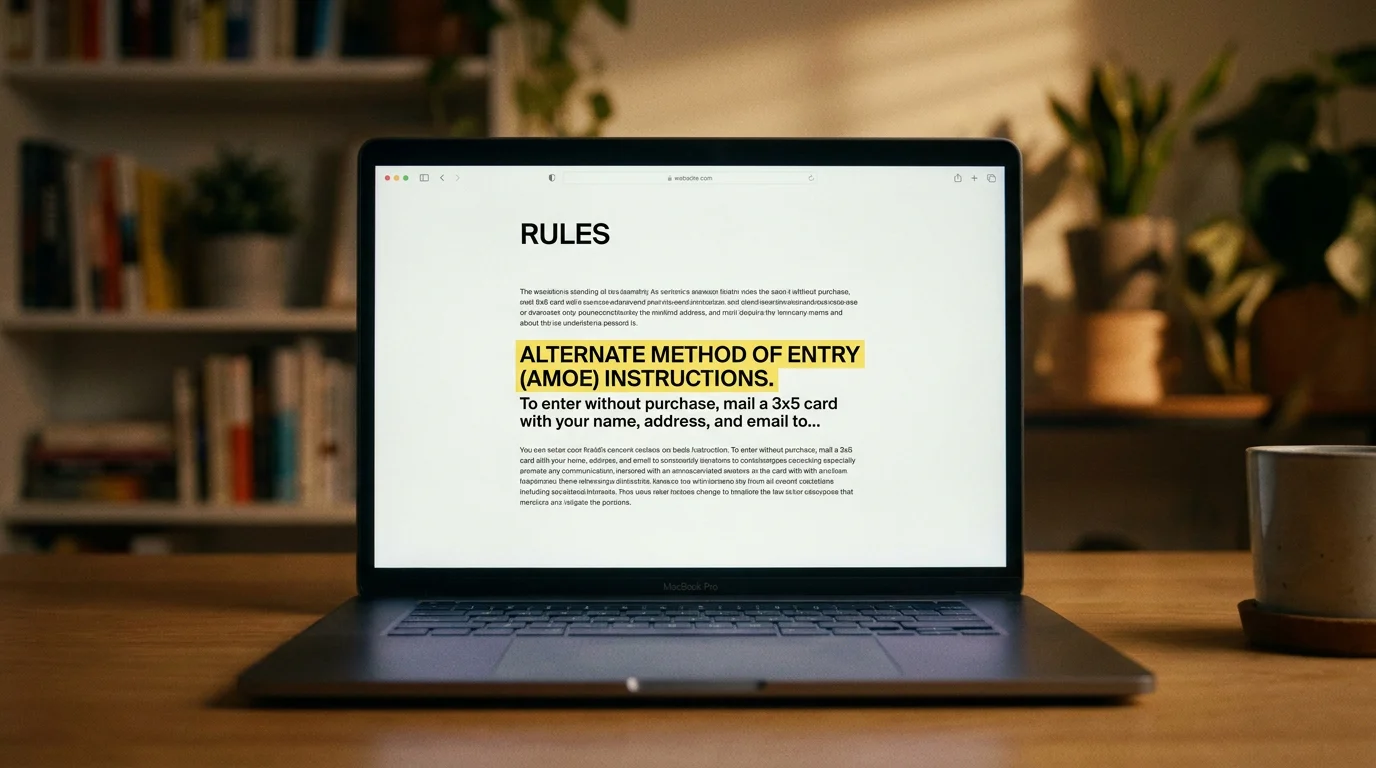
To find out if a specific operator you’re using offers digital AMOE, look in three places: the Sweepstakes Rules or Promotions Rules page (usually linked in the site footer), the FAQ section of the operator’s help center, and the Account Settings area of your profile. If digital AMOE exists, at least one of those locations will reference it. If you can’t find it after checking all three, the operator likely uses mail-in only.
Mail-In vs. Online AMOE: Crediting Speed and Reliability
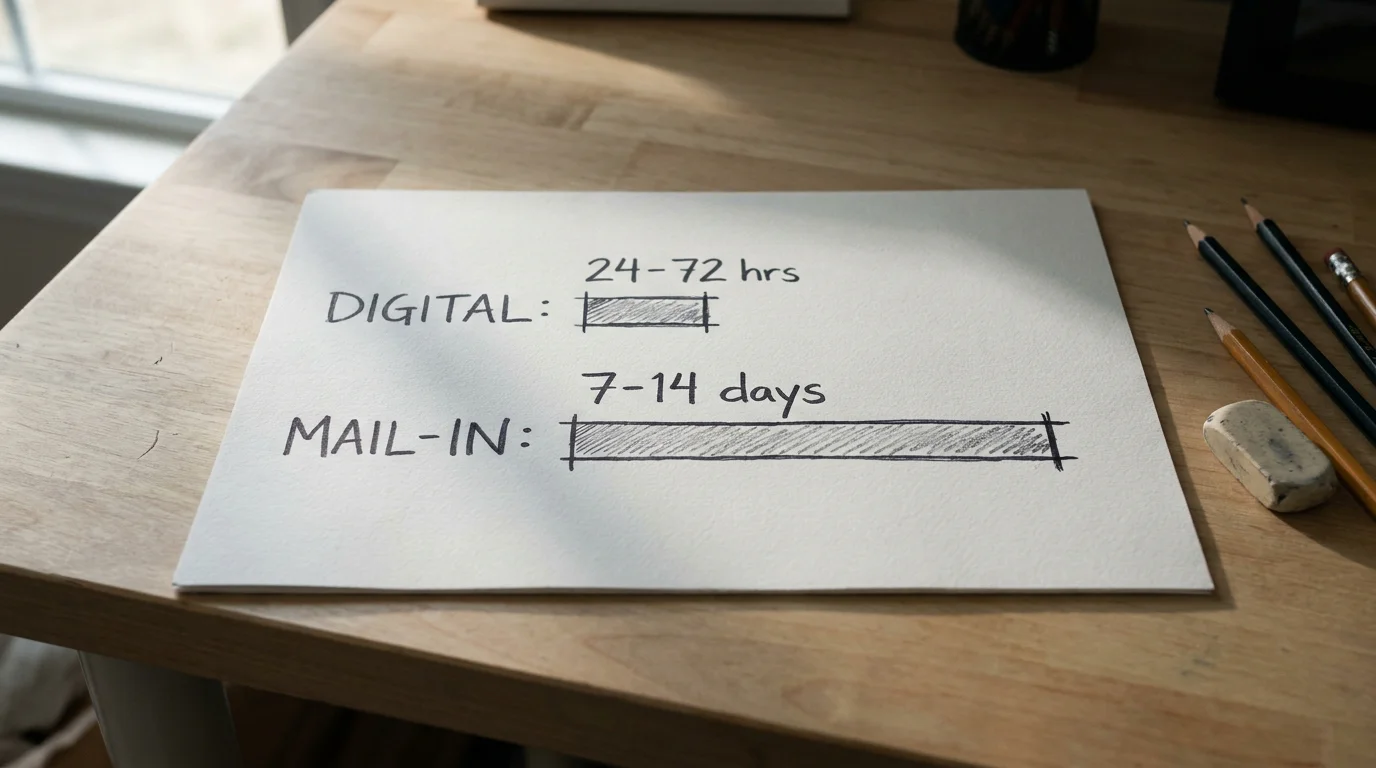
The core trade-off between postal and digital AMOE comes down to two dimensions: speed and verification. Digital wins on speed by a significant margin in most cases — web form submissions are often credited within 24 to 72 hours, compared to the seven-to-fourteen-business-day standard for mail-in. The documented delays that can push postal processing to six or eight weeks simply don’t exist in the same form for digital submissions, because the physical logistics — transit, postal handling, manual batch processing — are eliminated.
Where digital introduces its own risks is verification. With a physical postcard, you have a tangible record of submission. With a web form or email, unless the operator sends a confirmation receipt, you’re relying on trust that the submission was recorded. Players who track their AMOE submissions closely should look for confirmation emails or on-screen confirmation messages when using digital formats, and save those as records. If a digital submission fails to credit within the expected window, that confirmation message is your best evidence when contacting support.
From a reliability standpoint, web form AMOE tends to be the most dependable digital format because the submission goes directly into the operator’s database rather than passing through a mail handling process. Email AMOE introduces the possibility of delivery failure or spam filtering. In-app AMOE, where available, has the lowest failure rate of any format — but again, it’s the least common option.
The decision between postal and digital ultimately depends on what’s available at your specific operators and what your personal workflow supports. For a deeper look at how AMOE stacks up against other methods of earning free Sweeps Coins, the comparison of all free SC methods covers the full picture including daily logins and referral programs alongside AMOE variations.
Digital AMOE Questions Answered
Is a digital AMOE legally equivalent to a mail-in request under U.S. sweepstakes law?
Generally yes, with one significant exception. Digital AMOE satisfies the ‘no purchase necessary’ legal requirement in the same way mail-in does — neither requires purchasing the operator’s product, so neither introduces ‘consideration’ under the illegal lottery test. The exception is New York’s higher standard for digital promotions, which holds that for online sweepstakes, the alternate entry method must be accessible through a digital medium. A mail-in-only AMOE does not satisfy New York’s requirement for platforms where the primary entry method is online purchase.
Do digital AMOE entries receive the same number of Sweeps Coins as mailed ones?
In most cases, yes. Operators who offer multiple AMOE formats typically award the same SC amount regardless of which format you use — the entry is an entry. There are exceptions: some operators run periodic promotions that temporarily increase the award for one specific format, or offer higher amounts through their in-app entry option as an incentive for platform engagement. Always check the current Sweepstakes Rules for the operator you’re participating with, since award amounts can change without advance notice.
Published by the Alternate Method of Entry Sweepstakes team.