
Sweepstakes Casino Player LTV US: Free-Play Valuation
 Available in US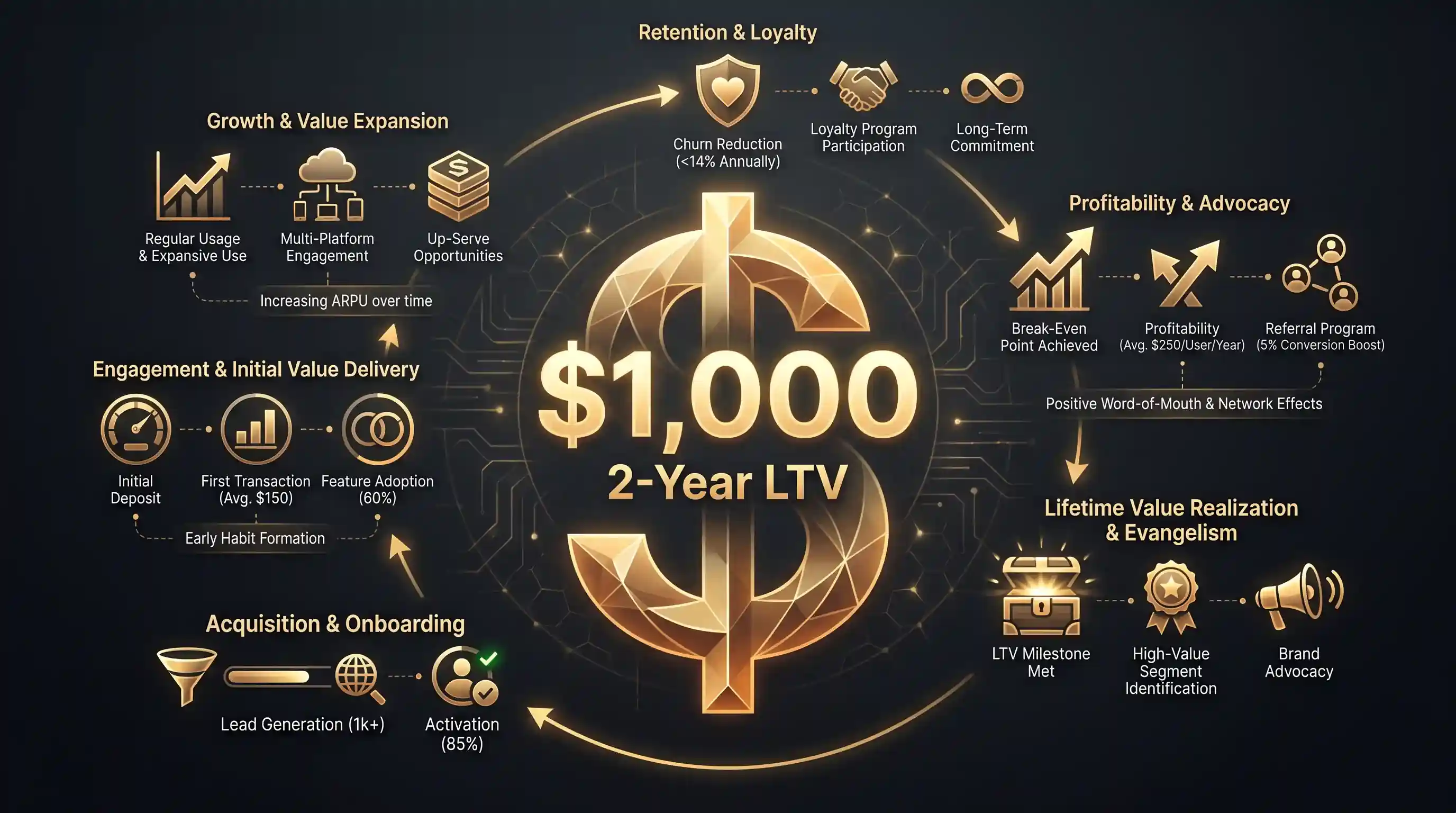
When I first encountered the Gaming Innovation Group’s player lifetime value estimate for sweepstakes casinos, I read it twice. One thousand dollars over two years, per player, averaged across the user base including the 88% who never make a purchase. That number looks impossible until you understand the mechanics behind it. It’s also the key to understanding why operators invest in AMOE programs at all — and why the economics of free-play acquisition are more complicated than they appear from the player side.
Lifetime Value Calculations for US Sweepstakes Accounts
The $1,000 two-year LTV estimate from GiG’s investor materials reflects average revenue per user across the full player population — purchasing and non-purchasing users combined. The math only works because of the minority of high-value purchasers who subsidize the aggregate figure across the much larger non-purchasing base.
The structure is familiar from other consumer platform models. At most sweepstakes casinos, a small fraction of players — industry data puts the purchasing fraction at roughly 12% — generate the bulk of revenue. Within that 12%, a smaller subset of heavy purchasers drives a disproportionate share of total Gold Coin sales. GiG’s estimate of a typical transaction size in the $20 to $50 range understates what the highest-value players spend per month; the average is pulled down by the larger number of first-time or occasional buyers.
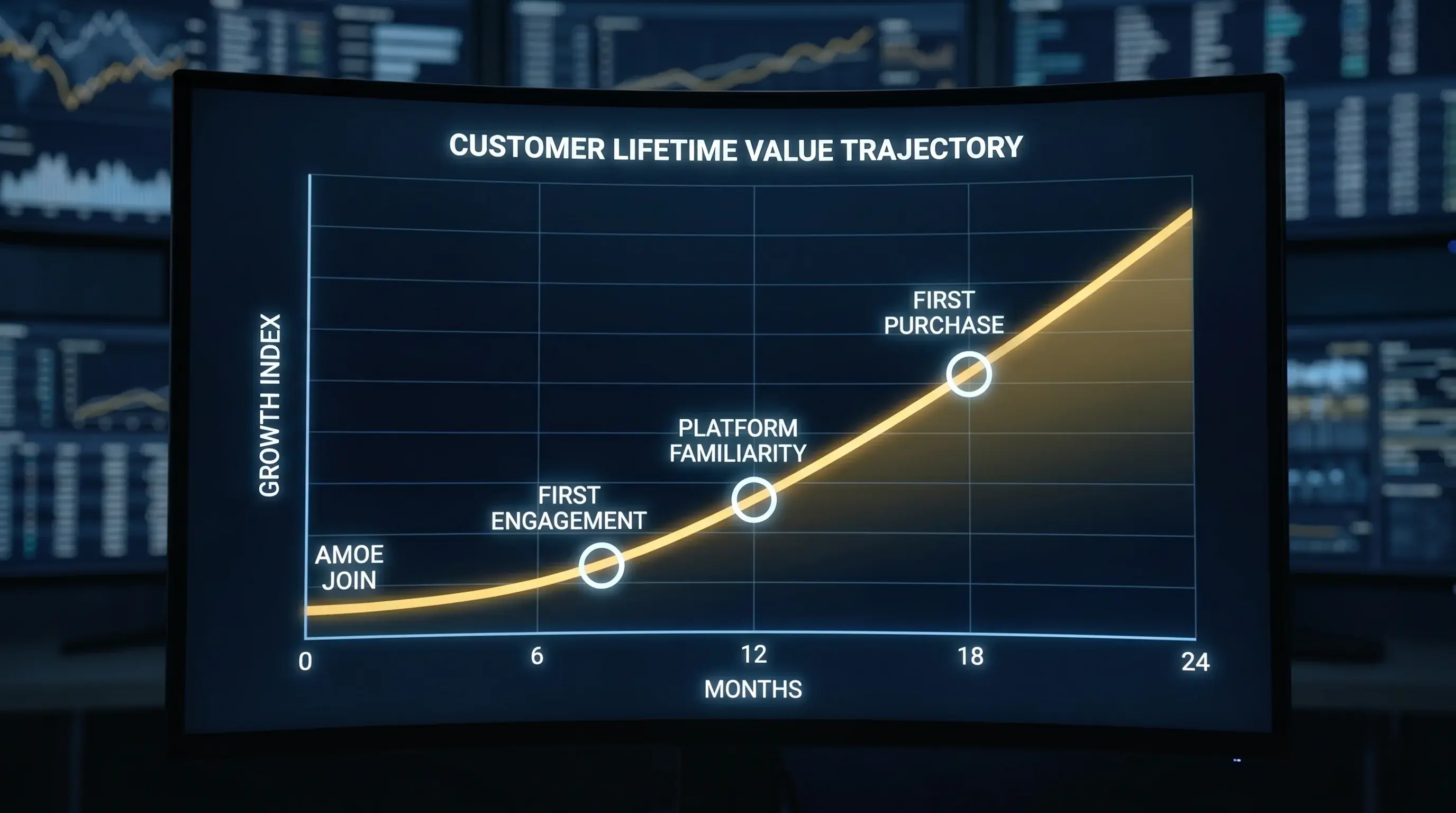
The ARPU (average revenue per user) figure growing at 17% annually between 2020 and 2024 reflects two dynamics: the purchasing cohort spending more over time, and the proportion of users who transition from free-play to purchasing increasing as platforms mature. A player who has been engaged with a platform for twelve months is substantially more likely to make a first purchase than one who joined last week — which means the non-purchasing AMOE participant of today has a probability of becoming a revenue-generating customer that the operator can estimate and factor into acquisition cost calculations.
AMOE as the Entry Point for Long-Term Player Conversion
The way I explain this to clients is: AMOE is not the product, it’s the door. Operators advertise free SC availability because the acquisition cost of a player who enters through AMOE is low — essentially the cost of processing the submission, which runs in the range of a few cents per request at scale. If even a small percentage of those free-entry players eventually make purchases, the LTV return on the acquisition investment is substantial.
The conversion process isn’t accidental. Platform design at sweepstakes casinos is engineered to show free-play participants the full feature set of the product — the same games, the same promotional events, the same social features — so that when the “upgrade to Gold Coins” moment arrives, the player is already engaged and knows what they’d be getting. The SC experience funded by AMOE and daily logins creates the product familiarity that makes the purchase decision lower-friction.

This is why I’m cautious about any framing that treats AMOE participants as categorically separate from the platform’s economic model. Free-play participants are the feedstock for paid participant conversion. The 88% who never buy aren’t a cost center that operators reluctantly maintain for compliance purposes — they’re the top of a conversion funnel that produces enough purchasers to generate billions in annual revenue.
Free Player to Paying Customer: The Conversion Path
The path from AMOE participant to paying customer typically runs through a few identifiable stages. First, the player starts with AMOE and possibly daily login SC — a modest balance that enables some gameplay. Second, they hit a game they enjoy or a promotional event that depletes their SC balance faster than AMOE replenishes it. Third, the platform presents a Gold Coin purchase option at a moment of engagement — often with a “welcome” or first-purchase promotion that makes the initial transaction unusually favorable. Fourth, the purchase happens.
Operators optimize each stage of this path. The promotional events that deplete SC balances are designed with the conversion opportunity in mind. The first-purchase offer is calibrated to provide enough value that the transaction feels worthwhile even for a player who has been skeptical of spending. And only 12% of users ultimately complete the conversion — which means the funnel has a high drop-off rate that operators compensate for through volume at the top.
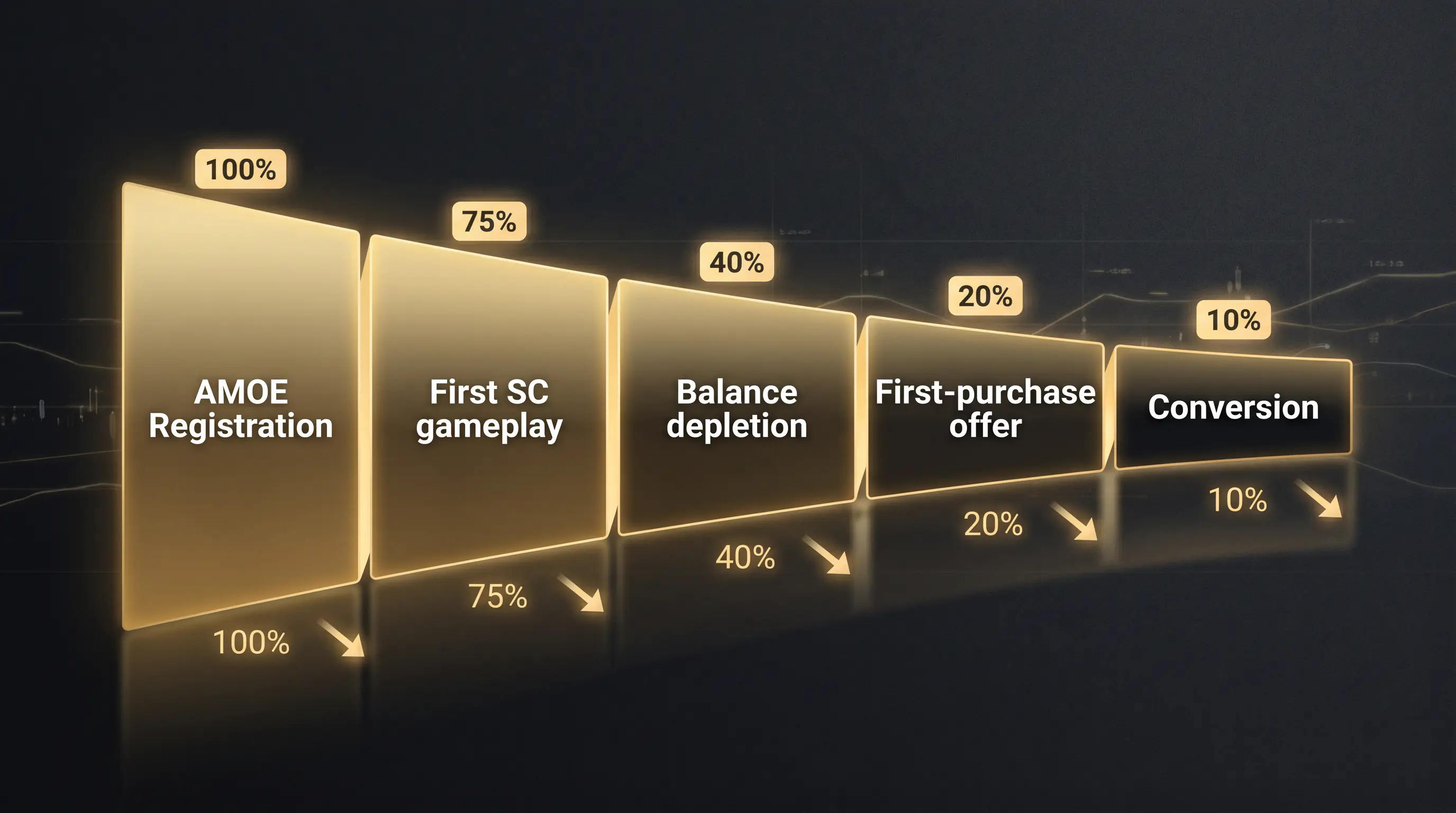
Understanding this funnel helps contextualize what AMOE actually is from the operator’s perspective: a cost-efficient player acquisition mechanism with a quantifiable expected conversion yield. The free SC awarded per request are a small investment in a relationship that has a calculable probability of producing a customer worth $1,000 in LTV over two years. The math works for operators even at low conversion rates, which explains why AMOE programs are maintained and even marketed prominently despite their relatively small per-request SC amounts.
What LTV Thinking Means for How Operators Structure AMOE
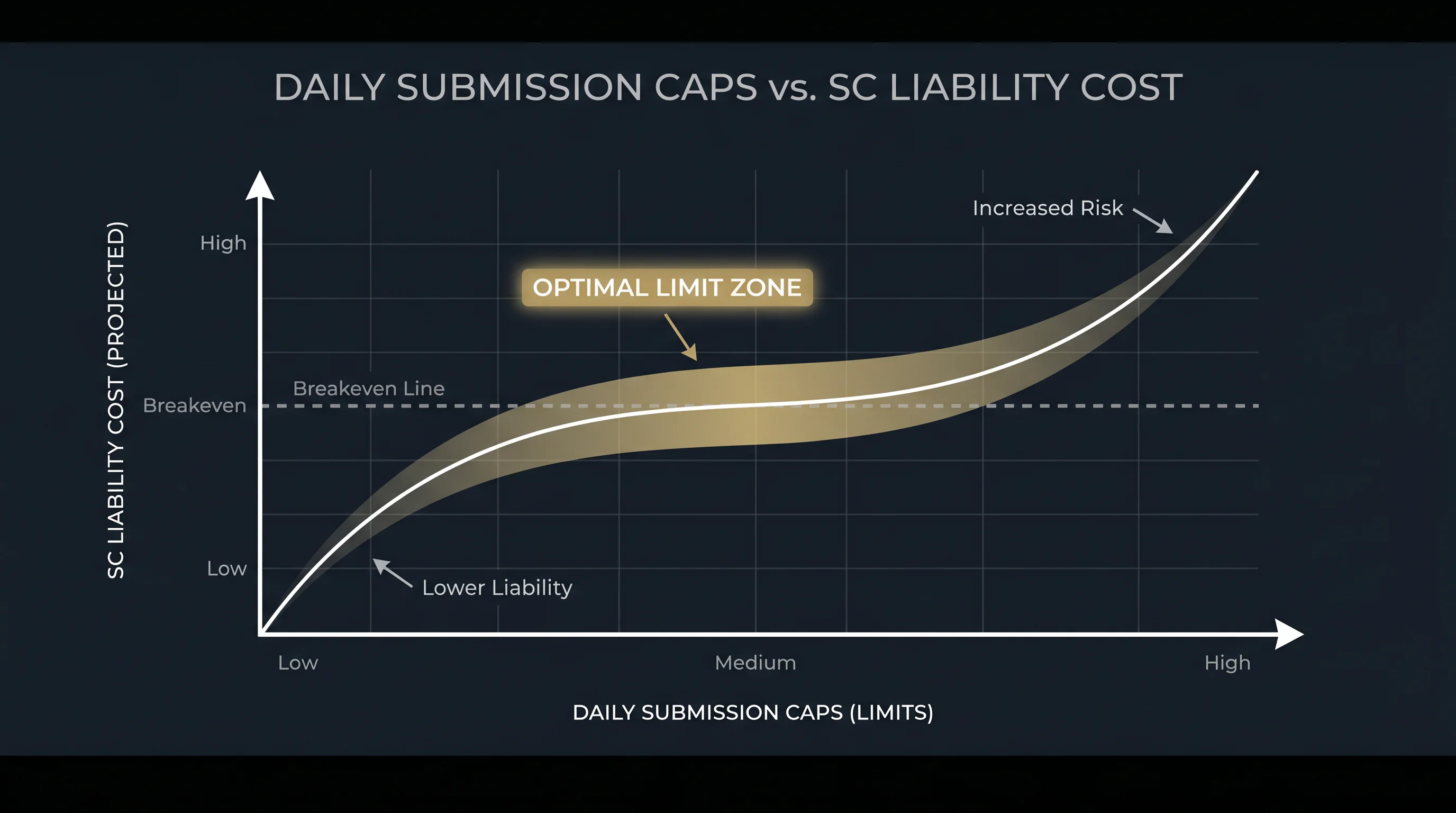
The LTV model has direct implications for AMOE design choices that might otherwise seem arbitrary. Why one to five SC per request rather than ten or twenty? Because higher per-request amounts would increase the SC liability for every player who uses AMOE without converting — a cost that grows linearly with submission volume. At one to five SC per request, the SC issuance cost per acquired user is small enough that even a low conversion rate produces a positive aggregate return.
Why enforce the one-per-day limit? Because unrestricted AMOE submission would allow high-volume free-play participants to accumulate SC at a rate that’s economically unviable for the operator. The daily cap ensures that the free-play channel produces the desired engagement without enabling the kind of bulk SC accumulation that would represent a material liability without conversion potential.
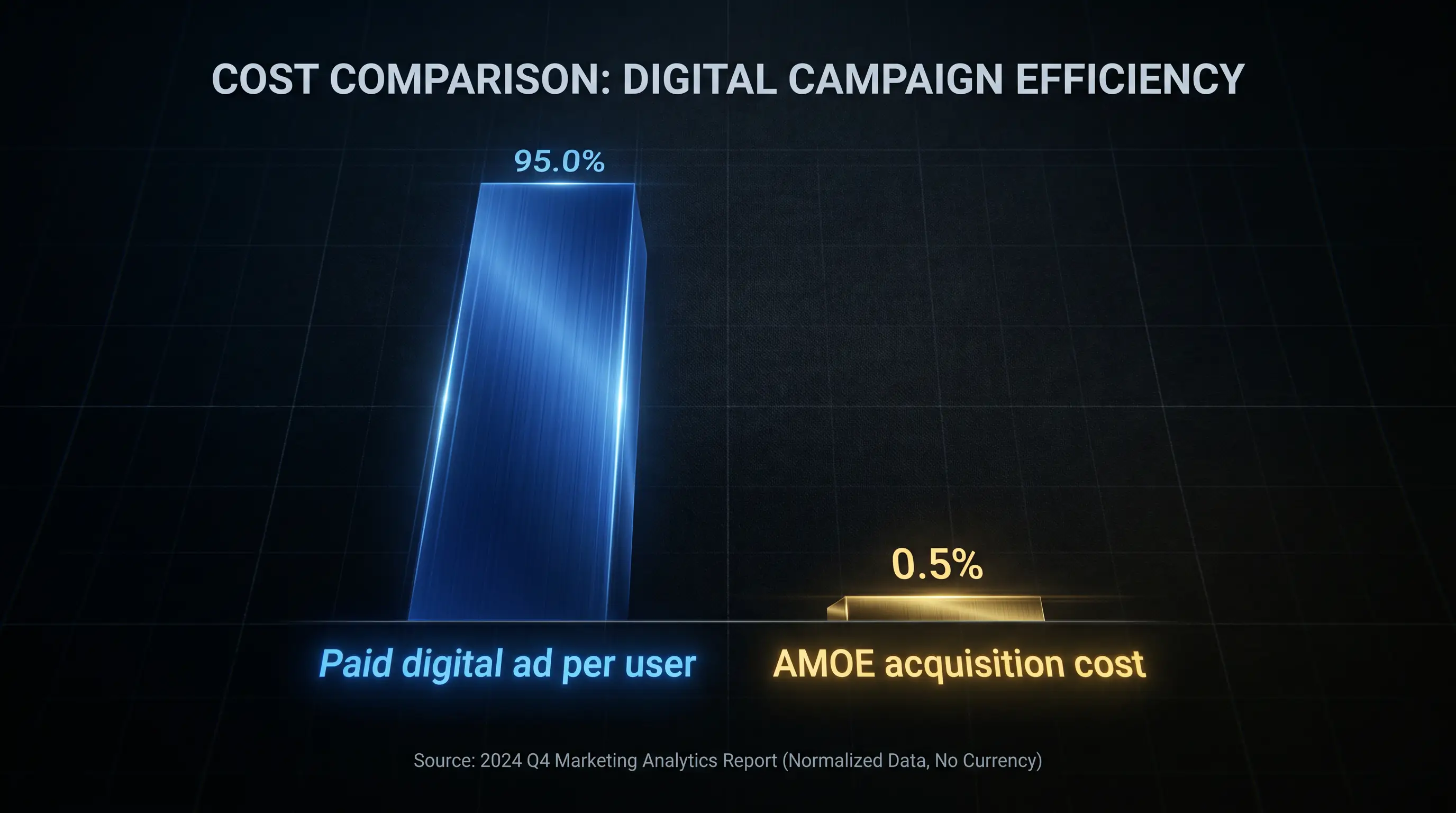
And why do operators continue offering AMOE even as regulatory pressure increases? Partly compliance necessity, partly acquisition economics. The acquisition cost advantage of AMOE — essentially free compared to paid digital advertising — makes it financially attractive even when per-request SC amounts are modest. A player acquired through AMOE costs almost nothing compared to a player acquired through a paid ad, and both have similar probability distributions of eventual conversion.
For the demographic data on who actually populates these conversion funnels — age distribution, spending frequency, and purchase behavior — the player demographics analysis provides the population-level context that sits behind these individual LTV estimates.
Player Value and AMOE Strategy: Questions
Does using AMOE instead of buying Gold Coins affect how an operator treats you as a player?
In terms of AMOE processing and SC crediting, no — your free entries are handled identically regardless of your purchase history. Where a difference can emerge is in promotional targeting: operators often send purchase-oriented promotions and first-buy incentives specifically to active free-play users who haven’t yet made a purchase, because this cohort has the highest marginal conversion potential. Ironically, consistent AMOE use without purchasing may make you a more active target for purchase promotions than less engaged users.
Are AMOE-only players ever excluded from promotions, bonuses, or tournaments?
Some operators reserve specific promotions, leaderboard competitions, or high-value events for players who have made at least one purchase. The typical framing is ‘Gold Coin holders only’ or ‘eligible accounts’ — where eligibility is defined by purchase history. This kind of restriction is legal and disclosed in the promotional terms. Players who have participated exclusively through AMOE should read the eligibility criteria for any promotion before counting on participating. The general SC games are typically available to all verified account holders regardless of purchase history.
Written by the editors at Alternate Method of Entry Sweepstakes.