AMOE Account Eligibility US: 2026 Age and Location Rules
 Available in US
The AMOE eligibility question trips up players more often than the submission mechanics do. You can write a perfect postcard, use the correct address, include all required information — and still have your request go unprocessed if you don’t meet the eligibility criteria or your account is flagged. I’ve reviewed enough operator terms to know that the eligibility rules are more nuanced than “18 and older, U.S. resident.” Let me give you the complete picture.
Eligibility for AMOE derives from sweepstakes law, which requires that the free entry pathway be available to all legally eligible participants. The same regulatory framework that mandated AMOE as a feature also defines who “legally eligible participants” includes — and who it excludes. With 58% of the sweepstakes casino player base in the 25-to-44 age range, most players clear the age threshold easily, but geographic and account-status eligibility trip up a meaningful number of otherwise prepared participants.
Age Minimums and Regional Sweepstakes Participation Rules
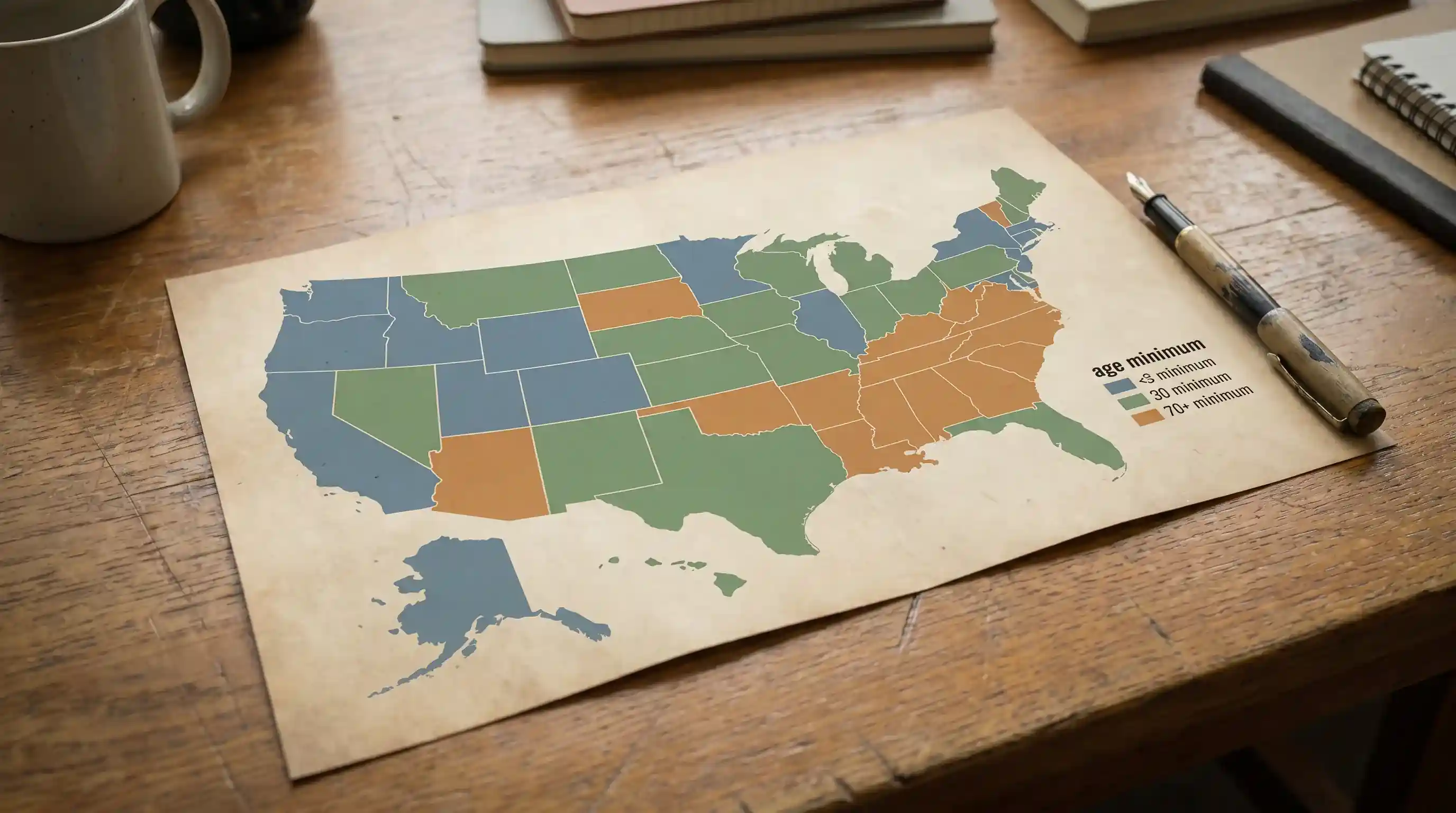
The minimum age for sweepstakes casino participation varies across operators and across states. The most common minimum is 18 years old, which applies in most states and at most operators. Some operators set a higher minimum — 19 in Alabama and Nebraska, 21 at platforms that align their age floor with state gambling age requirements for consistency. A few operators default to 21 for all players regardless of state, as a conservative compliance choice that simplifies enforcement.
These age requirements apply to AMOE participation specifically, not just account creation or Gold Coin purchases. A player who is below the minimum age cannot legally participate in the sweepstakes through any method — paid or free. If an underage account submits an AMOE request, the operator is obligated to reject it, and if the underage status is discovered after SC have been credited, the operator is typically within their rights to reverse those credits and terminate the account.
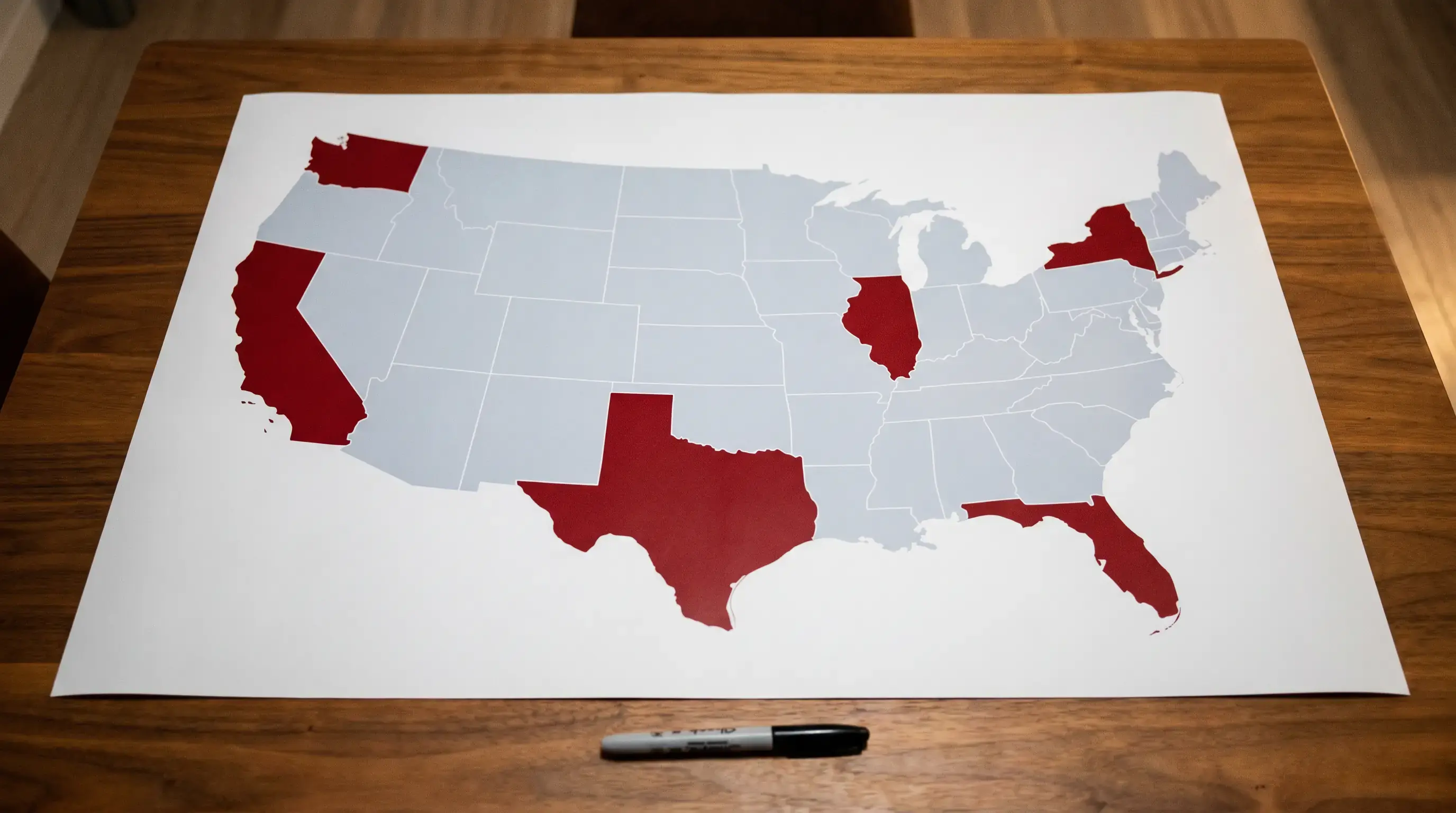
Geographic eligibility has become significantly more complex following the 2025 state restrictions. Operators who have restricted access in California, New York, Montana, Connecticut, New Jersey, Nevada, and other states where enforcement actions occurred do not process AMOE requests from players residing in those states. The restriction applies to the player’s residence, not just their IP address — a player in California using a VPN to access a restricted platform from a different apparent location is violating the terms and risks permanent account termination.
Some operators also specifically exclude employees and their immediate family members from AMOE participation. This is a standard sweepstakes exclusion — it prevents the people most familiar with the operational mechanics of the program from using that knowledge for competitive participation advantage. Players who work for, or have immediate family members employed by, any sweepstakes casino, game provider, payment processor, or AMOE administrator should read the specific eligibility exclusions in the operator’s terms before submitting.

What Identity Verification Is Required Before You Can AMOE
The identity verification question has a simple surface answer and a more complex operational answer. The surface answer: most operators don’t require formal identity verification before crediting AMOE submissions. Account creation typically requires an email address and a name — not a government ID, not a proof of address, not any of the documentation that licensed gambling operators require at account opening. Your AMOE postcards can be submitted and credited without formal ID verification in most cases.
The more complex answer is about what happens when your account becomes active enough to matter from a risk perspective. The trigger for full KYC (Know Your Customer) verification at sweepstakes casinos is typically the first redemption request: when you try to convert SC to cash, the operator runs their identity verification process. This usually requires a government-issued photo ID, a selfie or live photo matching the ID, and proof of address — a utility bill or bank statement showing your name and physical address.
This deferred verification model creates a situation that beginners should understand early: you can accumulate a significant SC balance through AMOE before the identity verification question becomes relevant. But when it does become relevant — when you’re ready to redeem — the verification process can take one to five business days, and it can fail if your account information doesn’t match your documentation. Using your real name and current address from account creation forward, rather than a variant or an outdated address, protects you from verification failures at redemption time.

There’s also a verification layer that some operators apply to high-volume AMOE participants specifically. If your daily submission pattern, household address, or account activity generates unusual signals — suggesting multiple accounts from the same location, for example — an operator may flag your account for manual review, which temporarily suspends AMOE crediting until the review concludes. This process doesn’t require you to do anything proactively; the operator contacts you when and if it applies. Responding promptly and accurately to any verification request keeps the review period short.

Account Standing: When Prior Violations Affect AMOE Access
Account standing — your history of compliance with the operator’s terms — is an eligibility factor that most players don’t consider until it affects them. Accounts in good standing are eligible for AMOE; accounts that have been flagged, suspended, or subject to active review may not be.
The types of account history that can affect AMOE eligibility include: suspected or confirmed multiple-account violations (creating more than one account to circumvent per-household limits), bonus abuse claims (pattern of exploiting promotional offers in ways the operator considers outside normal use), chargeback history (disputed Gold Coin purchases), and prior account terminations at related platforms operated by the same parent company. These flags can apply to new accounts at platforms operated by the same entity, not just to the original account where the issue occurred.
If your AMOE requests have been crediting normally and then suddenly stop, account standing review is one scenario worth investigating with customer support. Unlike a processing delay — which affects all submissions uniformly — a standing-related hold often stops all new credits while leaving previous credits in place. That asymmetry is a diagnostic signal: if your account shows SC from last month but nothing new is arriving despite consistent submissions, a support inquiry about your account status makes sense before you assume the submissions are being lost in transit.

Disqualification Scenarios: Employee Rules and Household Conflicts
Beyond age and geographic eligibility, specific disqualification scenarios apply to particular categories of participants. The most common is the employee exclusion I mentioned earlier. Sweepstakes regulations in most states permit operators to exclude employees, contractors, and their immediate family members from promotional sweepstakes participation. “Immediate family” typically means spouses, parents, children, and siblings regardless of whether they live in the same household.
A less commonly discussed disqualification involves professional sweepstakers — individuals who participate in sweepstakes at high volume across many platforms as a primary or supplementary income activity. Some operators have terms that allow them to disqualify or limit participation from accounts they identify as professional sweepstakes participants, particularly when those participants’ AMOE submission patterns appear to be maximally aggressive rather than casual. This isn’t a systematic practice across the industry, but it exists at some operators and is worth being aware of if you participate at the maximum rate across a large number of platforms.
Household conflicts beyond the standard daily limit also create disqualification scenarios. If two accounts at the same address have different names but the same IP address, the same mailing address, and similar participation patterns, operators with sophisticated matching systems may flag the situation as a potential household rule violation and restrict AMOE processing for both accounts pending review. Maintaining separate, clearly distinct accounts for separate household members — with different email addresses, different usernames, and clearly differentiated personal information — reduces this risk.

For the complete picture of what operators commit to in their terms and what rights they reserve, including the account standing provisions and disqualification criteria that govern eligibility decisions, the guide to AMOE terms and conditions covers the contractual framework in detail.
AMOE Eligibility: Quick Reference
Can non-U.S. residents participate in sweepstakes casino AMOE programs if they have a valid U.S. mailing address?
Most sweepstakes casino operators restrict participation to U.S. residents rather than just people with U.S. mailing addresses. The eligibility requirement is typically based on residency — where you permanently live — not on the location of a mailing address you have access to. A non-U.S. resident who uses a U.S.-based PO Box or a friend’s address would likely be in violation of the eligibility terms, and any SC accumulated under those circumstances could be forfeited if the account is reviewed. The operators’ terms define eligibility by residence, and that definition is enforced at the identity verification stage when the discrepancy between claimed U.S. address and actual non-U.S. residence would typically surface.
Are employees of third-party AMOE processing companies ineligible to submit requests themselves?
Yes, in most cases. The employee exclusion at sweepstakes casinos typically extends to contractors and service providers who work on the sweepstakes program, which includes third-party AMOE processing administrators. The logic is the same as for operator employees: access to operational knowledge about the program could create an unfair advantage or an appearance of impropriety. If you work for a company that administers AMOE processing for sweepstakes operators, read your employer’s conflict-of-interest policies and check the specific exclusion language in any sweepstakes terms before submitting AMOE requests at platforms your employer serves.
Written by the editors at Alternate Method of Entry Sweepstakes.