
Sweepstakes Responsible Gaming US: Casino Safety Tools 2026
 Available in US
This is the article in my coverage of sweepstakes casinos that I take most seriously, because the data here touches on real harm rather than compliance technicalities. I can spend all day analyzing AMOE formats and processing windows and find it intellectually engaging. The responsible gaming data is different. When 80% of sweepstakes casino users are spending money monthly — without the safeguards that licensed operators are required to provide — that’s a consumer welfare problem that deserves direct treatment, not footnotes.
Current Player Spending Data and Missing Platform Protections
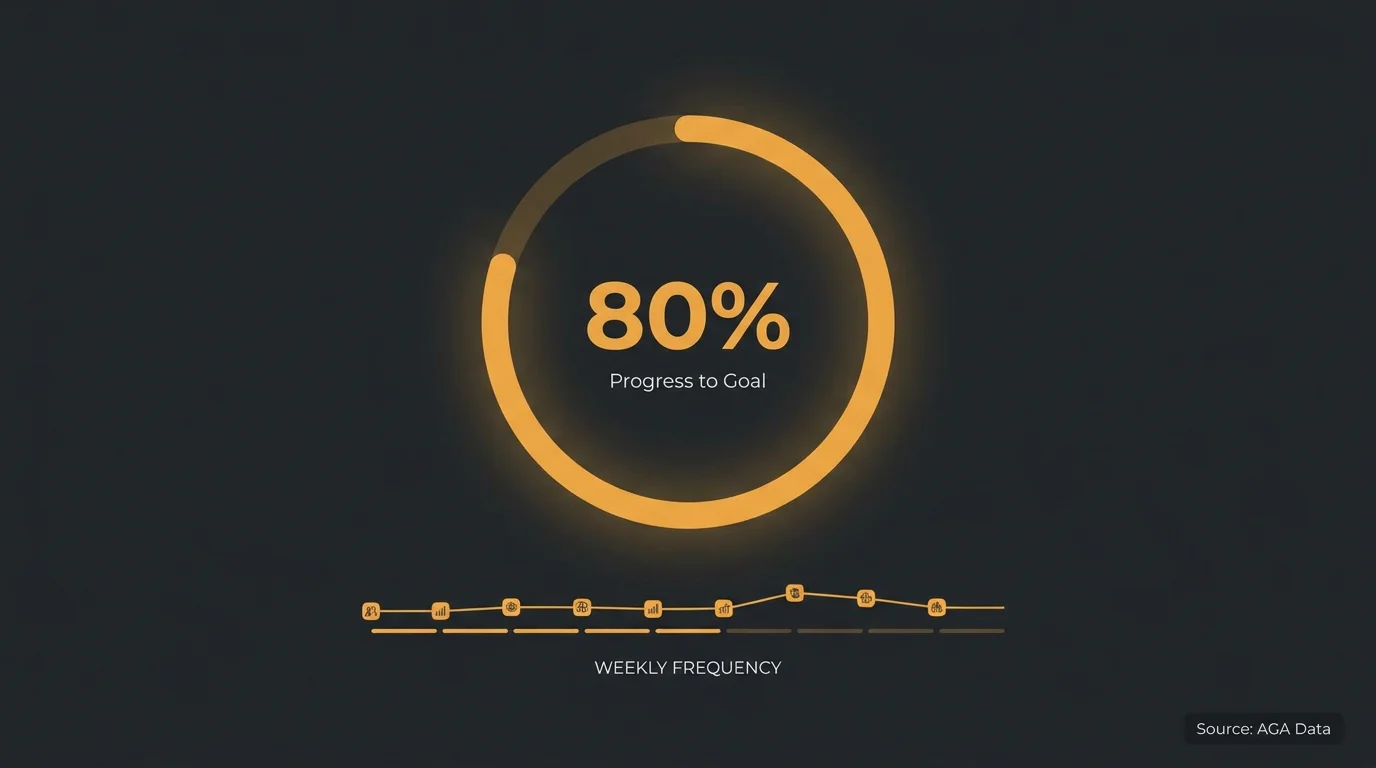
Eighty percent of sweepstakes casino players spend money monthly, according to data from the American Gaming Association. Almost half of those spending players do so weekly. This data was compiled to support the AGA’s position that sweepstakes casinos function as gambling platforms from a behavioral standpoint regardless of their legal classification — but the data itself is relevant beyond the policy debate.
Those spending figures describe a population that is deeply engaged financially with these platforms. Weekly purchasers are not casual sweepstakes participants dipping in for a chance at a prize. They’re regular spenders at a platform that looks, feels, and behaves like a casino — a platform that, unlike licensed casinos, is not required to provide them with tools to monitor their own spending, set limits, take breaks, or access problem gambling resources through regulated channels.
The context of this data matters: only 12% of sweepstakes casino users ever make a purchase, which means the monthly spending cohort is a subset of that 12%. Within the purchasing minority, weekly frequency is extremely common. The behavioral pattern that emerges is one of heavy engagement concentrated among a smaller group of paying users — the pattern that produces the LTV figures operators rely on, and the same pattern that characterizes problem gambling in licensed markets.
What Regulated Casinos Offer That Sweepstakes Don’t
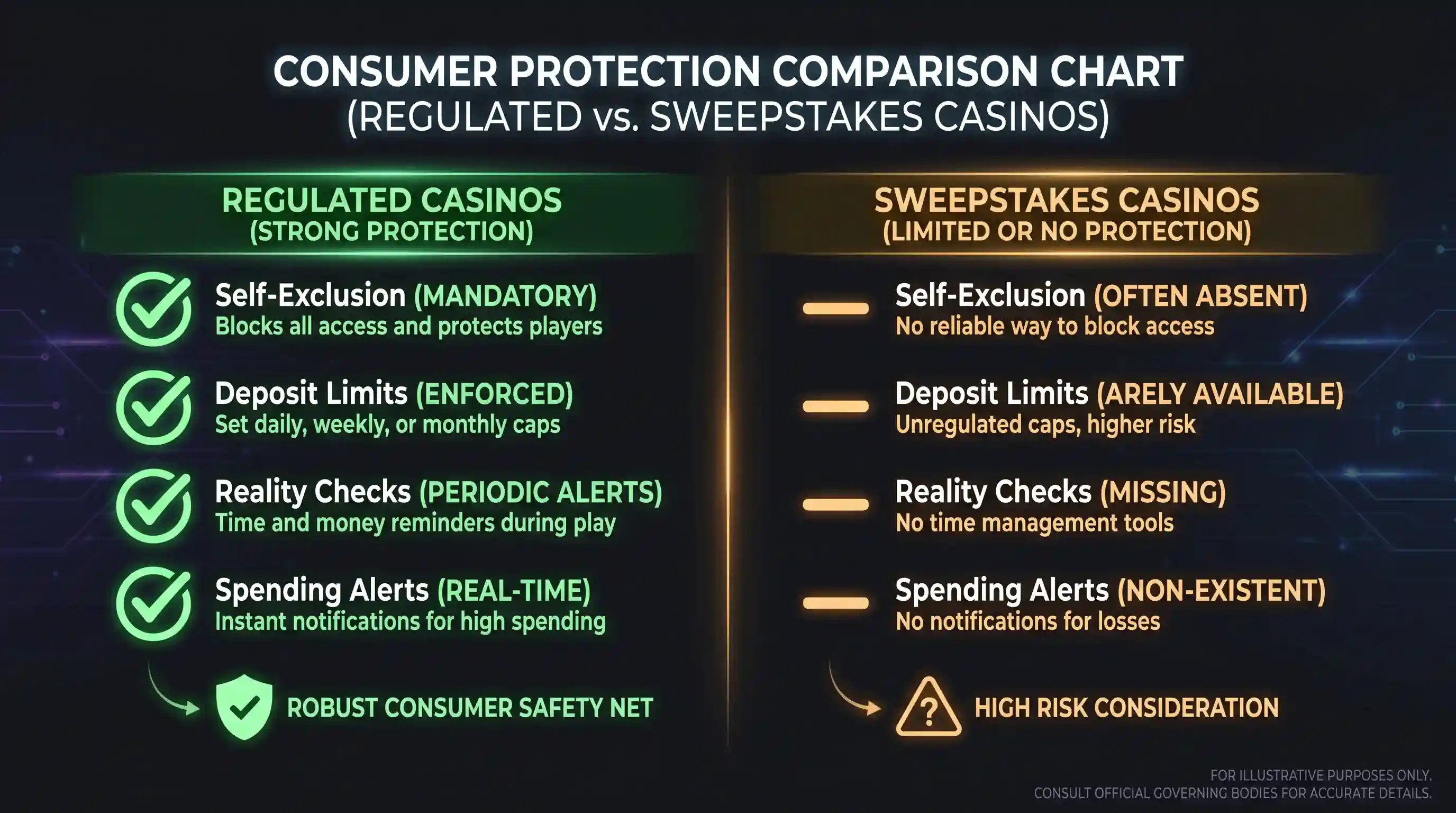
Licensed online casinos operating in the seven states with legal iGaming are required to offer specific responsible gaming tools as conditions of their licensing. These include: self-exclusion programs that prevent problem gamblers from accessing the platform for defined periods; deposit limits that cap how much a player can spend in a given timeframe; reality checks or session time alerts; and mandatory access to problem gambling resources at point of need.
The self-exclusion mechanism is particularly significant. State gaming control boards maintain centralized self-exclusion registries that licensed operators must honor — a player who self-excludes in one state’s program gets blocked from all licensed operators in that program. No equivalent infrastructure exists for sweepstakes casinos. A player who recognizes a spending problem at a sweepstakes platform has limited structural recourse beyond voluntarily self-requesting account closure, which operators may process at varying speeds and with varying completeness.
As Tres York of the American Gaming Association stated directly in 2025: “The data is clear. Consumers see through the facade of ‘sweepstakes’ casinos and name it for what it is: gambling.” His point extends to the protection implications. If players perceive the experience as gambling — and the behavioral data suggests they’re engaging with it as gambling — the absence of gambling-equivalent consumer protections creates a meaningful safety gap. The sweepstakes legal classification doesn’t change the behavioral reality for players who develop unhealthy spending patterns.
Advertising Saturation and Its Role in Player Behavior
By early 2025, half of all online casino advertising in the United States was promoting sweepstakes platforms — a figure derived from Sensor Tower data cited by the American Gaming Association. This advertising saturation created a specific consumer environment: players who had never considered sweepstakes platforms were exposed to them through aggressive digital marketing, often framed around the “free play” and “no purchase necessary” angle that made engagement appear low-risk.
The intersection of advertising volume and player behavior is documented in the regulatory record. Attorney general enforcement actions and class-action plaintiffs both cited advertising practices as contributing to a misleading consumer environment — one where the “free” entry framing obscured the spending dynamics that characterize actual platform engagement. When an ad promises free Sweeps Coins and presents a casino-style interface, the implicit consumer understanding of what the product is may diverge from what the terms say it legally is.

This isn’t a novel dynamic in consumer markets — it appears in any industry where marketing emphasizes free access while the actual revenue model depends on a conversion from free to paid behavior. But the scale of sweepstakes casino advertising combined with the absence of responsible gaming infrastructure creates a specific risk profile for players vulnerable to compulsive spending patterns.
Is AMOE an On-Ramp to Problem Spending?
This question deserves a careful answer rather than a reflexive one. AMOE itself doesn’t cause problem spending — it’s a free participation mechanism that, in isolation, costs only postage. The concern is about what AMOE enables: access to casino-style gameplay through an engagement pathway that creates the behavioral familiarity and platform attachment that conversion strategies exploit.
The conversion funnel at sweepstakes casinos is explicitly designed to move free-play participants toward purchasing behavior. The platform experience funded by AMOE SC — the same games, the same promotional mechanics, the same win/loss dynamics — is the foundation of that conversion. For the majority of participants, this pathway produces a benign outcome: they play for free, enjoy the entertainment, and never spend money. For a subset, the engagement pattern that begins with AMOE participation evolves into regular purchasing at the frequency and intensity that problem gambling researchers recognize as concerning.
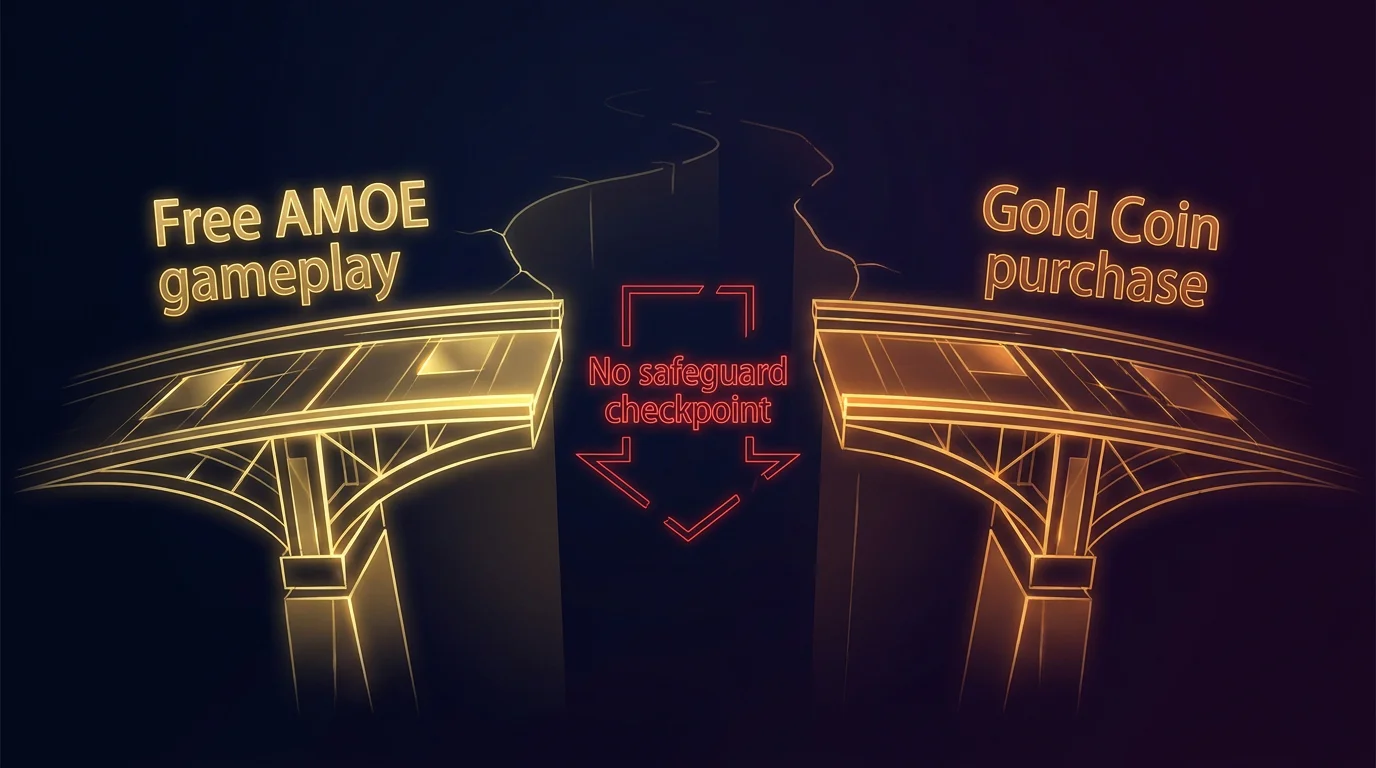
The absence of safeguards at the point of conversion — where a player transitions from AMOE-funded free play to Gold Coin purchases — is the specific gap that distinguishes sweepstakes platforms from licensed casinos. A licensed casino must present responsible gaming options at the point of first deposit. A sweepstakes casino has no equivalent requirement. The transition from free to paid is engineered for frictionlessness, not for safety. For the comparison between sweepstakes and licensed casino models on these protection dimensions, the side-by-side comparison of both platform types covers the regulatory gap in detail.
Responsible Gaming at Sweepstakes Casinos
Do sweepstakes casinos offer any self-exclusion or deposit limit options?
Some operators offer voluntary account cooling-off periods, deposit limits, or self-exclusion options through their account settings or by contacting support. These tools exist at the operator’s discretion, not as regulatory mandates, and their availability and reliability varies significantly across platforms. Unlike the centralized self-exclusion registries that licensed gambling operators must honor, sweepstakes casino self-exclusion requests are processed operator by operator, with no cross-platform enforcement mechanism. If you’re concerned about your spending at any sweepstakes platform, contacting their support team to request account restrictions is the practical starting point.
Are minors able to participate in sweepstakes casino AMOE programs?
AMOE programs legally require participants to meet the operator’s minimum age requirement — typically 18, 19, or 21 depending on jurisdiction — and to hold a verified account in good standing. Operators are required to implement age verification processes as part of account creation. However, the robustness of age verification at sweepstakes casinos varies, and the absence of the identity verification rigor required at licensed gambling operators has been cited as a consumer protection concern. Mail-in AMOE creates an additional verification challenge: a postcard sent by a minor from a family address may not be identifiable as such. The legal obligation falls on operators to enforce age requirements, but enforcement effectiveness in the AMOE context is not independently monitored.
Prepared by the Alternate Method of Entry Sweepstakes editorial staff.