AMOE Sweepstakes Advertising US: Marketing Strategies
 Available in US
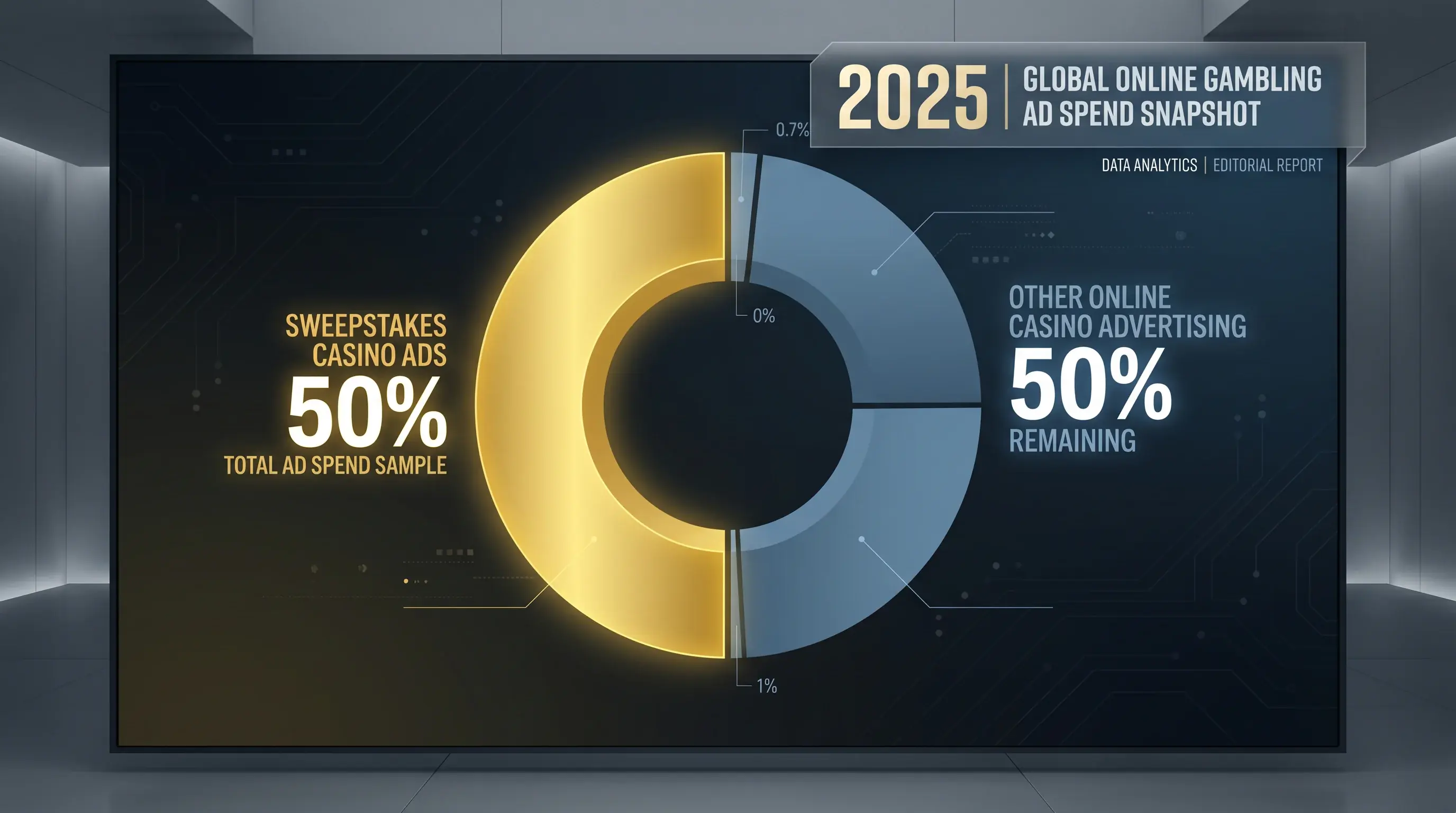
I pay attention to advertising claims as a professional habit — and the volume and tone of sweepstakes casino advertising has been one of the most striking developments in digital marketing I’ve tracked in the past three years. The numbers from Sensor Tower, collected by the American Gaming Association, landed hard in 2025: half of all online casino advertising in the United States was promoting sweepstakes platforms, not licensed casinos. That’s not a niche marketing category. That’s a dominant position in one of the highest-spend advertising verticals in digital media.
Sweepstakes Casino Advertising Volumes and Industry Reach
The 50% share of online casino advertising that sweepstakes platforms captured in early 2025 represents a striking inversion of expectations. Licensed online casinos — legal in only seven states — have significant incentive to advertise in those markets, and they do. But sweepstakes platforms, able to market nationally, operated at a structural advantage that translated directly into ad volume.
The financial math explains it: an industry generating over $10 billion in gross purchases annually has a substantial advertising budget to work with. Average revenue per user growing at 17% year over year justified aggressive customer acquisition spending. The free-entry narrative — “play for free, win real prizes” — is among the most compelling acquisition hooks in consumer marketing, and it requires no misleading claims to deploy because the product genuinely does offer that pathway through AMOE.
What the advertising doesn’t often emphasize is what “free” actually means: the AMOE process, its limitations, its processing times, and the small SC amounts typically awarded per request. The “free” in sweepstakes advertising leads with the most attractive interpretation and omits the operational details. That asymmetry between marketing claims and operational reality is one of the persistent compliance concerns that regulators have been scrutinizing.
How AMOE Is Used as a Player Acquisition Hook
The AMOE mechanism has a double function that operators understand well: it’s a legal requirement and a marketing asset. The compliance requirement says operators must offer a free entry pathway. The marketing insight says that free entry is an extremely effective acquisition message. These two functions reinforce each other, which is why AMOE is prominently featured in advertising rather than buried in terms documentation.
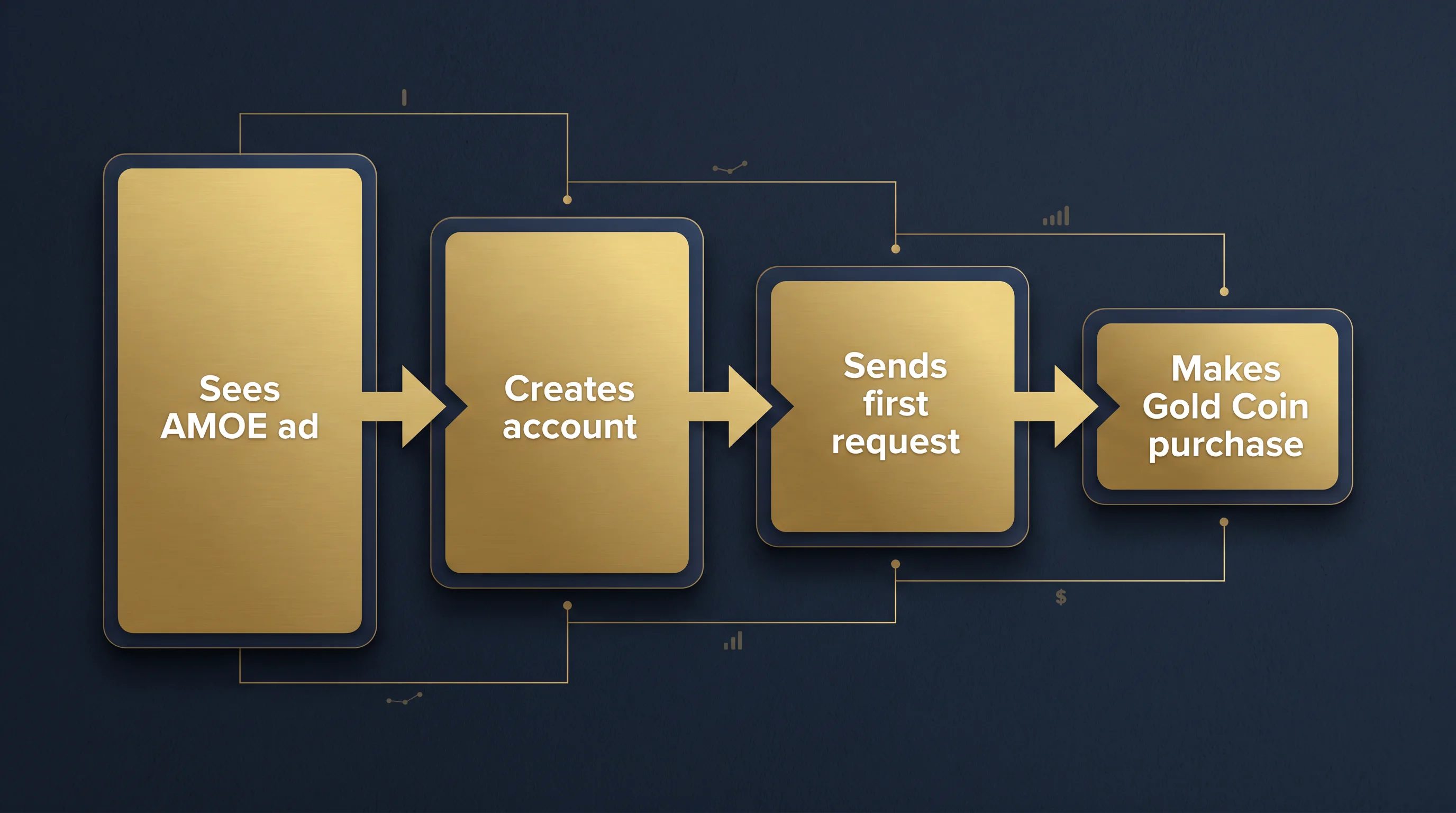
From a customer acquisition standpoint, the AMOE-to-paid conversion funnel works like this. A player sees an ad promising free Sweeps Coins. They navigate to the platform, create an account, and discover the AMOE process. They mail a request, receive their first SC, and engage with the games. Some percentage of these players — industry data suggests the purchasing fraction is around 12% of total user base — eventually make a Gold Coin purchase. The lifetime value of that converted player, estimated at around $1,000 over two years by Gaming Innovation Group data, is the financial justification for the entire acquisition chain.
The ARPU growth rate of 17% annually between 2020 and 2024 reflects how effectively this funnel worked at scale. Operators that mastered the free-entry acquisition model — advertising AMOE availability prominently, making the initial SC experience accessible, then converting engaged players into purchasers — grew their revenue at rates that justified the advertising spend many times over.
“Get Free Sweeps Coins” — The Standard Ad Promise
The advertising language around AMOE follows a recognizable pattern. Variations on “get free Sweeps Coins,” “play for free,” “no purchase necessary,” and “win real prizes” appear across social media ads, search ads, and programmatic display campaigns for virtually every major sweepstakes operator. This language is legally accurate — AMOE does provide free SC, no purchase is necessary, SC can be redeemed for prizes — but the gap between the advertising claim and the operational reality of AMOE creates friction for players who arrive expecting an unconditional benefit.
The friction points are familiar by now: one to five SC per request, processing windows of seven to fourteen business days under normal conditions, household limits, the mechanics of postcard formatting, and the minimum redemption thresholds before any SC has real-world cash value. None of these operational details appear in the advertising. They’re in the terms and conditions, which the same research suggests most users don’t read before signing up.
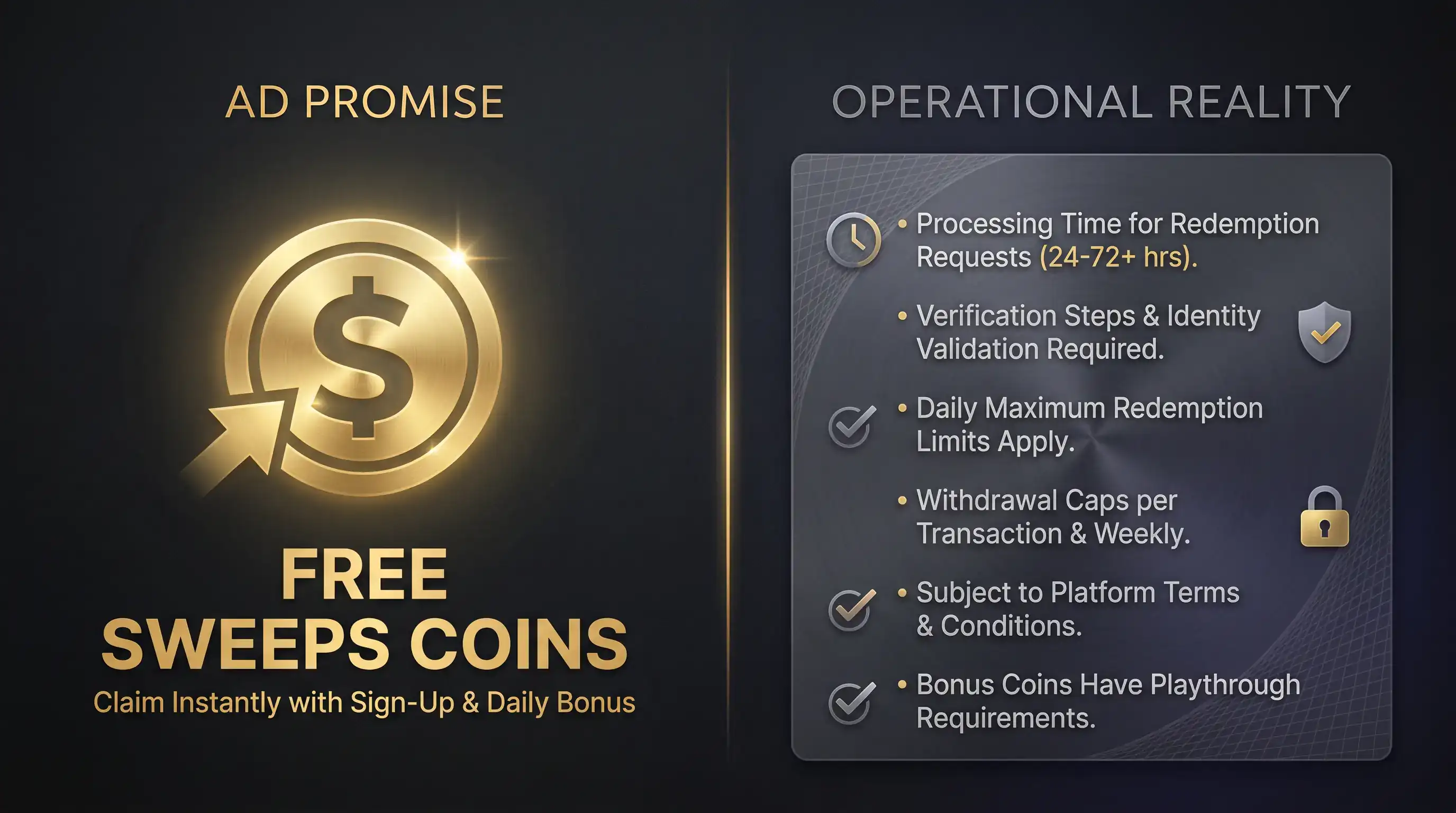
From a compliance perspective, the advertising-versus-reality gap isn’t necessarily deceptive in a legal sense — the full terms are disclosed, AMOE does work, and the process is genuinely available. But the design of the marketing creates expectations that the operational process doesn’t always fulfill quickly, which generates dissatisfaction, support volume, and ultimately regulatory complaints. The operators who have managed this best are the ones who’ve invested in making the actual AMOE experience match the marketing promise — clear instructions, reliable processing, prompt crediting, and transparent SC amounts.
Advertising Under Scrutiny: What Regulators Are Watching
The advertising practices of sweepstakes casinos became a focal point of regulatory scrutiny during 2025 for two related reasons. First, the sheer volume of advertising amplified regulatory visibility — it’s harder to ignore an industry when its ads are in front of every digital media consumer in the country. Second, the nature of the advertising claims raised questions about whether they accurately represented the product.
Attorney general offices in states that took enforcement action frequently cited advertising practices as part of their case against specific operators. When advertising emphasizes “play casino games and win real money” while the legal disclaimers mention sweepstakes structure, no purchase necessary, and promotional currency only in fine print, regulators see a potential disconnect between what’s being marketed and what’s actually being sold.

There are also questions about advertising practices in restricted states — whether operators continued advertising in California or New York after access restrictions took effect, and whether those ads directed potential players toward products they couldn’t legally access. This category of complaint has generated its own subset of regulatory inquiries.
The regulatory attention to advertising is separate from the AMOE compliance questions but reinforces them. An operator whose advertising is under regulatory scrutiny for overstating the free-play benefits is an operator whose AMOE program also faces elevated scrutiny for whether it genuinely delivers on those claims. For a broader look at how the demographics of who plays these platforms intersects with advertising practices, the player profile and demographics data provides relevant context.

AMOE Advertising Questions
Are sweepstakes casinos required to disclose AMOE in all their advertisements?
FTC guidelines require that sweepstakes promotions include ‘no purchase necessary’ language wherever promotional claims are made, and that AMOE instructions be accessible to all entrants. In practice, most sweepstakes casino ads include the NPN disclaimer, though sometimes in fine print. The requirement is not that every ad must walk through the full AMOE process — it’s that the free entry pathway must be disclosed and accessible. What constitutes adequate disclosure in digital advertising continues to evolve as regulatory scrutiny increases.
What restrictions exist on sweepstakes casino advertising in states where the platforms are banned?
This is an active area of regulatory concern. Operators with national advertising campaigns who continue running ads after access restrictions take effect in specific states are potentially exposing residents of those states to marketing for a product they cannot access. Some state enforcement actions have specifically included advertising conduct as part of the complaint. There’s no uniform federal standard governing this; each state’s enforcement posture varies. Players in restricted states who see sweepstakes casino advertising can file complaints with their state attorney general’s consumer protection division.
Published by the Alternate Method of Entry Sweepstakes team.